
"It's a web magazine. We were print too in the past, but we are all digital now".
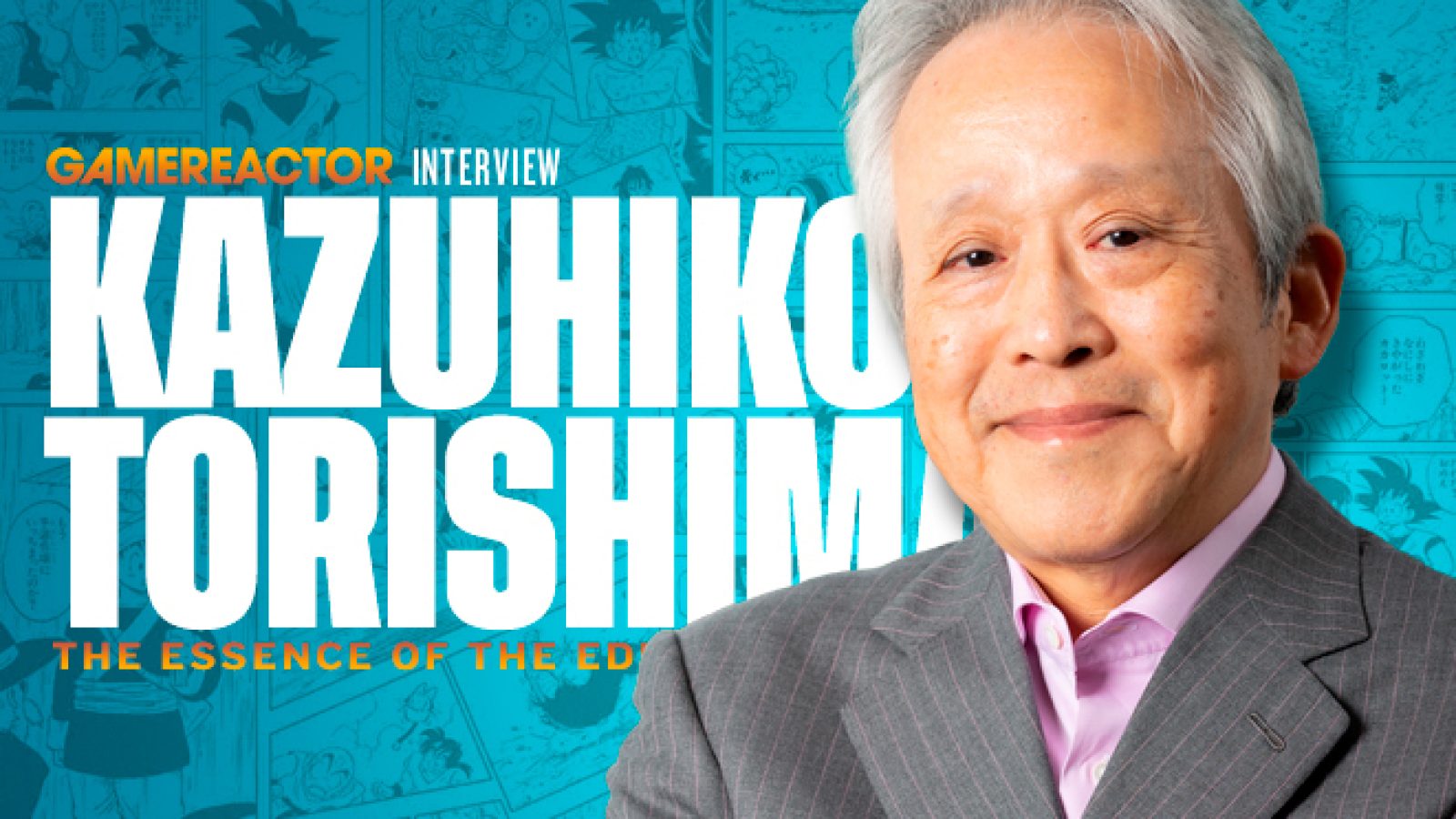
Kazuhiko Torishima, the legendary manga editor behind Dr. Slump and Dragon Ball, was naturally interested in what Gamereactor was format-wise, before we sat down to talk at the 26th Comicon Napoli. Comes with the turf.
Described to me in the days prior as someone direct, serious but fun, with interestingly unique opinions, and sometimes even complicated, during our conversation, albeit brief, he made it very clear that he had (and still has) a knack for connecting content to audiences. The magic to link artists, production, and business. What he himself calls the essence of the editor.
It was his blunt honesty, and the fact that he always spoke his mind, that late Akira Toriyama appreciated the most about him. And it is thanks to Toriyama-san, whom fans have missed since his passing two years ago, that Torishima-san has been more willing as of late to attend conventions such as this massive, beautiful one in Italy.
Here's a transcription of our chat together, with some excerpts and reflections from his panel.
★ As an editor, which would you say was the key to identifying stories and characters that could become massive hits in manga?
Is this regarding a certain mangaka or a manga in general?
★ In general, how do you find what's special for it to become a success?
I don't have an answer! (Laughs)
Naturally, if you have the ability to know the future and by knowing beforehand what is going to be a success, of course, it would have been a very boring thing. Like the bingo card. In the bingo card, you have the numbers, and this is not a hit, it's not a hit, and it might happen that the rest of the numbers would hit.
So the essence of the editor, the work of the editor is to catch first-hand how the audience reacts and try to convey all this message to the mangaka in order to give a direction
★ Having worked with him and elevated his art, it's now two years after Toriyama-san's passing, how would you define the legacy together?
[Reflects slowly, thoughtful] Well, you know, this was not only Toriyama-san's stance, but my stance as well, because the main audience for us was the kids, the main readers. And as kids, by definition, they're powerless human beings, they do have so many problems, they could be sad, they don't know how to stress out, to get rid of the stresses, and so the manga could be a means to forget all the sadness, all the annoying things, and all the things that they might be bothered about.
So Toriyama and I, we used to talk for hours about this. Because at school, the kids have the teachers who are sort of just not teachers, they rule their world in the school. And at home, they have their parents, and the parents, they rule the kids' world. And of course, the kids have no money. They don't have the means to enjoy themselves, to forget about stress and all the sadness. So by reading the manga, they can get into another world and have an experience, an adventure, where they can forget any issues, any cause of their stress, and they can really enjoy it. So that was something typical that we talked about.
★ That's a beautiful answer.
[Torishima-san smiles and laughs]
Beyond the spicy takes on Jujutsu Kaisen, Demon Slayer, Chainsaw Man, Blue Lock, or even his reported dismissal of Dragon Ball Daima as "shit", from his panel the day after it'd seem that Torishima-san indeed fears that manga is becoming too adult, too wordy, and too expensive. It linked back to our question: if kids stop reading manga, the future pipeline of mangaka disappears.
★ We had the pleasure of having Horii-san last year here at the Comicon Napoli. What do you think of Dragon Quest as perhaps the main bridge between manga, anime, and video games?
So, let's say the most popular definition, the difference between manga, anime, and video games. So the manga is something written, you add colour, it becomes anime. And then when you start playing, and by using your hand, you start to move the pieces, then it becomes a game. That's, let's say, the most popular definition of the three means.
- Don't miss: Yuji Horii's best tribute to the late Akira Toriyama: "We can make a next title using what he had left"
Of course, nowadays we can do all of these things by using just a smartphone. Naturally, we can have the manga, anime, and the games, the video games, one close to the other. But it's just a physical closeness, because the features of each mean, the manga, anime, and the video games, they are totally different.
Therefore, the creator, let's call the author of the manga, anime, or the video game, they have to really and deeply understand the main features of that manga, the anime, and the video game. Otherwise, they cannot be created properly.
As you said, I had a chance to support and to contribute to the Dragon Quest manga, and the anime, but none of them had a real hit. So, you know, the main reason I failed is because by knowing and deeply understanding the main feature of each mean, the core of each medium, we should have given the main purpose and the main work to a mangaka, an anime producer, and a video game producer, in order to let them do their work.
★ Do you think today's manga industry still gives editors enough time and authority to shape young authors the way Shonen Jump did in the Golden Age? Or has the speed of the market changed that relationship forever?
Basically, it has not changed at all. So the main difference between, let's say, the Golden Age or Shonen Jump was that now, if a manga is a success, then they start to talk immediately about the anime and the game. And, as I already told you, manga, anime, and video games are really close, but different. So it's very important that the editor really understands the difference among the three, and otherwise it might happen that it fails as a project.
So, of course, if we aim to have a perfect manga, a perfect anime, and a perfect video game, it would be too much stress. But I think that the main means which is important is the manga. So we have to pour all of our effort into the manga, and then we can aim for half of the success with the anime, and then maybe we might succeed.
So I think that the main essence, there are three tricks to be successful in the three mediums: That the protagonist should be properly described in the other (the game or the anime). And this is backstage, but even for the anime or the game, we have to choose the best person ever to create that anime, to create that video game, and be responsible and accountable. And finally, you should avoid to work with a company because it's famous.
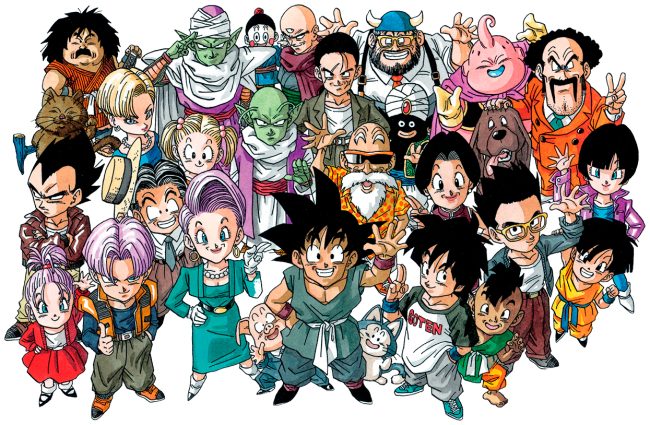
From Torishima-san panel at Comicon Napoli the day after, one main editorial insight was the contrast between Toriyama "hating" manga and therefore making Dragon Ball incredibly synthetic, readable, and universal, versus Oda being deeply in love with manga and his own story, making One Piece richer but also heavier and less approachable for kids. A fascinating paradoxical idea: Toriyama's reluctance became part of his genius.
★ Talking about famous, and I think you've shared your opinion in the past regarding this matter, but let me ask you, what is your take on more modern massive manga hits, such as Attack on Titan or One Piece? Would you have edited them yourself?
You might not know, but when I was the chief editor, I said no to One Piece, to the manga version [Says Torishima-san firmly hammering the table with his fist]. But all my staff, the team, told me, no, no, no, we have to print it, print and support it. And after two hours, two-hour long discussion, I said, okay, we'll try. So if, and this is a big IF, if I was [Eiichirō] Oda's editor, maybe One Piece was never around! [Laughs]. Or I would have forged Oda more, and maybe he had worked upon something more than just One Piece!
★ That's funny. Thank you so much for your time. Arigato gozaimasu, Torishima-san.
---
Brutally candid, old-school, and almost provocatively purist, Torishima-san comes across as the guardian of manga's fundamentals: harsh and sometimes dismissive, but not negative for the sake of it. He still thinks like a top editor who cuts through manga with a red pen: judging manga by clarity, readability, character function, audience impact, and whether children can actually access it, with a coherent philosophy behind the bluntness: manga should be economical, character-driven, approachable, and capable of creating future generations of readers and creators.
At the 26th Comicon Napoli, he was treated by artists and fans from around the world like the legend of the medium that he is.
