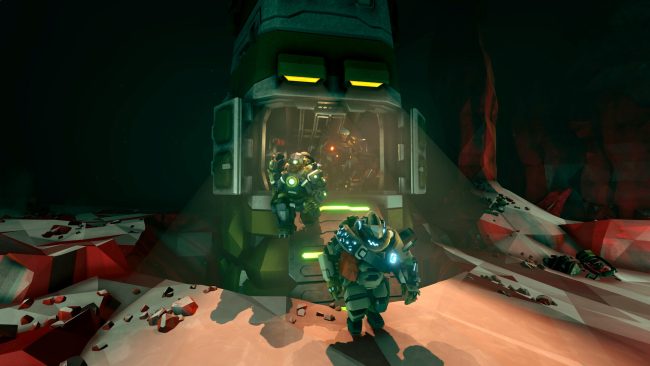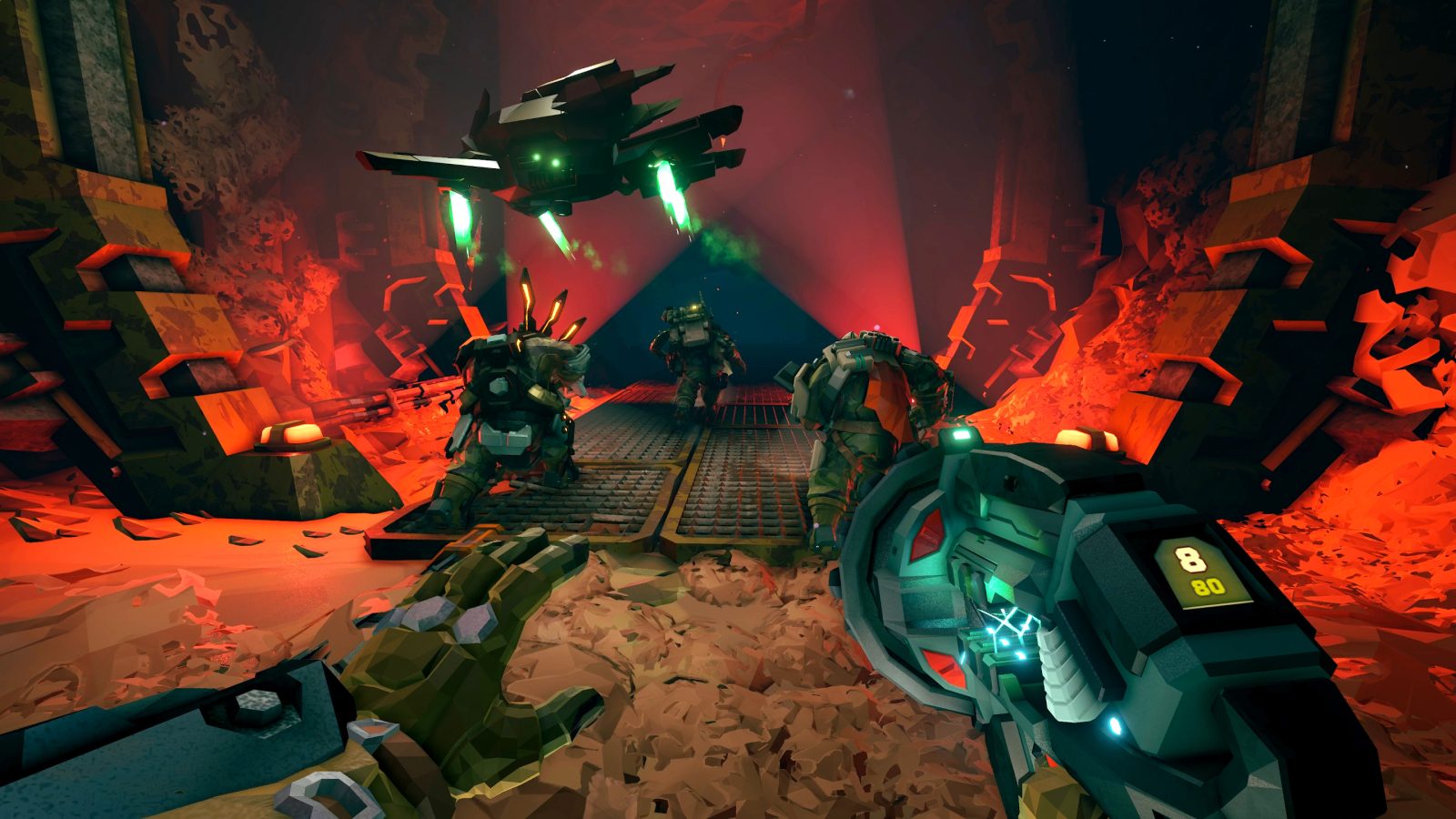
Deep Rock Galactic: Rogue Core is out now in Early Access. Giving players a tougher, more combat-focused experience than the original Deep Rock Galactic, while maintaining a lot of what made players fall in love with the first game is a tricky task, but Ghost Ship Games' Marketing Manager Aaron Hathway told us how they managed it. Check out our full interview with Hathaway below, and take a look at our review of the Early Access experience here.
Q: Was the Deep Dive game mode from Deep Rock Galactic a key inspiration behind Rogue Core, and how did you evolve the experience from the base game?
Hathaway: "Yes — many years ago, when Rogue Core was just a twinkle in our eye, it stemmed from us playing around with the Deep Dive mission model. We wanted to experiment with a longer, more challenging endeavor, with this sense that you really put a crew together and commit to fighting through it or die trying. It's been through a lot of snowballing iterations and evolved since then. When we started working on Rogue Core more seriously, we quickly realized that it couldn't be a DLC for Deep Rock Galactic. We'd really have had to dial down our scope and ambitions if we wanted it to all fit into Deep Rock Galactic. It's been much more motivating - and fun - to explore new gameplay systems, art direction, weapons and damage mechanics when we don't have to 'justify' or balance it with regular Deep Rock Galactic. If we tried to mash it into Deep Rock Galactic, we'd risk screwing up the balance, or diluting that game's own identity.
We've had a lot of fun with the freedom to build stuff like new damage systems, weapons, progression structures, characters and themes. We think it's in a good spot, evolving on Deep Rock Galactic and in some places breaking away from it entirely. Rogue Core is a spinoff, not a sequel. It's intended to scratch a different itch than Deep Rock Galactic, and to co-exist alongside it."
Q: As far as we could tell, you can only have one player on each class in a team. What's the reasoning behind this?
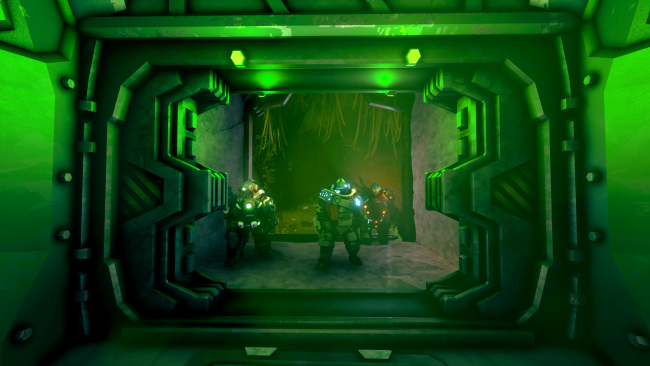
Hathaway: "We imagine the Reclaimers of Rogue Core as distinct individuals. Like, in the game's universe, there is only one Slicer, Retcon, Guardian, and so on — these are their callsigns, rather than general class descriptors. Having class exclusivity reinforces that, and creates more of a sense of a hand-picked team of operators to fit the whole feeling of the game."
Q: How familiar do you have to be with Deep Rock Galactic to enjoy Rogue Core?
Hathaway: "You don't have to be familiar at all, but it helps. Rogue Core shares a lot of DNA with Deep Rock Galactic, so many fundamental controls will translate — movement, shooting, mining, traversal. At the same time, Rogue Core's gameplay experience is quite different from Deep Rock Galactic. It's faster-paced, harder, and more combat-focused. We'd say the game's difficulty probably starts close to the 'Hazard 3' experience from Deep Rock Galactic, and it scales up from there. So in that sense, the Deep Rock Galactic approach of "chill in the caves and mine a bit" will probably get you killed here.
So yes, some core skills do translate. But it's a different game, so it's a different gameplay experience. It's also possible that not having experience with Deep Rock Galactic would mean players can more quickly adapt to what Rogue Core asks of the players. We'll see!"
Q: What can you tell us about the narrative element of the experience. How will players discover the story in the gameplay loop, and do you see the story as having an end, to build further on the Deep Rock lore?
Hathaway: "Like with Deep Rock Galactic, we go for a "show, don't tell" approach with the game's story and lore. There's not a traditional linear narrative arc. It's more about collecting more details, pieces of a puzzle that might (or might not) fit together, so you can speculate about what's happening. We always want to make room for players' own interpretations. At the end of the day, our players' collective imaginations are always going to be more interesting than any single concrete story we'd make. So in that sense Rogue Core definitely does expand on the Deep Rock lore, but it's rarely served up neatly on a platter. You'll have to play a whole lot to catch all the thousands of different voice lines, hidden interactions and tooltips, and decide for yourself how they fit together and what they say about this world."
Q: There are nine levels in the game, which is quite a lot of content already, but do you have plans for extended replayability if teams want to put in hundreds or even thousands of hours?
Hathaway: "Yes! The Enhancement Tree and Chip-based upgrade system, along with different Bio-Booster decks, introduce a ton of ways to change and re-focus your starting build, with lots of different ways to synergize with the upgrades you get during a run. Since the game is harder than Deep Rock Galactic, we'd say there's an overall higher skill ceiling, so more 'room to grow' for players looking for that. We're also working on the Gauntlet challenge mode, which is by far the most punishing difficulty level we've made in a Deep Rock Galactic game.
We're also looking at more progression that isn't necessarily tied to increasing difficulty. But again, it's too early for us to commit to any details there, as we'd like to wait to see what the players want and how they engage with the game."
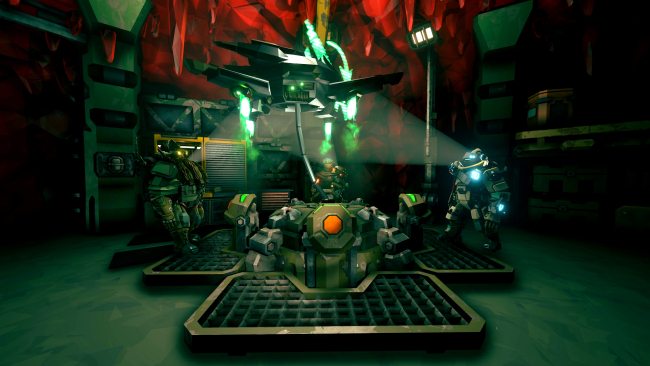
Hathaway: "The good ship Ramrod has been designed with a whole lot of extra space, so we've certainly got room for expansion if we need it. We've got a lot of ideas here, but this is a place where it's more fun for us to keep quiet about it and wait to see how it pans out. We'll put this on the Early Access roadmap, but it's hard to say exactly where it is on our list of priorities. A lot of the Space Rig 17 expansions and improvements only happened because of patterns we saw of how people were engaging with the space. In any case, we're always on the lookout for more ways to annoy OMEGA."
Q: I found the loot system in the game to be really interesting, as it makes players have to collaborate a bit more to get the builds and items they want. What was the decision-making process behind the loot system?
Hathaway: "The shared loot selection introduces friction, but we think a bit of friction can be fun. It ups the stakes, and nudges players to consider their teammates a bit more. If we wanted a frictionless game, we could turn off friendly fire too. But we keep that locked in for similar reasons."
Q: We've not yet got the 9th level in the game to go through, but how long do you expect players to take in beating all 9 levels and/or reaching the end of the "main" objective?
Hathaway:"Looking at the average player experience in Deep Rock Galactic, we wanted to make the main progression of Rogue Core something you can get through in about 40-50 hours. Keep in mind, this absolutely doesn't mean full completion — it's just the barebones core, like if you only do the 'main quests' and ignore all the side missions and collectibles.
This was designed so that a more casual player could still have a meaningful experience with the game. But beyond that, there's plenty to replay and unlock. We've already seen people logging hundreds of hours in the Closed Alpha, and much of that was on versions of the game that had less content than it does now.
As we keep developing after our Early Access launch, our aim is to make the core experience even richer for the casual player while also offering even more depths of challenge and progression toward someone who wants to stick with Rogue Core for hundreds, or even thousands, of hours."
Q: Are there any other roguelikes or roguelites you were inspired by when making Deep Rock Galactic: Rogue Core?
Hathaway: "Roboquest, Gunfire Reborn and Risk of Rain 2 come to mind first. Some of us in the office were really into Witchfire as well, but I think those first three are safe to call the biggest inspirations for Rogue Core's roguelite aspects.
Far Far West came out too late in our own development process to play a big role in our inspirations, but we'd like to give them a shoutout anyway because they've made a great game and we admire how they've tackled the co-op roguelike experience. Yeehaw!"
Q: Could you talk a bit about the overall gameplay philosophy for Deep Rock Galactic: Rogue Core and how it balances so much happening on-screen without overloading the player?
Hathaway:"It's tricky with roguelikes, as you often want to keep track of a lot of different upgrades and synergies and balance that with fast-paced gameplay. We mentioned our shared upgrade system, and in that sense, we think this actually can help people avoid that overload you describe — it creates natural breathing room, as it gives the team a moment to come together, discuss their builds, and check out what makes sense for them. The start of each level also tends to start somewhat quietly, unlike in Deep Rock Galactic which can sometimes drop you directly into an absolute hellzone. So we think that's also a nice chance to check out your upgrades and do a bit of strategic thinking.
This is also an area we'll be looking at as we develop further, to see if we can't find more effective and efficient ways to help players understand their build and all the information coming at them in the course of a run. Again, keep an eye out for our Early Access roadmap."