
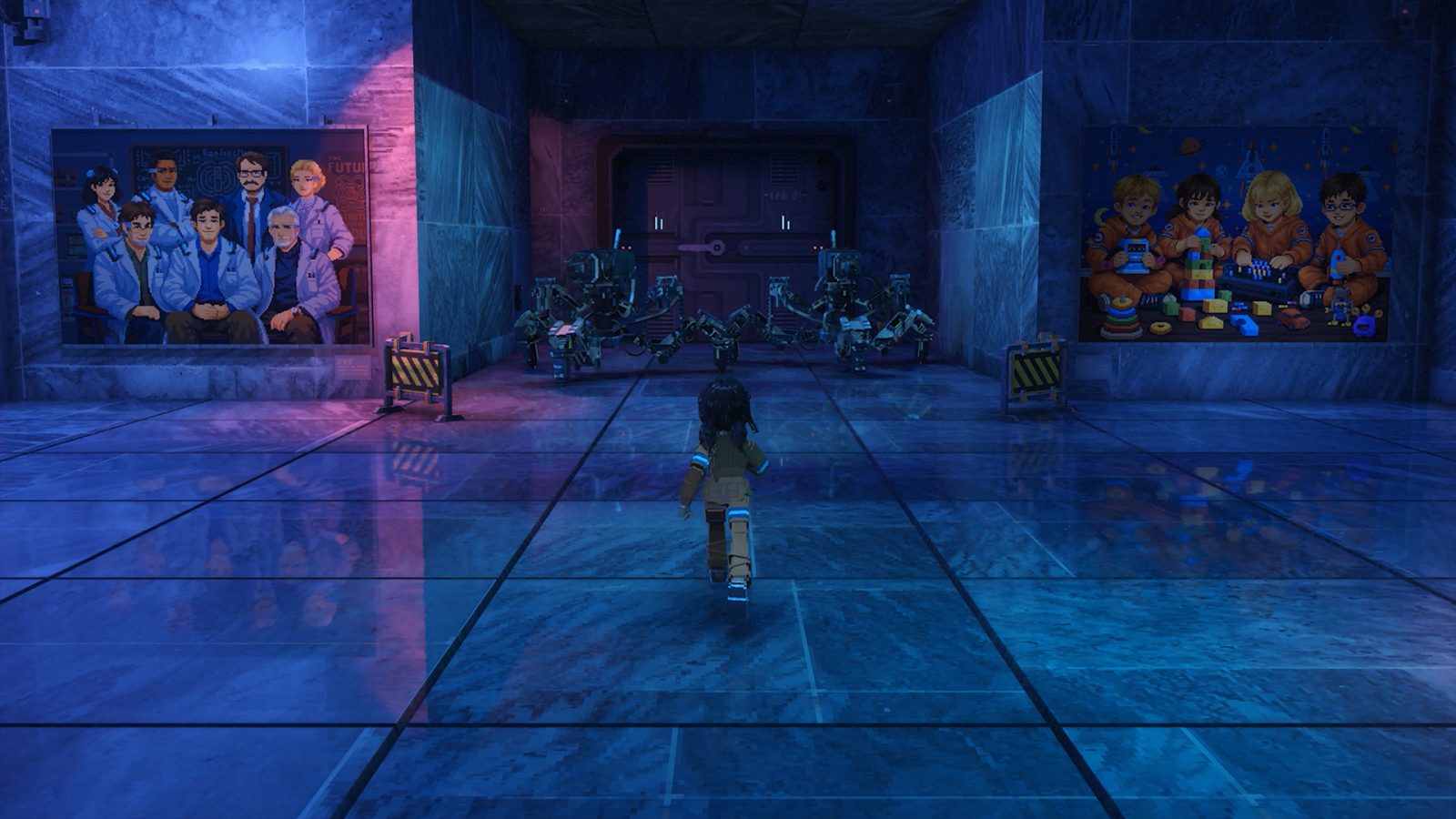
You may be familiar with Cococucumber and its recent hit, Echo Generation. The indie title proved to be an incredibly well-regarded game when it launched a few years ago, which is what made the announcement of a sequel feel fitting and timely. If you're a frequent Gamereactor reader, you'll know that this sequel, Echo Generation 2, has now launched and that our dedicated review of the game is available to read. But if you are searching for more from the project and the developer, we also had the luxury to ask the team at Cococucumber a few questions to learn more about the title.
To this end, you can see the complete interview with game director Martin Gauvreau below, where we touch on a variety of subjects, including its complex story, what the developer learnt from making Echo Generation 1, what Cococucumber's stance on AI is, Echo Generation 2's run time, and more. Catch all of this and then some below.
Gamereactor: What did you learn from the development of Echo Generation that you wanted to make sure you built upon or addressed in Echo Generation 2?
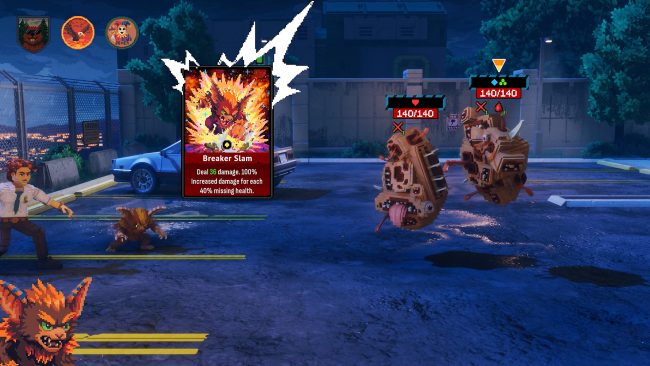
Gauvreau: "There were a lot of lessons from the first game, but one of the biggest areas we wanted to improve was combat depth. In Echo Generation, status effects and card effects were more secondary systems. In Echo Generation 2, we completely overhauled them to make them central to the gameplay experience.
"Now, understanding status effects, card synergies, and how abilities interact is essential to succeeding in combat. We wanted battles to feel more strategic and rewarding, where players are constantly thinking about combinations and adapting their approach instead of relying on a single strategy."
Gamereactor: What led you to wanting to explore the past and creating a prequel-esque story in Echo Generation 2?
Gauvreau: "We felt there was a lot of potential in exploring the story behind Jack, the missing father from the first game. Players only saw fragments of his story in Echo Generation, so we wanted to dive deeper into what actually happened to him and how those events shaped the world.
"Since the first game focused heavily on the kids and their sense of adventure, Echo Generation 2 gave us an opportunity to tell a more mature and emotional story through Jack's perspective. It also helped create a stronger connection between the two games, with Jack becoming a central figure that anchors the overall narrative."
Gamereactor: With the story being told from the perspective of different characters, what steps have you taken to ensure that it all feels connected and has a natural flow?
Gauvreau: "Even though the game explores multiple characters and locations, we made sure there were strong recurring themes tying everything together. A big theme throughout the game is the idea of home and returning home, which is reflected in characters like Jack and Bulder. We also explore the importance of family, both biological family and found family, through characters like Sister M, Annata Z, Strix, and Noliva.
"Another important theme is the question of who gets to be a hero. Each character approaches that differently, but together their stories create a cohesive emotional journey across the game."
Gamereactor: What kind of creative flair can we expect from the unique character-driven chapters? Did you use this as an opportunity to flex your creative skills?
Gauvreau: "Absolutely. We saw this as an opportunity to really push the individuality of each character and their story. The locations vary dramatically, especially in Noliva and Annata Z's chapters, because we wanted players to experience different parts of the galaxy with its own tone and atmosphere. At the same time, the shared themes running throughout the game help unify the experience.
"We also approached combat in a similar way. Different characters lean into different archetypes and playstyles, and we encourage players to experiment with builds, synergies, and combinations to discover what feels most fun for them."
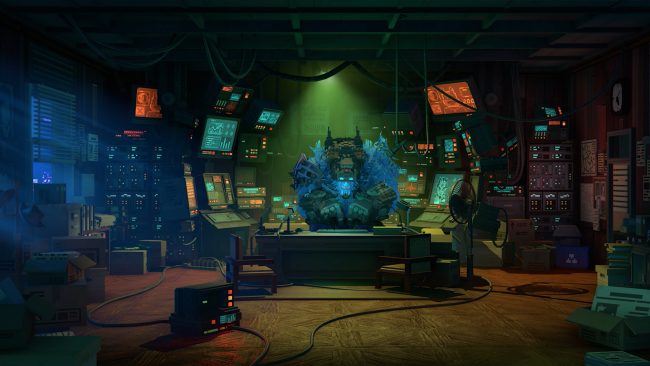
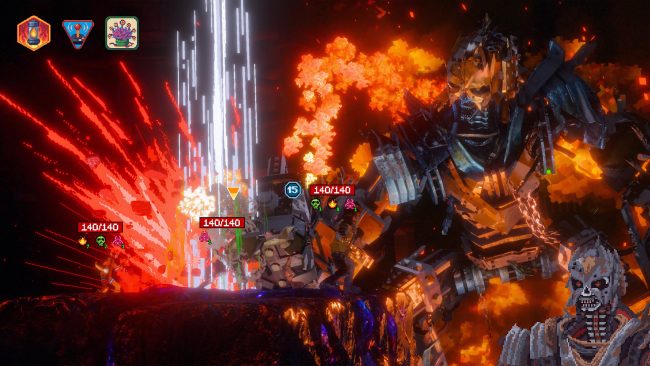
Gamereactor: What's your position on balancing the combat and the deckbuilding nature? Do you attempt to rein in the player at all, or do you like to encourage 'game-breaking' builds and combinations?
Gauvreau: "Early in the game, encounters are more controlled and players are introduced to mechanics gradually so they can learn the systems. As the game opens up, players gain access to more cards, status effects, and build options, and that's where experimentation becomes really important. By the late game, we want players to discover powerful or even "game-breaking" combinations.
"Part of the fun of deckbuilding games is creating builds that make you feel incredibly powerful, so we wanted to embrace that feeling rather than restrict it too heavily."
Gamereactor: What is Cococucumber's stance on using AI in game development, and was AI used at all in the production of Echo Generation 2?
Gauvreau: "Everything in Echo Generation 2 is handcrafted, as with all of our previous games. So much of the identity of Echo Generation comes from its artistic direction and attention to detail; AI cannot provide consistent results the same way.
"The voxel aesthetic is something we've continued to evolve and refine in the sequel. For us, that artistic process is an important part of the game's value. We wanted the world, characters, levels, and atmosphere to feel intentionally designed by artists rather than AI generated."
Gamereactor: How long do you expect a playthrough of Echo Generation 2 to take? How does it compare to Echo Generation?
Gauvreau: "We're aiming for a playtime that's similar to the first game, although it will likely be a little longer depending on how much players engage with combat and experimentation.
"Compared to Echo Generation, the sequel has significantly more depth across the board, from the world-design and storytelling to combat and character progression. A lot of players who've seen the game so far have described it as a major "glow up" from the original."
Gamereactor: This is the second chapter in the wider universe but how far do you think you can take Echo Generation? Would you like to make a third title or explore a spinoff adventure perhaps?
Gauvreau: "We definitely see a lot of potential in the Echo Generation universe and we're very open to exploring different directions in the future. That could mean continuing the main story, focusing on entirely new characters, or even experimenting with different genres or spin-offs within the same universe. Right now, nothing is off the table."
Gamereactor: If the opportunity arose, would you ever explore an Echo Generation adaptation, and if so, how do you think this could be handled?
Gauvreau: "We'd absolutely love to explore that possibility. An animated limited series in the style of Arcane could be a really exciting way to dive deeper into the world and characters. At the same time, there's also something very appealing about a live-action approach similar to Stranger Things, with an episodic structure that captures the mystery, nostalgia, and emotional tone of the games. The Echo Generation universe has a lot of storytelling potential beyond games."
Gamereactor: What's one part of Echo Generation 2 you feel people should be talking about more?
Gauvreau: "Echo Generation has always felt a little bit like a hidden gem to us, so honestly, we'd just love for more people to give the series a chance.
"If you enjoy the atmosphere of Stranger Things, classic RPGs like Final Fantasy VII, or strategic card-based combat games like Slay the Spire, we think Echo Generation 2 offers a really unique blend of those influences with its own identity and style."
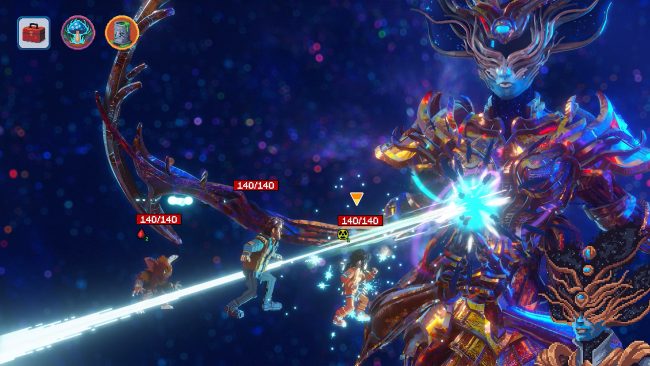
Thanks to Gauvreau and Cococucumber for answering our questions. You can now play Echo Generation 2, as the game has launched on PC and Xbox Series X/S.
