
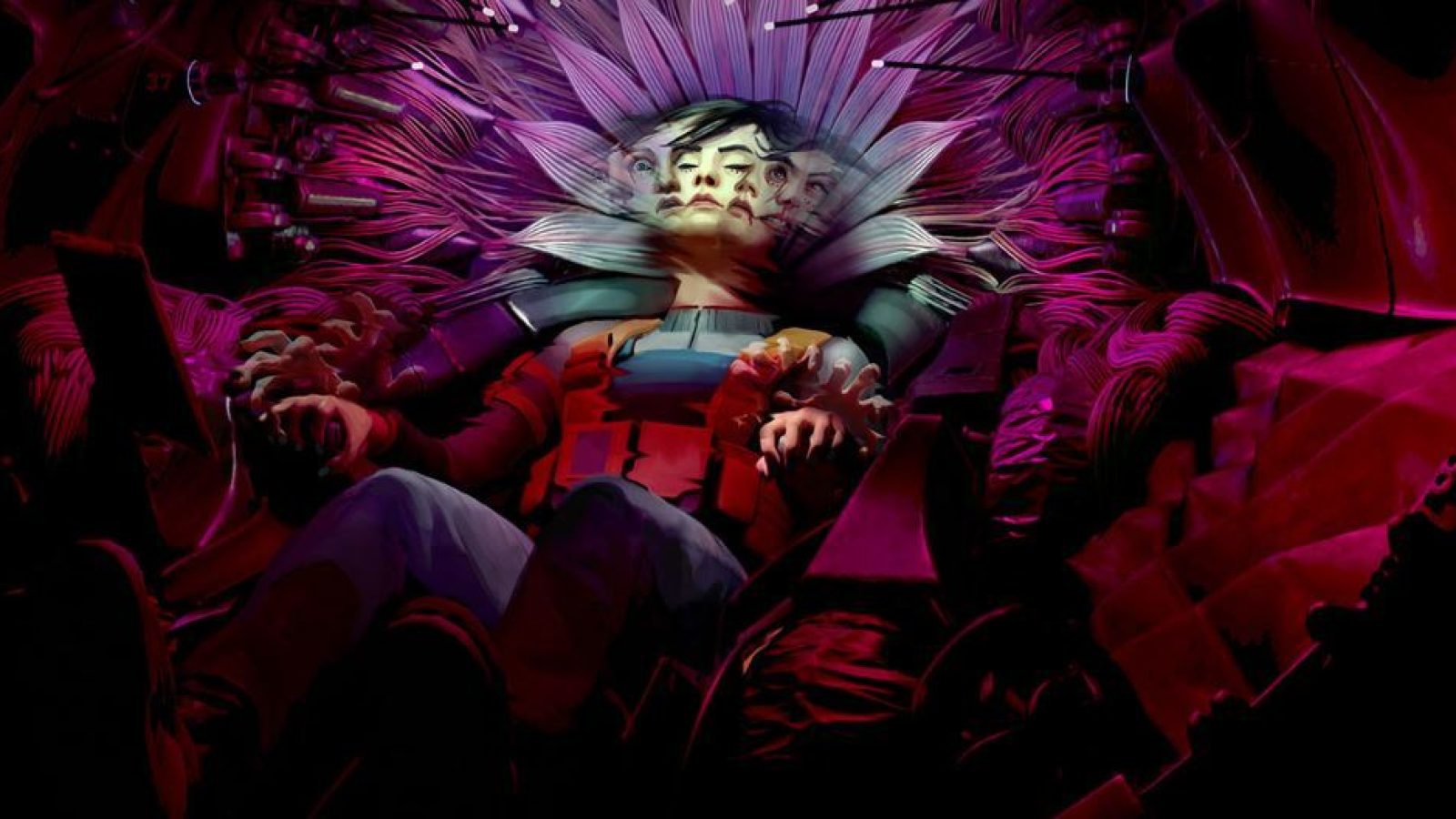
Ontos was revealed at last year's The Game Awards with much fanfare, given that it's the storied developer behind such horror hits as SOMA and the Amnesia series. While it can be considered a sort of spiritual successor to the former, it's also an entirely new beast, even if it continues to draw upon the studio's design traditions.
It's described as a "sci-fi adventure that takes you to the edge of reality," and that does seem to be quite obvious through the first gameplay teaser from the show. We had a chance to sit down with Creative Director Thomas Grip to not only ask about inspirations, and how actor Stellan Skarsgaard became involved, but also what the studio's stance is on AI tools in game development, and what kind of game Ontos will end up being once released.
Gamereactor: In more real terms, can you describe what kind of game, genre-wise, we're looking at here? Is this the more unnerving, suspense-laden horror of SOMA, or something more direct like The Dark Descent?
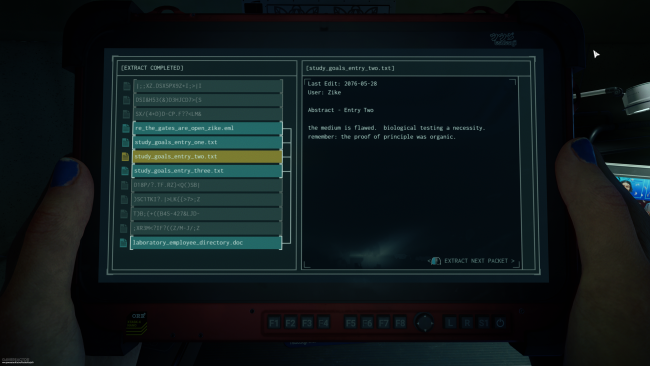
"Neither! I guess that it is closer to SOMA than it is to Amnesia, but it really is a new beast. All our previous games have had this core tension of being hunted and stalked by something. In ONTOS that is no longer the case, and the focus is instead on the player tackling these highly analog scenes, experiments of sorts, filled with choices, stakes, and disturbing subject matters.
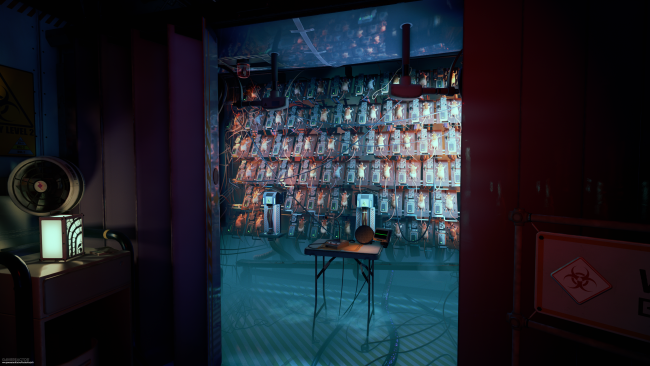
"As an example, the player comes across a guy that tells you he is trapped in a server made out of rats. You must now get to the bottom of what is going on and decide what to do. Make a wrong move and he might end up dead, or perhaps something worse...
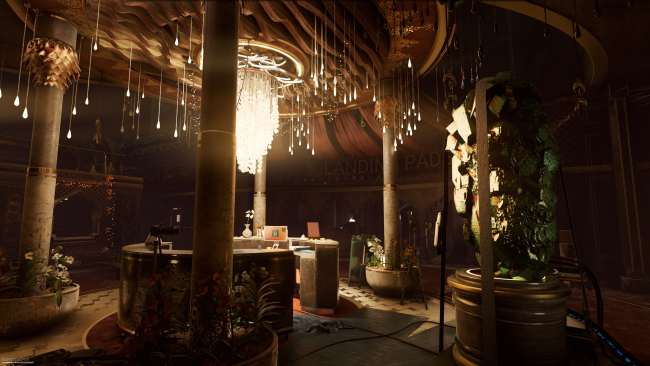
"So much of the game is the build-up to these scenes. You explore Samsara to discover facts, tools, and resources, and then these scenes put you to the test. There are other puzzles and encounters in between, but they are not the main focus of the experience."
Gamereactor: What kind of length can players expect? Do you have an idea of what an average play through will take?
"It will be very much up to the player. In a scene like the rat server one, the player can just choose to pull the plug, kill the person, and then exit with a much-needed item. That might take a player a few minutes if they brute force the puzzle in this way.
"Or they can spend an hour to search the scene, talk to the computer claiming to be a person, experiment with the equipment, and so on, managing to save them.
"There are also optional areas and other activities players might skip for more ethical reasons, or simply not find. On top of that, a big theme in the game is the idea of "how far are you willing to go to know the truth?" and play time is partly dependent on how you answer the question.
"All that said, a fast and casual player not really engaged with the puzzles might play for something like 10 hours. But a curious one, determined to uncover all of Samsara's secrets, can play for well over 20 hours - by far our longest playtime to date."
Gamereactor: Can you elaborate a bit on how Stellan Skarsgård became involved with the project?
"This is really all due to our publisher Kepler Interactive and their involvement. The game is very much driven by characters and how they deal with the themes that the game presents. So, to have performances that really sell and deliver these emotions and content is key to the experience.
"Once Kepler came on board, we were talking about hiring various actors we could consider in order to really bring this home. Stellan was brought up as a perfect fit for a specific role, and to my big surprise and amazement, we managed to bring him onboard.
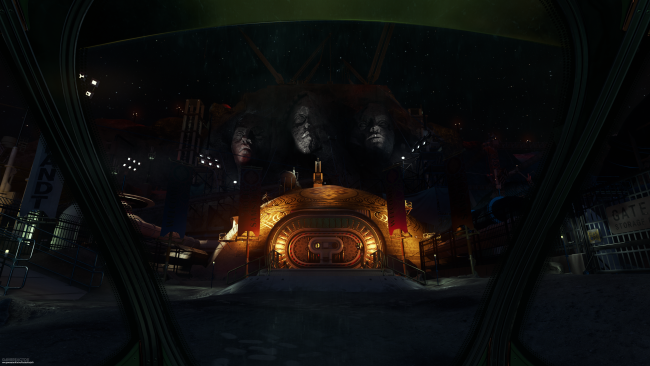
"He takes on the very complex role of Felix, the owner of the moon station Samsara, and Stellan does a stellar job at it. It is extremely cool for his first foray into video games to be ours. As a fellow Swede it really warms my heart too."
Gamereactor: The world of Ontos looks incredibly analogue and physical, which brings to mind the current debate over AI usage and the benefits of its usage in some cases. Can you perhaps explain or talk about how the studio sees these tools, and how, if at all, they are implemented?
"I feel quite strongly about not using AI for a few reasons. I work in this industry because I, as a human, love the creative process of making games. Why would I want to hand that process over to a computer?
"Similarly, I want to see art and stories created by other humans - things that have real thought and meaning behind them. If I feel that about the content that I watch and enjoy, why would I want to be a part in removing the humanity from art too?
"I think it is also a very slippery slope when it comes to control. When something is created by essentially nobody, who can you ask why there are certain decisions, details, and so forth? We are creating spaces and interactions that we want to have very specific meaning for the player and want to be very careful on the control we have over this process. That control is quickly lost when you start automating away the human input. We want to be extremely careful or risk losing a very core essence of the craft.
"Because of this, even creating quick mock-ups and such feels really wrong to me. I would much rather just do a shitty stick man sketch that an artist can interpret and go from there together. I think this is a much better way of talking about ideas and making meaningful art."
Gamereactor: In a game made up of puzzles of different shapes and sizes, that, in some respect, are supposed or designed to stump players, how do you approach difficulty? Are there specific difficulty levels, or ways for the players to tweak the level of challenge, or do you want to design the game around a very particular mindset when it comes to that?
"The way our bigger scenes work is that there is no "right" solution. There are only really choices and consequences. Some of these options might be more hidden and could be considered puzzles. But they are not required for players to progress and can often be mixed with another solution.
"It is hard to explain without spoiling but, as an example, when you encounter the rat server, you only really need to get hold of a key in that environment. Doing so is quite simple, and you can basically manage by just randomly interacting with stuff if you want to play it that way.
"However, careless players will cause misery and will potentially suffer consequences. Both in the moment and further into the game too..."
Gamereactor: Do you, as a studio, feel the pressure to broaden the appeal of your games, or what are your thoughts on the analytics that portray the gaming market as "shrinking" when it comes to these types of experiences?
"I have never thought of the market as shrinking. Quite the opposite! I know there are also more games than ever too, but you still see quality titles selling better than ever. So, I see it all in quite a positive light.
"Appeal is interesting. A game like ours (a mind-bending and disturbing experience about the nature of reality) is not typical Saturday night entertainment for some people! However, we still want to get as many people as possible interested in the things we want to create, and I really feel people are interested in these kinds of experiences if given the chance. So, you need to balance how you present the content and ideas and, overall, just make sure players have an engaging experience.
"The more people that can enjoy the game, without us diverging from the thematic goals, the better."
Gamereactor: If there's one thing you really want to make sure a player feels or experiences when playing Ontos, what would that be?
"For them to think of reality in a way they never considered, leaving them with some mixture of awe and a deep, existential dread that takes years to go away!"