
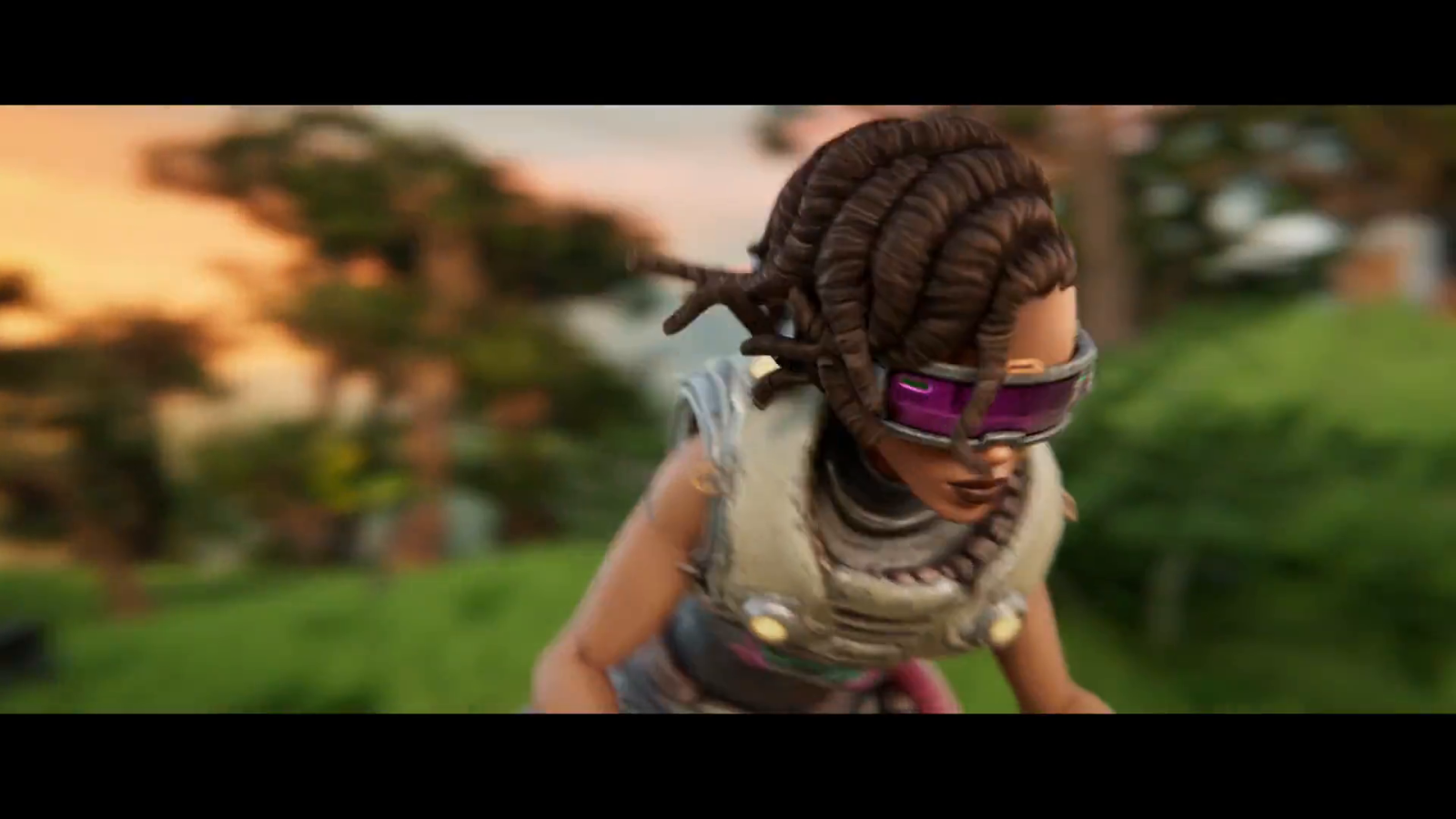
Borderlands 4 is launching in less than three months, and we had the chance to play over two hours of it, trying the new open, sorry, seamless world and how the new traversal mechanics will impact the gameplay and boss fights.
Later, we had the pleasure to sit down with Chris Brock, executive producer, and Taylor Clark, senior writer, who told us more about the innovations of the game, how they believe it will be a bigger evolution than Borderlands 3, and how they have tuned the writing and humour in this chapter...
Gamereactor: Did Borderlands 4 have the longest development period in the series?
Chris Brock: It depends what you mean by starting development. We tend to start talking about what we're going to do for the next game before the current game is finished. We start having early meetings, then we go into pre-production. That was around 2020, after Borderlands 3. And it's been a pretty heavy production for about three years. It depends on your definition. Borderlands 3 was pretty close. About five years of development.
GR: In Borderlands 4, was there anything you couldn't have done on PS4 or previous consoles?
CB: I don't think the world we made would have worked. The seamless world. We started making a game that had open world elements, but we didn't want a full open world. We didn't necessarily want to do all the things that open worlds do. We wanted to do the things we liked about open world games.
GR: So, I understand you don't like to call it open world. Do you prefer other terms?
CB: No, I don't like it. I prefer the term seamless. The key is that you're not locked out. You can start from the Fadefields and travel all the way to the mountains, and go back to other areas that we haven't talked about yet, and go back without really being blocked out.
Taylor Clark: I think the distinction for me is that we didn't want the baggage that comes with the open world term, like the idea of craft. Everything in Borderlands 4, the vast majority of what you interact with, is bespoke, largely story focused content. Why do I keep using the word content? (laughs) But that's most of what you're playing through. Not things that are there for the sake of it, or to trick and manipulate you to stay in the world.
GR: So even if the game wants the player to have more agency to explore the world, will it still be story-focused?
TC: We have more missions than ever, they are more diverse than ever, with more different tones than ever. But I think the magic of Borderlands, is that everybody approaches it differently. For some, the main story is what they're interested in, and then cut there. For some, they want to be completionists, and for others, the endgame is when the game really begins. So, I think there's a lot of options for people in terms of how they want to engage.


GR: Even if it takes elements from the previous Borderlands games in the story, will it be accessible for new players to start in Borderlands 4?
TC: Both, actually. It doesn't leave the whole series behind and start fresh. At the conclusion of Borderlands 3, we see Lilith warp the moon of Elpis away and sacrifice herself, and it all disappears. The question at the end of Borderlands 3 was, what happened to her. In Borderlands 4, in the first trailer we released, we see the beginning of the answer to that question. The moon comes crashing through the veil of Kairos, as the thing that keeps people in and the rest of the universe from seeing Kairos.
So, the planet is new, and everybody, from all the Vault Hunters and all our returning characters are experiencing Kairos for the first time, so we're all learning about it together. So, in that sense, it's a great fresh start for players, you don't need to know anything to understand Kairos and everything that's going on, but the people who invested in that story and what happened with the moon and with Lilith, will see their experiences enriched, by having that layer on top of it, if that makes sense.
GR: This game will be released on Switch 2. Was it easier to develop it on Switch 2 than developing Borderlands 3 and the others on Switch 1?
CB: Yes, yes. The Switch 2 has been an easier platform to develop on than the Switch 1. That's not to say that the Switch 1 was super difficult to develop, but the Switch 2 has been kind of more like what we are accustomed to develop on. I'll just leave it at that.
GR: Would you say it's on the same level with PS5 and Xbox Series X or more in the middle?
CB: It's hard to say for sure. It's powerful enough to develop Borderlands 4 and look great. I can't give you more details.
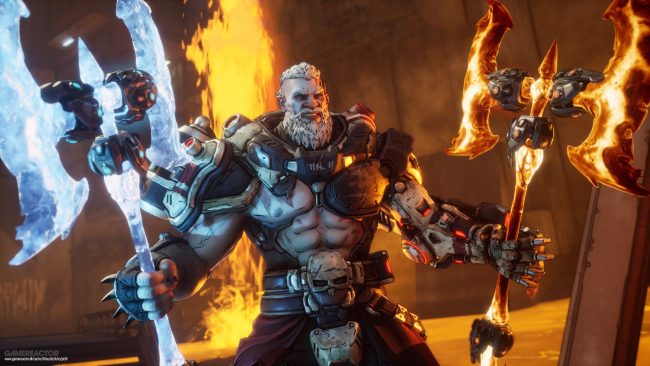
GR: Some of the previous games in the series have been criticised for not innovating enough. Have you responded in any way in Borderlands 4 to that?
CB: That's a good question. The time between Borderlands 2 and Borderlands 3 was about seven years. We had been gone for a while. We wanted to make sure that when we came back it was familiar. When people say it feels like more Borderlands, yeah, that was the goal. We wanted to make more Borderlands. We wanted to evolve, but we didn't want to change the formula so much that it didn't feel familiar.
But going from Borderlands 3 to Borderlands 4, one of the things we wanted to focus on was the traversal abilities and exploration. And that has led to the series evolving, I would say, more between 3 and 4 than it did between 2 and 3, for sure.
GR: We have four new playable characters. Who is your favourite character? In terms of story and gameplay.
TC: It's like asking your favourite child. I would say, uniquely in this case, normally when you write for a group of characters like that, you have your favourite character, and someone you don't like as much. That wasn't true for me, and I think for the other people on the storytelling team.
We enjoy writing for all the characters, we love their voices, and we feel super connected to all of them. So I go back to what I plan to play as a person.
CB: I won't say favourite, but for every Borderlands game, there's one character during development that I try to play less than the others. So I can have a fresh experience when the game is finished. This time, it's Harlowe the Gravitar. I said, I'm going to play her as little as I can while still being responsible. And when the game comes out, I'm going to play it at home with Harlowe. So I'll say Harlowe.
TC: I'm torn between Harlowe and Amon. They're very different people, with very different play styles.
CB: Vex is awesome. Obviously, when we make a game, we have to start with a Vault Hunter. We have to begin with one of them. And Vex was the first one we did. So I think we've played a lot of Vex so far.
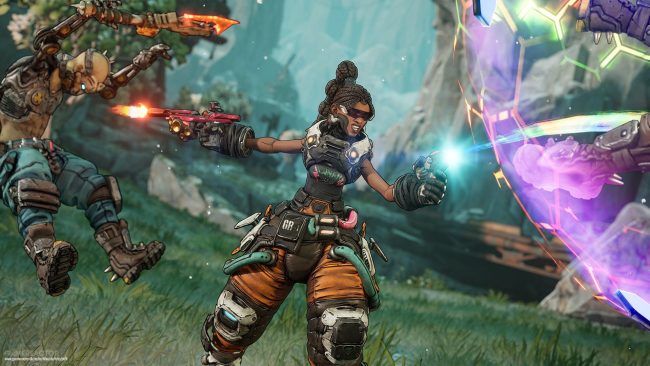
GR: You're saying that you want the humour to be a little bit different, drier, and grounded. Is that in response to some feedback from the previous games? Or did you want to make the series more mature?
TC: Yes, of course. It comes from various places. Of course, we listen to feedback and we value feedback and we take it seriously. Especially, people raise great points. And it would be crazy if we didn't take it to heart. But at the same time, the most important thing for us is to have a tone that feels like it makes sense in the world we're building and in the story we're trying to tell.
On Pandora, like the Wild West, the shotgun approach made sense. Because this was a world where anything goes. A world where everything was trying to kill you and corporations were trying to cut each other's throats. And Handsome Jack always looked at you and was talking shit to you. The slightly nastier tone made sense in that world. On a totalitarian, dictatorial planet ruled by this person with a iron fist, it makes less sense.
It makes less sense to have a tone like that. It wouldn't feel appropriate (like firing jokes from a T-shirt cannon) when we are under a horribly oppressed world. We tried to find the humour. It wouldn't be a Borderlands game without humour. So to find that tone in the world, in between the characters, find the humour and not trying to pull from the outside, like pop-culture references or stuff like that.
Don't miss our full preview of Borderlands 4 here, ahead of the game's launch on September 12, 2025.
