
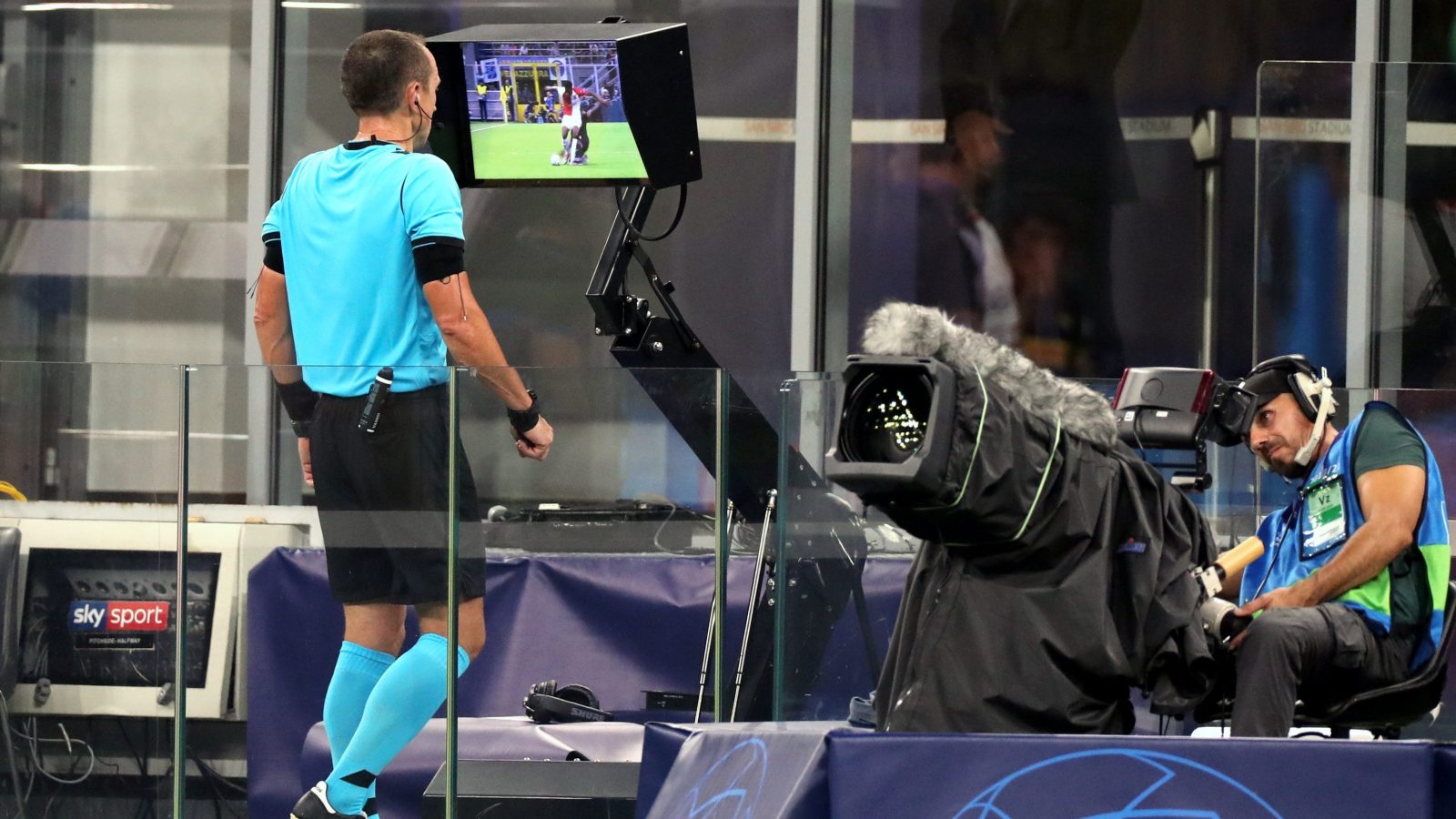
The new football season is almost here, and the European governing body of football has a clear goal: that VAR will only be used when it is strictly necessary, with clear mistakes, and will not be left at the free will of the referees, which can result in misuses or even abuses of VAR, leading to an extreme interventionism that has been responsible for the unpopularity of the tool among fans, eight years after it was introduced.
To help officials but also fans, players and coaches better understand when VAR must be used, and must not be used, UEFA has launched Clear Line, a guide to referee decisions in European football: a video library with over 150 clips from real matches, showing examples of good uses of VAR.
Basically, anything that is not depicted in the library is not suitable for VAR interventions, providing a clear guideline of uses of the video referee tool. Roberto Rosetti, UEFA's head of refereeing, explained to the media that this document "is designed to provide everyone with a clear guideline. It's not just for referees; it's for football. It's for players, coaches, fans, and journalists".
Five categories including mistaken identity
The library is divided in five categories: penalties, red cards, attacking offences, factual decisions and mistaken identity, one of the (still) most confusing topics after rules were introduced for the last World Cup, but were famously misused in a match between Switzerland and Argentina.
Mistaken identity is "where the referee has shown a yellow or red card for an offence but has clearly penalised the wrong player of either team, instead of the one who committed the offence in question", and they remind that "the offence itself cannot be reviewed", which is where the referee made a mistake with Breel Embolo, showing him a second yellow card after "re-refereeing" the offence, something that should not have been done.
