
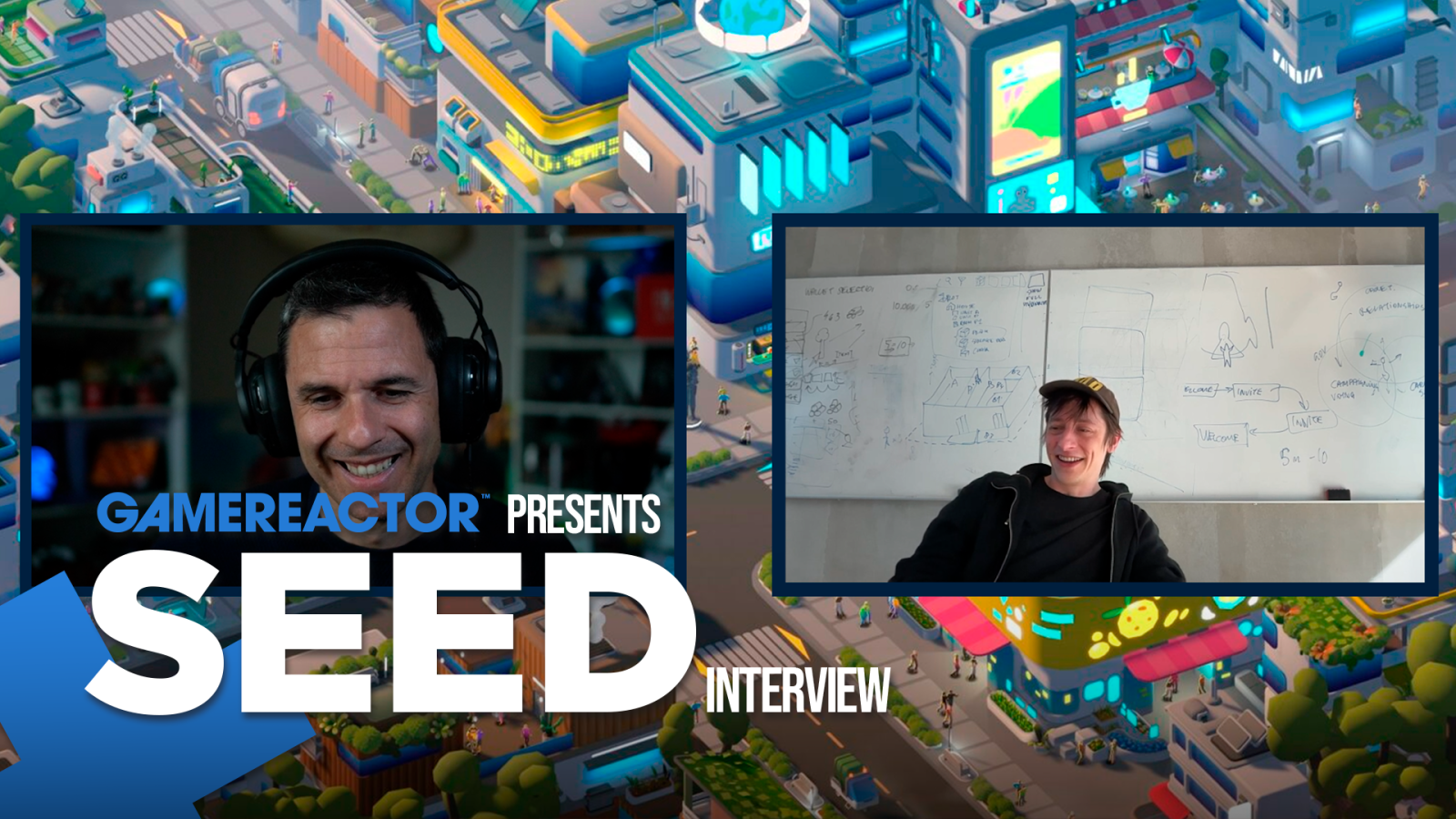
With a significant evolution in the past year, an ongoing closed beta, and a beautiful Björk-infused cinematic trailer released last month, we wanted to learn more about living society MMO Seed, a project we had been following since 2018-19 and that seems to be flourishing into something special.
In the interview below, we sit down with Klang Games' CEO and co-founder Mundi Vondi to talk all things Seed in-depth.
"So it's still the same vision", Vondi describes when comparing the current build to the early version we got to know originally. "But I think just like the concept of building a multiplayer simulation like this has just led us to places we maybe didn't expect, and so I think as we look towards the future there's maybe a little bit more clarity around how this is supposed to work. I think the vision has always been, you know, something exciting that we've all been excited about but achieving it has always been a bit of a mystery and that's maybe why it's taken so long (...) but we're really starting to see the fruits of that labour now and players are really having fun in there, building cities and simulating societies".
In the video, the CEO explains that, after going into a kind of stealth mode following the last public push around 2019, Seed pivoted several times, from the more survival-oriented Seed Pioneers, back towards a live-sim direction, and now into a hybrid that combines life simulation with survival elements. The result, he says, is a tone that is less black and white, allowing the game to embrace "utopia and dystopia and everything in between."
"For the first time", he continues when asked about the core social interactions between users and Seedlings, "players will be able to build societies with more than a thousand people together. What we've always aspired to do with Seed is to create that type of playground where more players can play together than before. Finding a way for so many people to play together is the true challenge of Seed, but what it does bring is a very deep social cohesion."
Players, as he explains, are constantly communicating, debating how to run their societies, what to produce, which laws or policies to enact, and who to vote for as their next leader:
"You're not playing with your hands stuck to WASD and the mouse. You're doing a lot of communication. I would say it's pretty damn social. It is a game about collaboration and competition. There are no monsters in there at the moment; it's just other people. So it's all about how people work together or against each other, and create those emergent stories that come from that."
However, even if there are no monsters, we also wanted to go back to the matter of violence within these societies we discussed some years ago.
"We're actually just introducing Law & Order in the following months," Vondi announces, "so we did want to put it in the trailer before actually having some of those mechanics in the game. I want to be completely honest: it is a cinematic trailer to show what we aspire to achieve".
"It might sound counterintuitive to working together, but we want violence in there"
"If we look at games like Sims Online or Habbo Hotel", the CEO then compares ironically, "that had really strict non-violence policies, you end up with different types of violence, violence that you can't really fight against. In Sims Online, players used [to] pee on each other's lawns to harass one another, and it actually had one of the most sophisticated cyberbullying mafias in gaming history."
That inevitable conflict is the reason why, he says, Seed needs systems for law, punishment, and even force.
"In some ways, violence is a necessary evil. What we've always wanted to avoid is a situation where you have an admin that can be a tyrant and nobody can do anything about it. If you want to bring down the government of your society, you should be able to do that by force. But it's also about self-policing, so having law and order and consequences to your actions is where it all boils down to."
Vondi then adds that those consequences may be severe, including players being extradited from their society if they misbehave, with the idea of growing a healthier player base than in other multiplayer games where toxic behaviour carries little real cost.
- Don't miss: PEGI explains its "biggest update yet", from interaction risks to why Steam and Apple are missing
Seed's narrative depends on your approach: from hardcore survival to guiding breadcrumbs and life-sim-like established societies
Finally, and with the complexity that comes with a full social simulation, we wanted to understand how you actually play Seed and how much hand-holding we can expect in the first few steps.
"A lot of it depends on how you start the game", Vondi reveals. "If you start with a group of friends and you want to build a society from scratch, then you deploy together in the middle of nowhere and you have nothing. It's actually quite hardcore; I would maybe say then the survival is at its very peak."
From there, players have to secure water, food and shelter, cook meals, clean drinking water, and deal with infections or injuries caused by basic tasks such as chopping trees, as their characters begin as unskilled labour.
"It's quite hardcore, but really engaging, and I think that's quite fun. Then we do put a lot of helpful guardrails for you, so we tell you what you need to do to progress to the next phase of society."
Vondi says this more guided structure came from seeing how overwhelming it could be when new societies unlocked the full suite of political tools too quickly.
Besides the current closed beta, we expect to learn more about Seed in the summer. For more insight, play the fully-subtitled interview above.
