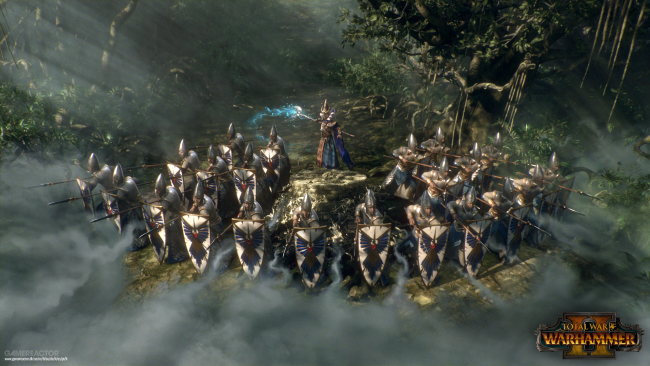
This week Creative Assembly unveiled Total War: Warhammer II, in the process revealing three of the four new races appearing at launch (which is scheduled to happen at some point later this year), and two separate campaigns to keep players busy.
One of the campaigns will traverse both the new map and the one from the original (thus you'll need to own both games), while the other will just focus on the new map. It's in the campaign for the standalone Warhammer II that we're going to see an innovation from the studio that should see the end-game get a whole lot more interesting.
"The one thing that does bind [all of the races] together is that we've got this - and it's probably the most adventurous bit of narrative we've ever built into a Total War game - we've got an overriding piece of narrative that is driving all those races via their objectives, in a kind of a race," CA's Al Bickham told Gamereactor ahead of the reveal of Warhammer II.
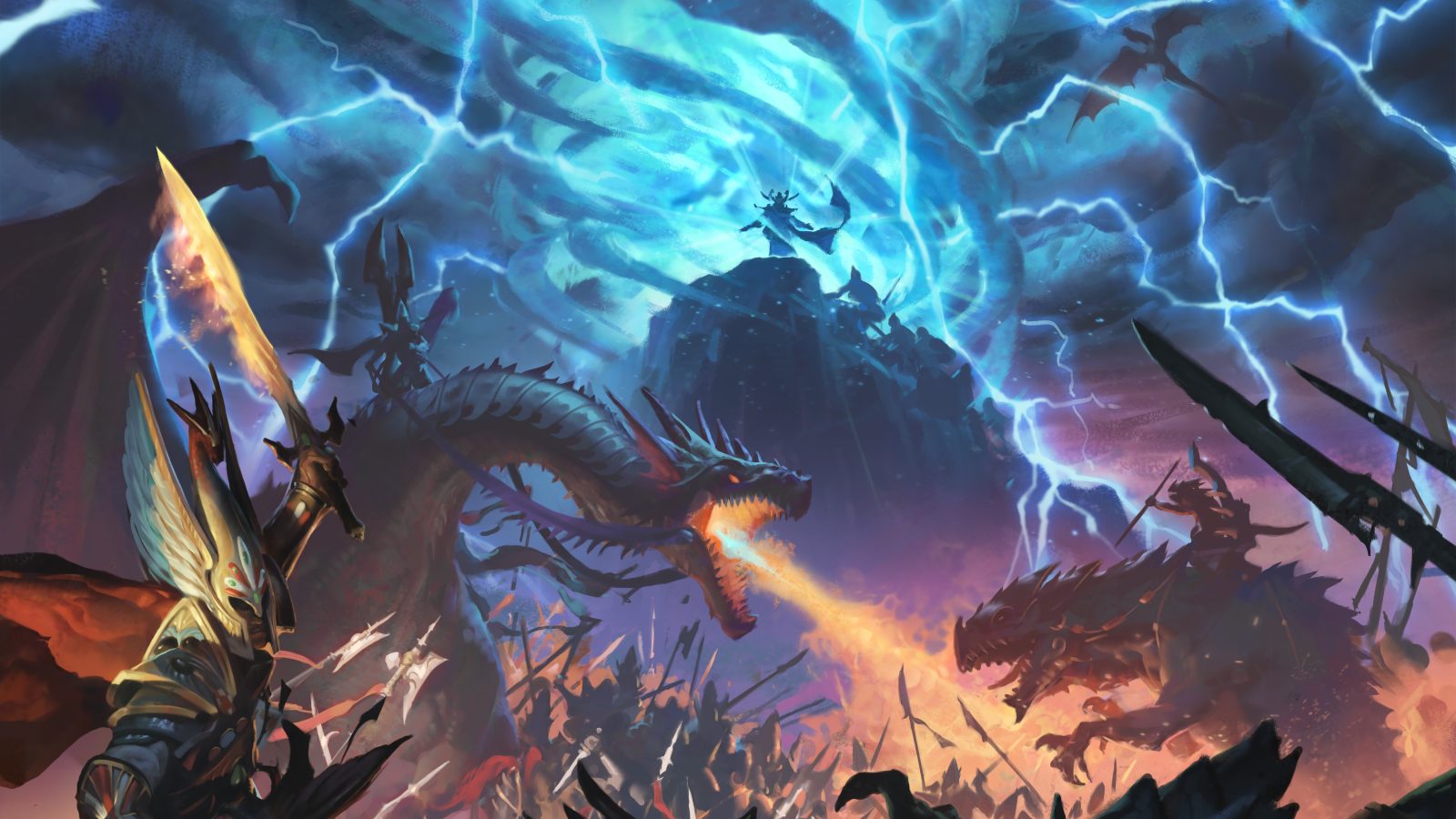
"And it's all based around this thing called The Great Vortex, which was forged by the high elves in ages past, to basically blast a massive chaos invasion back to the Chaos Wastes, back the Realm of Chaos. And this vortex, which is hovering above Ulthuan - you'll see it on the campaign map kind of swirling away, it's the heart of the campaign map effectively - has become unstable (an event has happened in the world to make it unstable), and each of the races needs to get there first through a series of neat in-game mechanics."
Game director Ian Roxburgh explained further, telling us that how it "creates a narrative within the gameplay, but not in a linear way. Again, people can play the game and just play the normal sandbox Total War style, not engage in all that, and just go for world domination. To us that sandbox gameplay is sacrosanct to Total War. But if people want more of a story line and a narrative to give a bit more context and build the world out and the flavour of the world, then it's there for them as well."
The key, according to Roxburgh, is to build in a challenge that could see players fail in the end-game: "You can actually lose the game even if you've conquered vast amounts of territory and you own most of the world," he warned, "whereas previously in Total War once you get past a certain tipping point it's pretty inevitable that you're just going to go through the motions and win the game."