
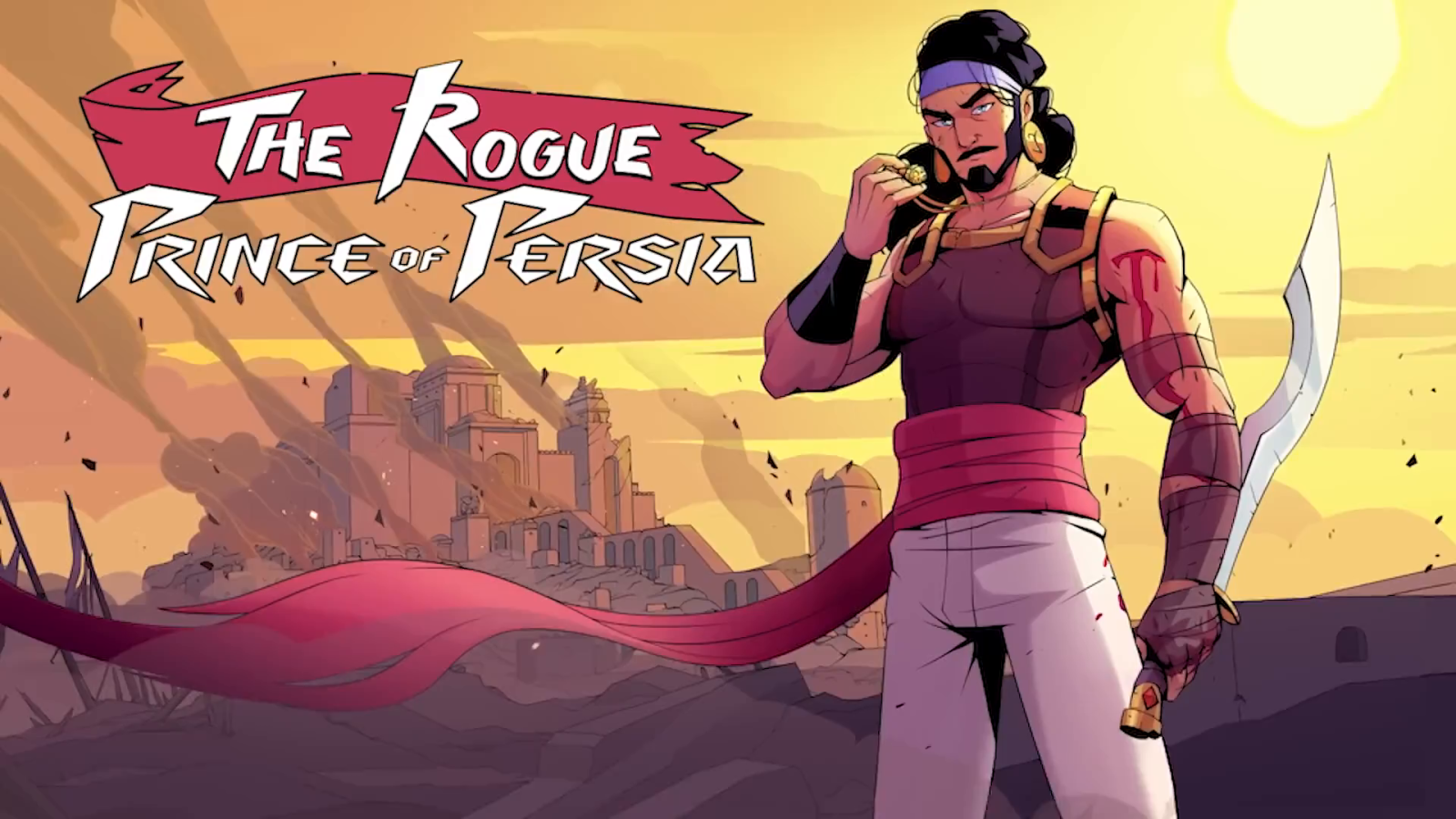
After not showing signs of life for many years, the Prince of Persia series returned in 2024 with two titles: the phenomenal but overlooked Metroidvania The Lost Crown and a roguelite in the form of The Rogue Prince of Persia. The latter was an Early Access release, but now the 1.0 edition is finally here. Fans have been following it with excitement and it's time to see if the full game can live up to expectations.
Early Access games can live a kind of suspended existence of pure potential, free from the usual critical gaze. The good ideas can be allowed to shine, while flaws and shortcomings can be more easily forgiven as the game isn't finished yet. There are bad examples of games that have existed in this way for over 10 years, but fortunately there are also good examples where developers manage to use Early Access to shape the game in a positive direction while keeping the economy afloat. Baldur's Gate III has done it, the Hades series has done it with great success, and The Rogue Prince of Persia is fortunately also one of the good ones. Evil Empire has put together a beautiful, well-rounded experience that seems complete and finalised with its update to 1.0.
The first thing you notice when you start Rogue Prince is the distinctive graphical style. It has a unique and cartoony style that can't really be found in other games, pointing more towards Tartakovsky's works such as Primal, Samurai Jack, and Clone Wars. A year ago, the style was even more unique, but based on audience feedback, they gave it an overhaul. In particular, the character design became more detailed, the faces got more features and more expressive in the eyes, and the prince's skin became, well, skin-coloured instead of purple. The changes are more appealing, I guess, to a wider audience, but it also lost a bit of the uniqueness of the style. However, the game still excels in its immediate visual appeal. It won't be to everyone's taste, but it's artistically strong and interesting regardless. Unfortunately, it's not always utilised to its full potential and the game can become boring to look at in the long run, but that's just as much down to the level design.
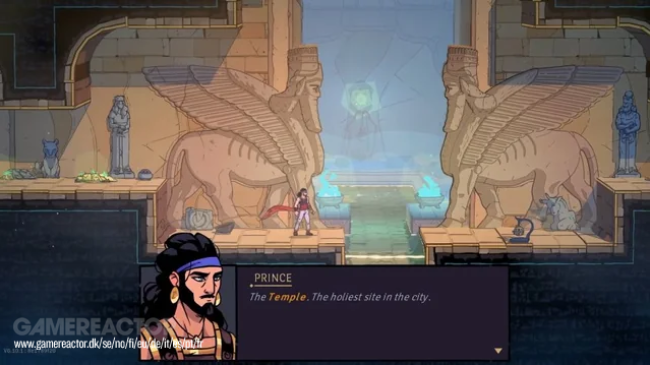
Rogue Prince is a 2D roguelite game by Dead Cells developer Evil Empire, which made a name for itself as a winner in the genre, especially with the Return to Castlevania expansion, and one can easily imagine Prince of Persia being brought up as a possible DLC as well. In any case, it's clear to see that Rogue Prince is related to Dead Cells. The levels are structured in the same way. Often you move through rooms and tunnels that are partially randomly placed. Certain items are a regular part of the areas, but they may be placed in new locations. Unfortunately, the visual style is lost in this level design. Most of the time you're running through corridors where the rest of the picture is really just the earth's crust or a building cut across. Therefore, nothing happens in the majority of the image, it's just empty space filled with colour and a discrete pattern, and since the genre dictates that you have to go through the same environments over-and-over again, it unfortunately becomes boring to look at in the long run. There's the yellow lane, the blue lane, etc. There are moments when you step out into the open and the background is allowed to live. This is where the game really becomes beautiful and you get a better idea of the universe. It just happens too rarely for you to be properly taken into the otherwise beautiful world.
The same problem applies to the soundtrack. The music is great, a kind of Middle Eastern neo-folk, but some tracks have a character or a melody that is repeated so many times that it will haunt you in your sleep. I've been playing video games for a few years now, and maybe it's just me, but I've reached the point where it's a real sin in game design to subjugate gameplay with annoying tunes.
If you've played Dead Cells, you'll recognise many elements in Rogue Prince. As it is a roguelite, every playthrough is characterised by randomness. This applies to how an area is structured, but also to the equipment you are given. You can't choose in advance which weapons you want to bring, but you can gradually unlock more and more. This is done by collecting the souls of the invading Huns. When you get back to the start, you can use these to either unlock more weapons or amulets. The amulets can have effects on all attacks and give you other boons. For example, one amulet can give you a 20% chance of setting an enemy on fire and another can give you 20% extra damage when attacking an enemy that is on fire. So you can quickly see how weapons and amulets can be combined in very powerful combinations. As the equipment that appears during a playthrough is partly random, you can't plan for the perfect combination, but instead you have to be flexible and change your strategy along the way. But this is a good thing and can lead to surprising developments. A run that seems hopeless can suddenly turn out to be the one that takes you all the way to the boss as a sudden new synergy emerges.
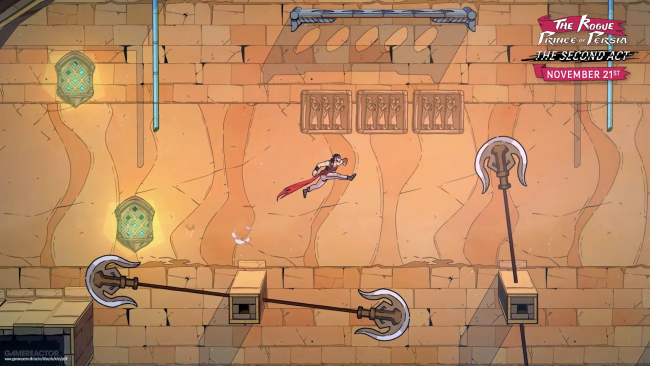
Although combat is reminiscent of Dead Cells, there is far more finesse to it in Rogue Prince. This is mainly due to the dynamic way the Prince can move. This is perhaps the best movement/parkour system in any 2D game, and the dynamics come from the ability to run on walls. The Prince can run a set distance on a wall which resets your jump and dash, so you can jump again and run on a wall again etc. Since you can't use shields or parry enemy attacks, it's essential to utilise the Prince's agility and speed, especially when there are many enemies on screen.
Although the combat system is good, it suffers from the same problem as the other aspects we've mentioned; that it can get a bit boring in the long run. However, this is less to do with the system itself, but the enemy design, which is monotonous. There is a wide variety of opponents that attack in different ways. However, they eventually blend together and there aren't many that are really memorable or stand out. Visually, there are 50 degrees of grey: there's the little grey, the big grey, the grey that shoots, etc. However, this does not apply to the bosses, which are all memorable and highlights of a run. Movement and parkour are also not properly utilised. It's almost a shame that such a good and fluid system isn't used in a more interesting level design. In The Lost Crown, there were plenty of sequences where you had to fully master the Prince's movements in order to get through, but they're not really there here. Sometimes it tastes a bit like that, but perhaps because the levels always have to be partially randomised, it hasn't been possible to create similar sequences. That's not to take anything away from the fact that the overall gameplay is well designed and fluid. Evil Empire has obviously put a lot of effort into fine-tuning to a degree where you always feel in control.
In a roguelite, there should be a reason in the story for the protagonist to die over and over again and slowly get better. I don't want to give too much away here, but the Prince is in possession of an amulet that brings him back to life, or rather takes him back in time to the last place he slept. The story in Rogue Prince therefore takes place during a day when Persia has been invaded by the Huns, which then repeats. You start the day in the Oasis. The Oasis is a pocket outside of this time loop, and therefore the Prince can have a development in relation with the people he meets and saves back here. Instead of quest lines, you have a mind map. As you gather information from the different paths, different events are linked together. In a way, this allows the Prince to be in several places at the same time, for example, saving several people who would die at the same time in the timeline. It's a really cool premise that basically works well, but it could have been utilised more. I would have liked to see greater consequences later in the timeline based on the problems you solve earlier in the timeline.
It took me about 25 hours to unravel the mind map and arrive at the "true" ending. I didn't feel like I was missing anything or there were threads I hadn't followed. The Rogue Prince of Persia is a really well rounded and finalised experience, which can almost be refreshing in a genre that can go on forever. It also lessens the impact of the game's problems, as they simply don't have time to become major issues. The Rogue Prince of Persia ties all aspects of the genre together into a solid game that will excite fans of roguelites and newcomers alike.