
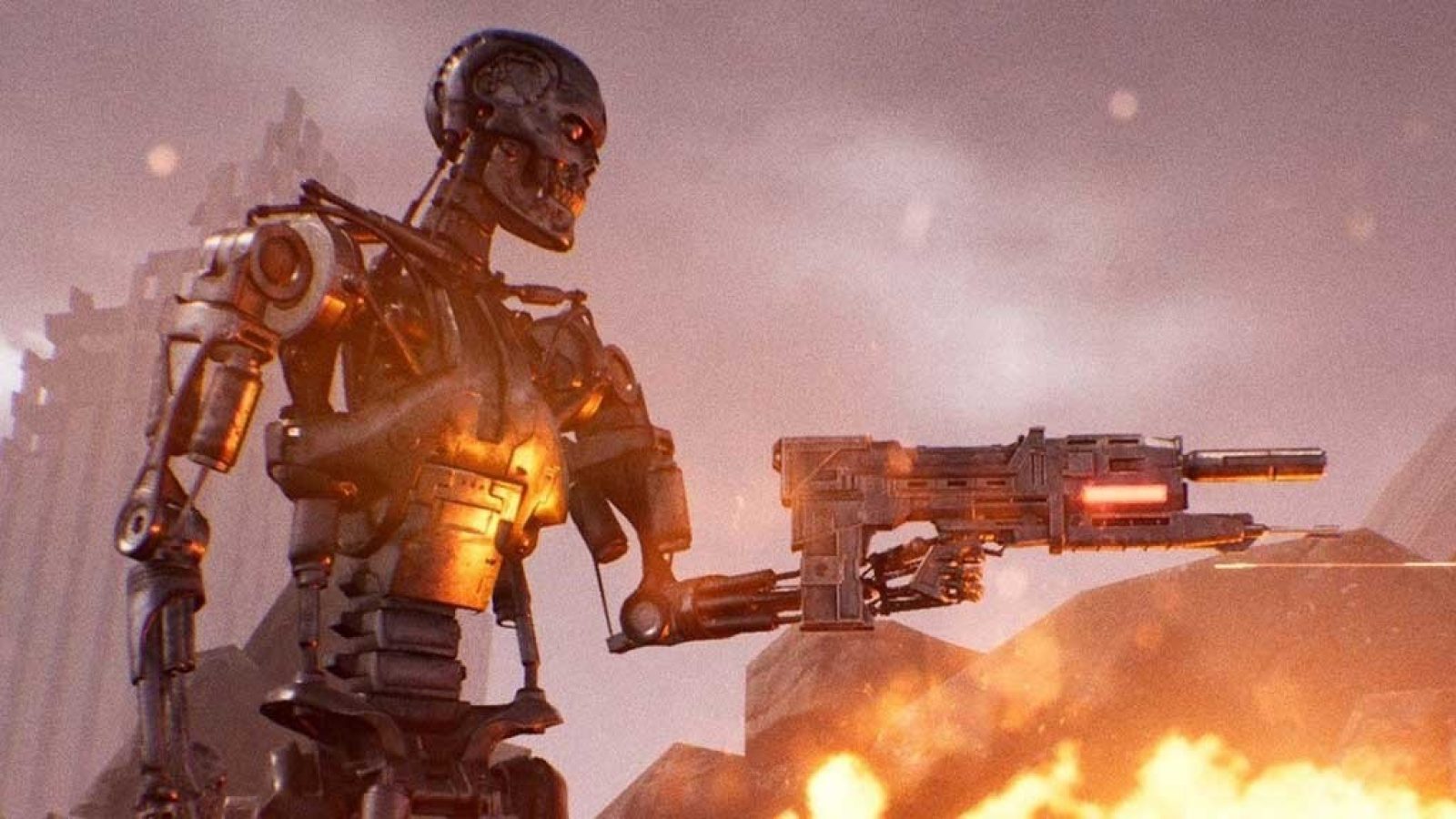
Explosions, skeletal metal robots, purple plasma shots and thunderous music are probably something everyone recognises from the Terminator universe. Slitherine chose a different path than letting us prevent the danger and instead let us see the future in their Terminator: Dark Fate - Defiance. We didn't have to worry about stopping the development of a murderous artificial intelligence that wants to wipe out humanity, as it is already well on its way to murdering humanity when the story starts. You may remember the intro in the second film or the war sequences in Terminator Salvation. We take on the role of leaders of a resistance movement in the fight against the Dark Fate version of Skynet called the Legion.
Although Terminator: Dark Fate - Defiance was buggy and had its technical shortcomings when it was released, the work done to update the title since then by Slitherine has led this to become a very competent strategy game, which I can recommend today. Even the first expansion We are Legion offers a nice addition to the base game where we take on the role of the machines in a reasonably long campaign. In this review, I will focus on telling you what I think of the latest expansion and third campaign called Uprising.
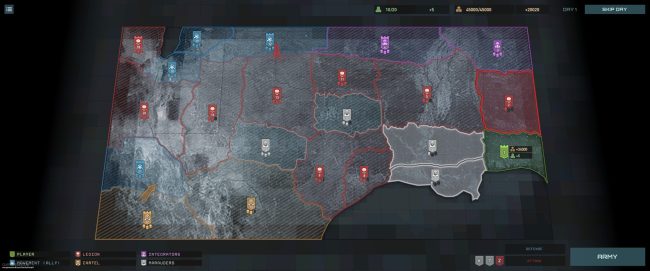
The world map where you decide what to do and where. Blue are allies on the map and you are represented by the green colour.
Uprising retains the tactical depth of the battles, the slightly clunky system for deciding which troops to bring into the fight, and a brand new open campaign structure. You also get control of a couple of new troop types. When you start the expansion, you're greeted by a map divided into 22 different territories. Each faction owns a single region of the world when you start and the campaign is all about defeating your rivals. You do this by conquering the regions and attacking them. You can also defend an area or help other human factions. When this is done, you get to play a mission in the game's real tactical mode. Each region you own gives you a currency you can spend on your troops. You are completely free in what you have access to and what strategic decisions you make. To unlock new vehicles, troop types and other things that can help you, you need to take over regions. Both the real tactical and strategic modes are interdependent and you need to interact with both to win.
During attack and defence missions, in addition to fighting the enemy, you can also take over vehicles. The downside is that the infantry that controls the vehicles does that task. However, you can ask your troops to get out of the vehicles and choose not to take these vehicles on the next mission. An important component of the campaign is knowing what to bring into the missions and what to take out of the missions. If your troops die, you may lose valuable weapon systems and vehicles. What the enemy has can also be captured and used if it is not totally destroyed during the battle. With such, you can also upgrade and change how troop teams work and what they can do on the battlefield. This is important because of how unforgiving this game is. Your troops die quickly and you need to use positioning and terrain to your advantage.
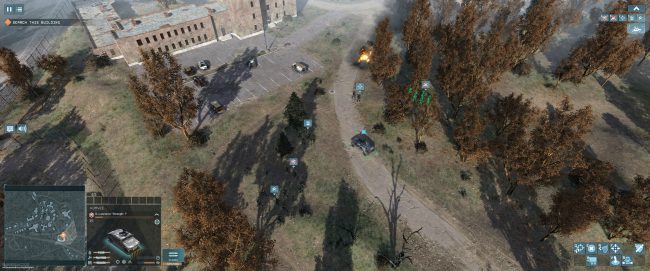
The battles are relatively unchanged. You try to complete missions as usual.
One of the reasons I like this game is because of the tactical decisions you need to make both during and after the battles. Unfortunately, I find this campaign with its four factions of which one is playable, not as interesting as its two story-driven predecessors. Something more is needed to really lift this new campaign to greater heights. It could be things like more spontaneous events, more unique quests, diplomacy with human factions. At the same time, it's hard to complain when you have so much more decision making during each mission and the battles are so engaging. Hiding troops in ambushes, attacking convoys of enemies, and dealing with ammunition, fuel, and extremely vulnerable troop types is a lot of fun. If your vehicle comes under fire, it could be a matter of time before it becomes completely unusable. However, with good positioning, smoke grenades, patching and more, you can still salvage vital pieces on board.
In this game, the machines are far more powerful than the humans. You have to use your more mobile troops and find vulnerabilities in their positioning. It adds complexity because of the dynamics between the factions. Another aspect that adds to the difficulty is that this title also models logistical aspects of warfare. However, it should be said right away that the supply chains are quite simple in this game. There are two ways to do this. The first is to use earned currency at the strategic campaign level to replenish your troops' supplies of ammunition, personnel and fuel. You also have the option of using two types of lorries that can follow your troops and do the same almost on the battlefield. Because the game simulates this, it adds an extra strategic dimension and vulnerability. Your enemy can destroy these and if your vehicles run out of fuel during the mission, you may have to abandon them. This in turn can weaken your situation and position in the level.
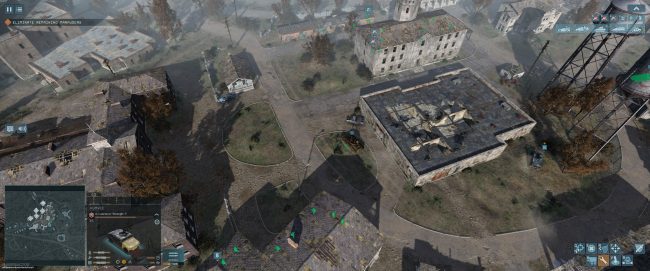
These missions you undertake are more of skirmishes rather than campaign missions with storytelling.
While I'm not particularly interested in fighting human enemies in this game, they still offer some variety. If you want more freedom than in the base campaign, it can be had in this downloadable content. One aspect of Uprising that I think needs some expansion is the mission variety. There are only a few types of missions that are randomised over and over again. These tend to be repeated a little too often. On the other hand, the problem is not just the game modes but the behaviour of your computer-controlled opponents. They are a bit too passive on the battlefields even during defence missions. However, I like when other factions ask for help during their missions, this can weaken the enemy and strengthen your own position. Over time, you can also become allied with human and semi-human factions. This can lead you to be able to recruit their troops. The Legion, on the other hand, is compensated for this by being able to attack any region they want without having conquered the neighbouring one first.
The title has not noticeably changed in terms of sound or graphics. Graphically, it's a relatively good looking strategy game and offers good sound and sound effects. Explosions look good and have enough punch. The machines' future weapons still sound a bit flat, but they are faithful to the film versions. Buildings break down and the environments are both varied in appearance and function. It's also great that you can see the soldiers wandering around inside the buildings to their windows. This is something that other strategy games such as the recently launched Broken Arrow and Warno do not simulate. It may not be up there with high-budget strategy games, but I'm still pleased with what Slitherine offers in Uprising.
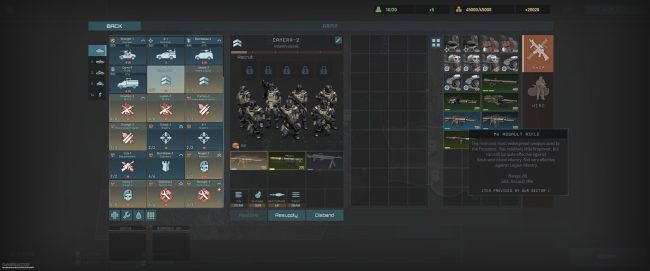
The menus are acceptable but a bit clumsy to use. They are easily cluttered when you have a lot of troops and equipment at your disposal.
Although there is some repetition of content, this is still good. The freedom to attack different regions as you see fit increases your control and serves as a mechanism to explain where your troops are fighting and why. I had fun during the course of the campaign and it is slightly more replayable than its predecessors. The artificial intelligence may need an adjustment to its behaviour in the battles, but works at an acceptable level. Although it cheats on higher difficulty levels and is active at the region level. Unfortunately, you can only play as a faction even though Legion was playable in the last campaign. Whether this will change in the long run is of course hard to say. For now, this is absolutely worth the price. Overall it's good, although I think the two previous campaigns are a bit better. As I said, it's hard not to feel a little happy to be playing a good semi-realistic tactical strategy game of the future bit of the Terminator universe.
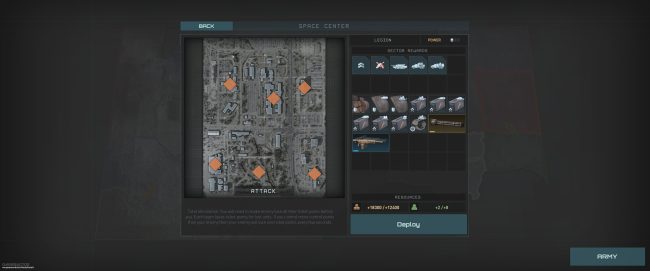
Each region has a reward if you conquer it. You should always take this into account before attacking.