
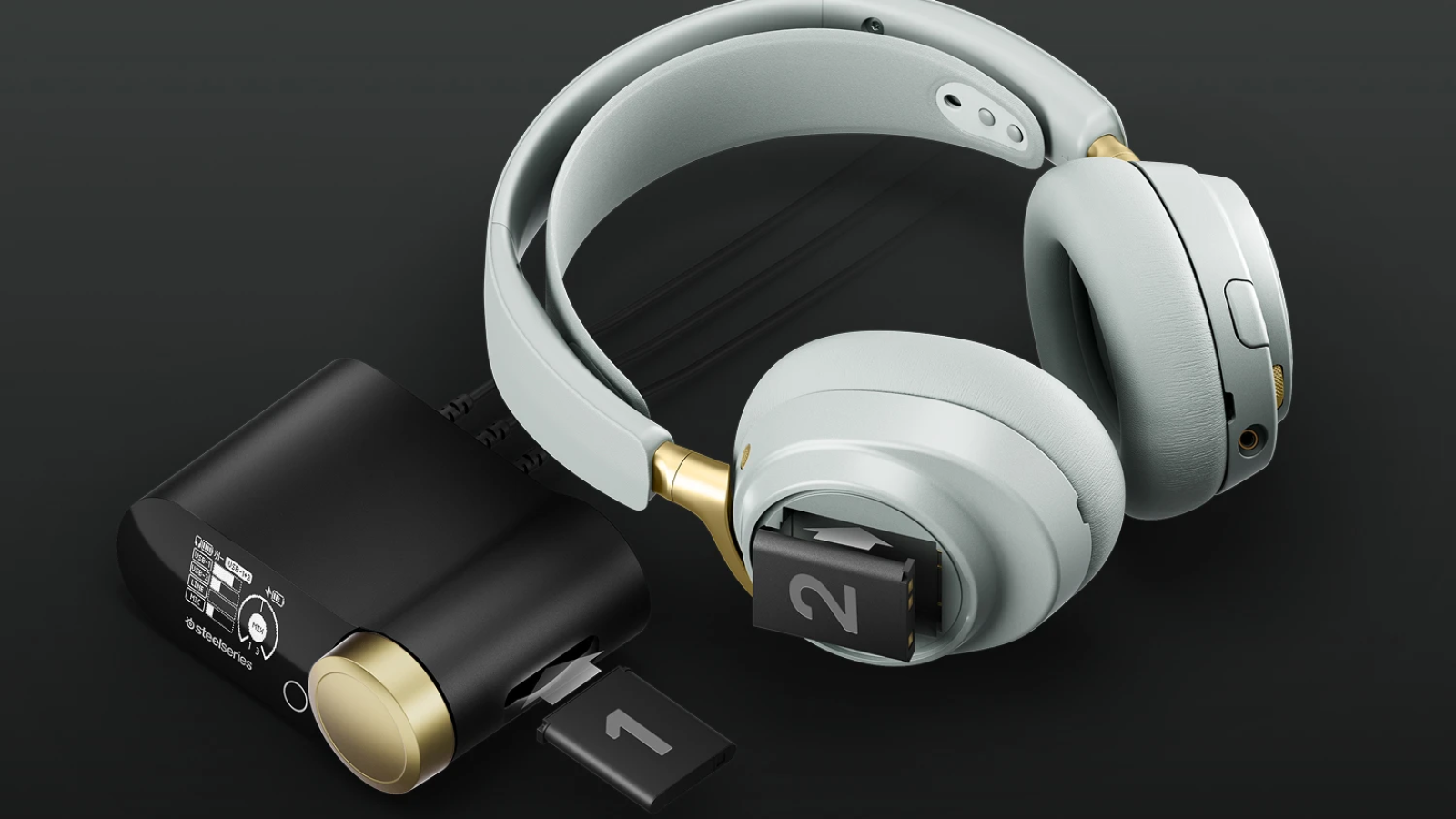
Like Apple before it, SteelSeries recently became the subject of criticism, not for a disappointing product, but solely because of the pricing of this product. This should not be understood as a defence, but rather as a framing of the debate surrounding the new Arctis Nova Elite, a headset that essentially doubles the price to a good £600 - essentially a first for a gaming headset.
But as I wrote, this is not the first time among headsets. Bang & Olufsen regularly charges twice as much, and as mentioned, Apple also got caught up in the hype with AirPods Max. The concern is, of course, that this jump will become normalised, but the point is that pricing is a dynamic, complex, and difficult thing to judge.
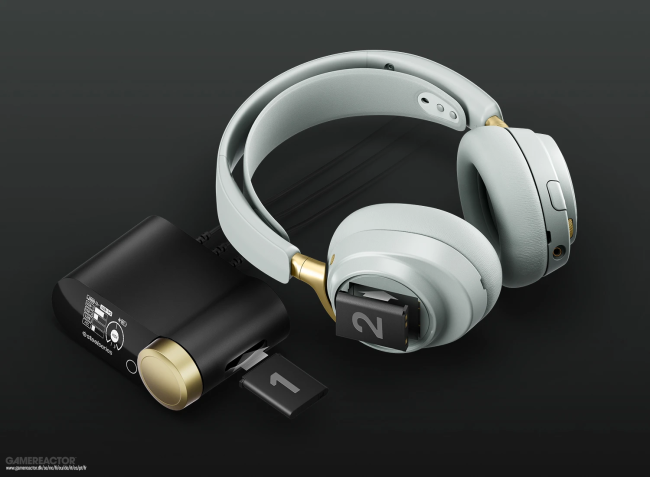
However, we can take a look at what the Arctis Nova Elite can do. The setup is similar to what you know from the Arctis Nova Pro Wireless, so we have roughly the same shape, the same small command centre that houses the extra battery that you can quickly hot-swap, and access to basic settings and customisation options. Inside, we find the new 40-millimetre carbon fibre drivers, which are encased in brass. These are also "pistonic", which means that vibrations occur in a much cleaner way, and should therefore create a clearer sound profile from 10Hz to 40KHz. There is Hi-Res Audio over 2.4GHz wireless, which is located in the aforementioned command module, and an LC3+ Bluetooth codec, which enables so-called "Omniplay", which is what the rest of us would call "multipoint".
There are actually upgrades across the board, even though the shape is the same. SteelSeries' already impressive microphone, which can be ingeniously stored completely anonymously inside one of the cups, is now 32KHz/16-bit and sounds absolutely brilliant, and there is also a new beamforming microphone, so you don't really need to pull out the actual microphone if you don't want to.
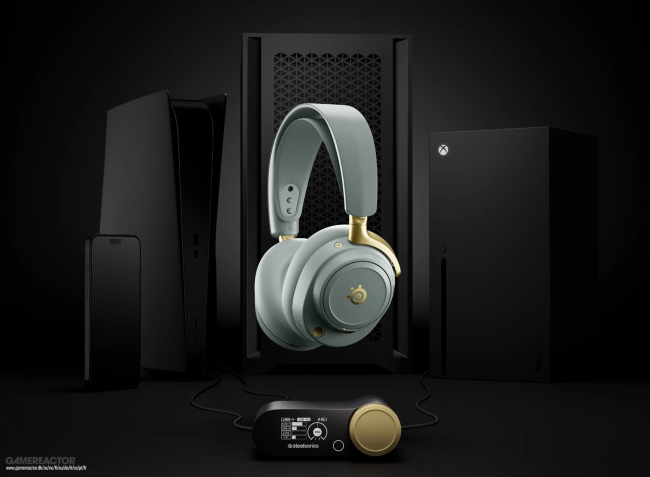
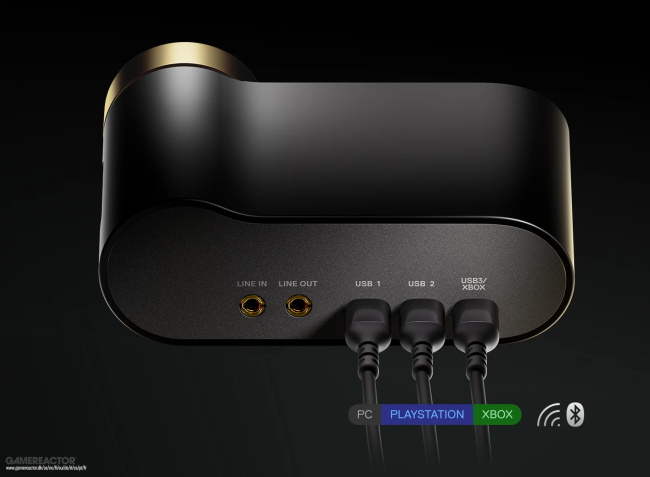
The small command module now has three inputs, making it truly platform-agnostic, and it swaps between the individual inputs based on which input is active. There is even a 3.5 mm input and support for Xbox's complicated Wireless Protocol, so all platforms should be prioritised here and work together, something that actually happens incredibly rarely.
Thanks to the headband, the airy, thick pieces of memory foam on the cups, and the almost Alcantara-like surface treatment the Elite has been given, this is without a doubt the most comfortable gaming headset I have ever worn, and there is no comparison. The small volume wheels are covered in brass and have an incredibly tactile click when you turn them, and every button has been lovingly crafted. Up close, this is an exquisite design that other manufacturers can only dream of coming close to.
It has a battery life of 30 hours, but this could almost be infinite, as a full charge is just a single swap away, and thus about 10 seconds away. And then the aforementioned microphone is really excellent, it just is.
The sound from the aforementioned carbon fibre drivers undoubtedly beats Audeze's Maxwell, which we have previously praised as having one of the most distinctive and impressive sound signatures in a headset specifically designed for gaming use. Although I've never really bought into the whole concept of 3D positioning and separate tuning that makes you more aware of a three-dimensional virtual space, both the surround sound and especially the improved ANC are really something you can feel. The signature is warm, the compatibility is versatile across genres, and it's... well, just magical.
So no, I'm not going to sit here and say that gaming headsets must cost £600, or that they should. Everything is expensive enough as it is, and it's a smart move for SteelSeries at a time when price awareness is greater than ever before. But at the same time, this is, without a doubt, the best gaming headset I have ever tested, and the score therefore has to reflect that. Whether they are worth the high price to you, I cannot decide, but I will refer to the Elite from now on as "the gold standard".