
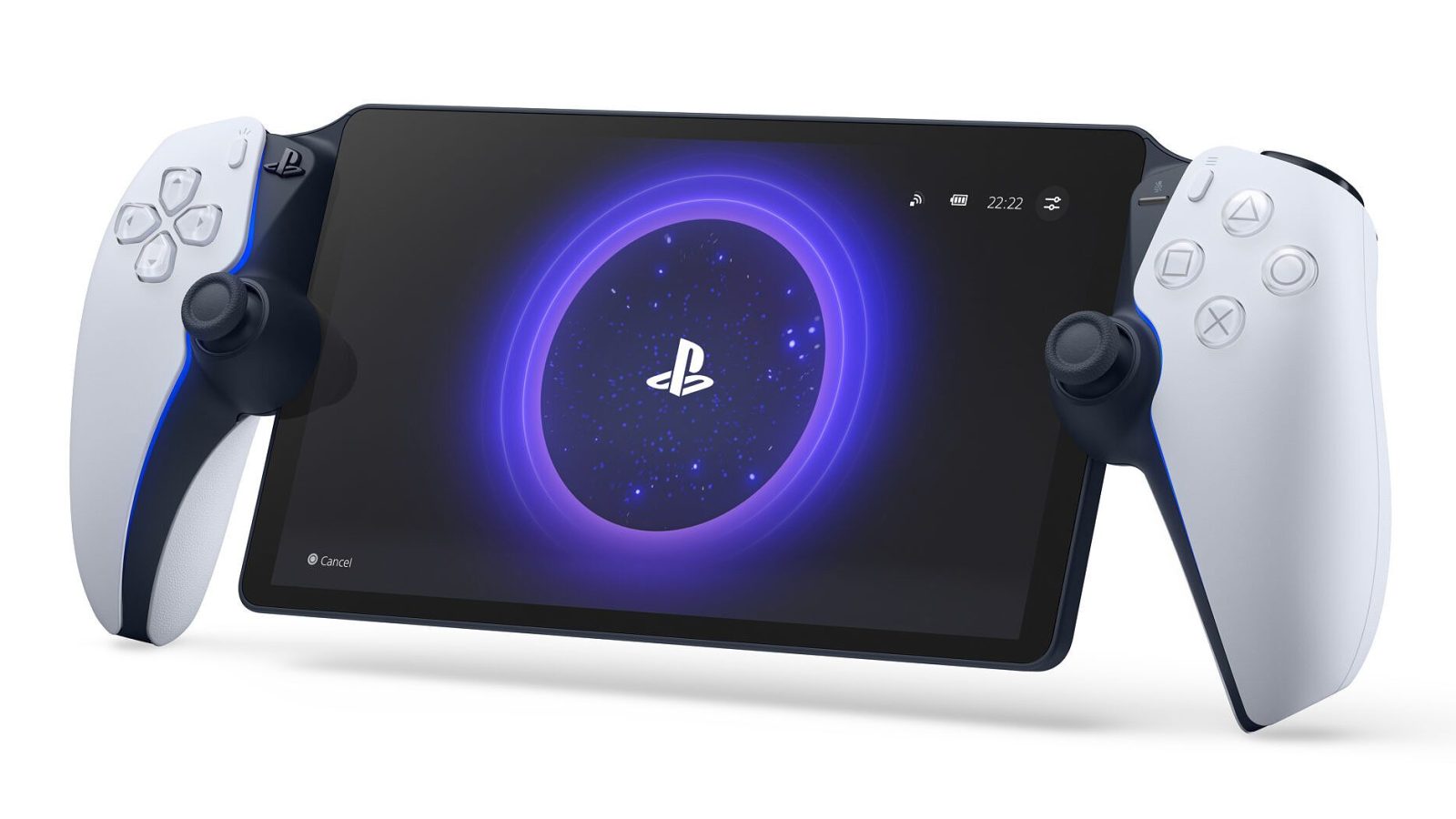
PlayStation Portal is a strange product. It's strange because on the one hand it offers a fairly obvious value to a very specific consumer, but at the same time fails to offer a broader set of features that would fit well into Sony's overall PlayStation product portfolio. It's a handheld without Bluetooth, a handheld without a dedicated operating system, but at the same time, I've used it incessantly in the time I've had it.
So where does that leave us? Perhaps it's worth taking a step back. The PlayStation Portal is a handheld, but not at all in a traditional sense. A "handheld gaming console" implies some sort of functionality on the go, but without a stable and fairly fast WIFI connection, the Portal is decidedly useless. Basically, its only function is to mirror your PlayStation 5 console. This is how a lot of streaming services work, from GeForce Now to Shadow, and you can even get something similar to the exact same experience by buying a Backbone, or any kind of mobile phone holder for a Bluetooth controller, and stream games from your console directly to your smartphone - both on PlayStation and Xbox.
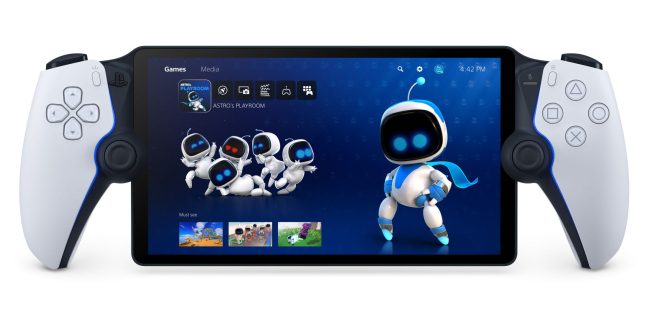
You can use Portal from a holiday home, on holiday, or any place where there is technically WIFI, but from there an extra step is added that introduces lag and poor responsiveness. Basically, Portal is more or less designed to stay at home, acting as an alternative way to play your PS5 when others claim the TV.
As I've mentioned on this site, this limited functionality appeals to me quite directly, and while being a reviewer requires me to sometimes look beyond the tip of my nose and put myself in the shoes of a more mainstream consumer, it's been difficult, as Portal fulfils a very specific need that I have. My little boys watch TV, or my partner often wants to watch something when we're just catching our breath after a long, arduous snooze. In those cases, I've taken out my Portal and played Baldur's Gate III. Clever, right?
The design itself is easy to describe; take a standard DualSense, cut it in half and insert an 8" 1920x1080 touch-based 60Hz LCD panel. You're not sacrificing haptic feedback, a headphone jack or USB-C - it's all here, and while the lack of Bluetooth in favour of a proprietary PlayStation Link connection for select Sony products is downright laughable, it's not because it's lacking anything, especially at a price of £199.99, a good £100 less than Logitech charges for the G Cloud, which I used for roughly the same thing earlier this year via my Xbox Series X.
It's not that it's particularly elegant to look at, and it would have been obvious to provide the consumer with some sort of way to protect the device when not in use, a small flap to protect the screen, or even a case. But at the same time, there are all the basics here, and the battery life of six or seven hours is decent, but not great.
But relatively functional hardware at an okay competitive price can't distract from the fact that you could basically just use your phone as a screen, with pretty much any controller, and achieve exactly the same functionality as Portal offers, just with Bluetooth, and without paying anything at all. What sets Portal apart is of course the joy of the dedicated device for the dedicated task, but also that the streaming experience on Portal is pretty solid.
Compared to the slightly grainy and washed out colours I experienced in Diablo IV on G Cloud, Portal manages to produce a vibrant, contrasty and bright image, even though it's an LCD. It's hard to tell at first glance, but when I tested against an iPhone 15 Pro Max sitting in a Backbone controller, Portal seems to produce less lag and produce a better looking image, but since it's over an internet connection, it's hard for me to sketch using parameters other than just... well, what the eye has seen.
However, it still means that you basically have to go out and spend £200 on something that you already have. It means that Portal is a somewhat confusing product. I have, as I said, used it much, much more than I immediately thought I would, and it actually remains a good argument in favour of using the PS5 as my primary console, because I find myself in a situation where using this dedicated device when the TV is busy is so often.
I can recommend Portal to those who can present a similar use case, i.e. that there are children stealing the good TV, or that being able to play games in the bedroom, as well as on the sofa, sounds pretty tantalising. For everyone else, Portal wasn't made for you, which perhaps says something about how limited this concept is.