The narrative adventure genre was suddenly rejuvenated when the team at Dontnod (now rebranded as Don't Nod) gave us their supernatural story, Life is Strange. The adventures and misadventures of teenagers Max Caufield and Chloe Price in the town of Arcadia Bay gripped us, episode after episode, in one of the genre's best titles. And that formula was followed by a sequel (with other characters and powers), a prequel focusing on Chloe and her friend Rachel, and a spin-off starring a new protagonist, Alex Chen, and her colourful world of emotions.
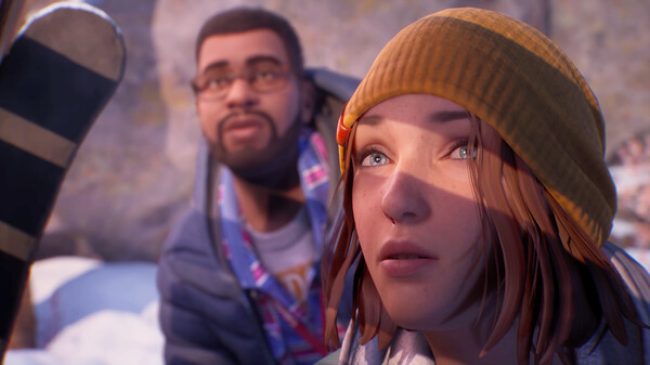
But except for the second game and its introductory adventure The Awesome Adventures of Captain Spirit, the rest of the instalments published by Square Enix (which owns the licence) passed their development to the studio Deck Nine, who are now exploiting it. Only this time, instead of creating a completely original story, they have the added responsibility of nurturing and honouring the original protagonist who started it all. Life is Strange: Double Exposure puts us back in the shoes of the complex and now adult Max Caufield, who faces a new mystery in his immediate environment, and with new "super powers" to boot.
In this preview version, to which we have had access, I have only been able to enjoy the first two chapters of the story that we will receive on October 29, but it is more than enough to experience everything we will receive in a couple of weeks. Because even though the years go by and the characters and plots change, Life is Strange: Double Exposure plays exactly the same as it always has.
Of course, we haven't exactly come here looking for an innovation in controls or an action system or anything like that. No, we come to Double Exposure to continue a story we never intended to revisit with our beloved Max, and to see ourselves reflected in her reflections if, like her, we too have changed. And you have to come with the groundwork laid, because Double Exposure will respect the choices you made in the first Life is Strange, and will develop its plot (and Max's emotions) depending on whether (spoiler) she chose Chloe or Arcadia Bay at the end of the game.
In my case, and to capture well how my game is developing so far, I chose to save Chloe over saving the rest of the town, but things haven't been going as Max had hoped over the years. For a while everything was fine, and Chloe and Max lived together (very together) for a few years wandering back and forth across North America. Max continued with her inseparable camera, making her passion for photography a profession and finding her place in the world, while Chloe... well, Chloe was always a free spirit that nothing and no one could keep tied down in one place. And now they lead separate lives.
Max now works as an artist-in-residence at Caledon College in Vermont, where she enjoys a generous grant to teach photography to students and continues to express her photographic art. She shares her free time with his inseparable new friends Safi and Moses. And all was going well, and she was beginning to question if Caledon could become her home... until Safi is murdered one night.
In desperation, Max begins to have strange visions of Safi (and the other inhabitants of the Caledon Campus) in a very different reality, one in which her best friend is still alive, but also in danger. And that's when her new powers awaken. She can no longer bend time, but she can open portals to an alternate reality. Max must investigate both worlds (life world and death world), interacting with the versions of the characters to unravel the mystery of Safi's murder, convict the culprit, and save the other Safi before the same thing happens.
It's a lot to take in, and on top of that Max has to keep her scholarship on campus and try to build a romantic relationship. This happens, at least for me, but as with the whole series, even the smallest actions can have catastrophic consequences in the future, and you'll never really know if you made the best decision or not until the adventure is over.
So far, the storytelling in Life is Strange: Double Exposure seems to me to be at the same level of impact I'd expect from a direct sequel, but there are some nuances that keep the title in good shape, and might even elevate it from True Colors, the last game released. Every scene is much more enjoyable now, because the body and facial expressions of the characters are much better, and I also think it's wise not to repeat with the same powers for Max this time around. It must also be said that, at least for now, it seems that we will have a title quite longer than the previous ones, as the length of these first two chapters has seemed to me almost twice as long as I remembered them in other Life is Strange. And the new characters, Max's powers, the plot and the themes the game will delve into are all presented in a great way.
The "dimension" change, in particular, creates a new layer of puzzles to explore two stories in one, and you can alter both realities by transferring objects from one to the other. I've only seen this in one example so far, but I imagine (and hope) they develop this system further, because it looks very interesting.
I think the current player scene will also appreciate this new avenue of dialogue that Deck Nine wants to strongly reopen about inclusivity and the gender debate. In Double Exposure Max is openly gay, as are many of the characters close to her, and issues such as bullying, patriarchy, transgender discrimination or racism can be seen here, although they are represented in such an elegant and natural way.
All in all, it looks like we Life is Strange fans will have a great game to look forward to in a few days. One that will continue the story we saw born in 2015, and one that will do justice to both the legacy of the original studio and the current talent behind it at Deck Nine.