
While I got to play GBA's The Sacred Stones, GameCube's Path of Radiance, and Wii's Radiant Dawn, I think my first proper Fire Emblem experience was with Nintendo DS' fantastic Shadow Dragon, the eleventh (!) entry already. Those four titles released between 2004 and 2008, so around 20 years ago, which is longer than the timespan between then and the first Japanese entry for the NES in 1990. This means that, with the more modern generations of hardware, and the will of Nintendo and Intelligent Systems to turn the once-niche S-RPG into a popular J-RPG for the masses (including the Western audience), the series has evolved quite a lot, and while it retains its traditional medieval fantasy class-and-turn-based combat as its core essence, there are a ton of added ingredients that fans who joined the series in the past decade take for granted.
I say this because the first impression I got, or the first reaction I had while playing the first few hours of Fortune's Weave on the Switch 2 was, shaking my fist towards the skies, "where's my classic combat?! Cut the filler and give me more engaging combat!"
And this could be a caveat for veteran fans, as they'll have to be very patient until the new game's dynamics click with them, if ever. That being said, however, the franchise's trademark combat is hidden in there and better than ever, waiting for you, I promise - you only have to 'endure' an incredibly long tutorial in a weird or 'unique' structure proposing a significant number of distractions you might not give an Ornius dropping about.
Or do you? Because the way IntSys is doing it here is honestly, probably, the best way to do it. It's got so many systems in place, so many activities, and all of them are so RPG-ised this time around, that any other way of introducing them would've been too overwhelming. And it can still be overwhelming as it is!
But once I got to the limit I was allowed to play and tell you about, I honestly felt good. And even if I was sure the game would keep throwing new systems at me for the next ten hours or more, I felt safe and comfortable, ready to welcome them one at a time.
Difficult to grasp at first, what you need to know is that you'll be free-roaming in the open area of Dagsion and also traversing the grander map beyond its walls, all in preparation for the next big battle (in the first few chapters, this means a proper show match at the Coliseum). There are some guided unrestricted missions intertwined, but these preparations are taken "by turns", which means you have limited free time and therefore have to more or less plan what you want to do in those turns, otherwise you won't feel or actually be as prepared. It never feels stressful and you'll get plenty of time soon enough to pretty much do whatever you want, so it's more a way to move the game forward than a demanding limitation. Imagine the also imminent The Blood of Dawnwalker: you choose whether to take actions that use one turn and move the hourglass forward.
Within the walls of Dagsion, those actions are clearly marked as you're running around to complete quests and errands to level up your prestige, or perhaps train your characters and make them eat meals together to get better and stronger while the bonds between each pair grant them better support on the field; or perhaps serve and pray in the seven temples of the different gods to later get their in-battle blessing; or perhaps collect and buy gifts for the many, many recruitable characters you'll meet in the city, each one with their own backgrounds, tastes and preferences, to win them over together with your prestige.
Then you leave town freely and, as if it were a board game, you move cell by cell to explore the surrounding regions, consuming the turns given to you, fighting smaller skirmishes, dealing with merchants, collecting more materials, ingredients and gifts, and even exploring dungeon-like, treasure-filled areas where the turn-based combat is also dropped in favour of exploration gameplay, with battles fought in a similar fashion to those in Xenoblade or the modern Final Fantasy titles, with chained attacks being the sauce to them.
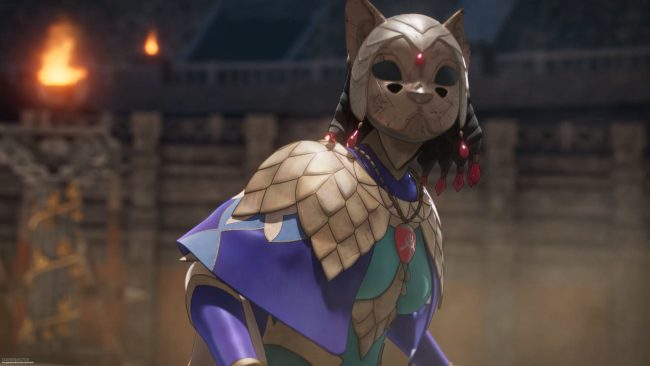
Did I tell you that you can capture mounts in the wild, then send them to the stables, tame them, ride them, and grow bonds with them so that they get even better in battle should your class allow it? You can watch the recent Fire Emblem: Fortune's Weave Direct for a lot more of these little details and interconnected systems, but suffice to say there's even more and more you can do I can't tell you about yet, so one idea is clear: the game will keep you entertained.
So, what about the combat? It's good so far, as you'd expect from the series. A little bit too easy or introductory for the first, what, 10+ hours? (Or did I go too OP?) But, even if you're a veteran, you also need to get to grips with the new tweaks, the new stats, the new weapons and mounts (firearms and elephants!), the new strengths and weaknesses, the new buffs and spectacular special abilities, the new classes and units! (Charioteers!). And some of that new stuff is already really, like really, really good, while in the meantime the game has put a big effort into getting you attached to the characters personally.
To me, the crucial aspect of these (many) initial hours with Fire Emblem: Fortune's Weave was just that: to check if it kept, protected, and evolved the quality of the combat gameplay, and so far I can only say I wanted to replay some of the battles just to enjoy them once again.
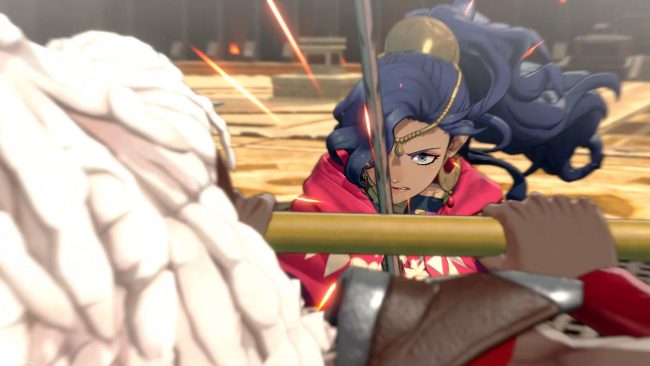
Also, I think it already deserves localised voices beyond English given the mainstream audience it aims to reach, its futuristic techie Sheikah approach took me a while to fathom, and it's true it looks a bit rough for a Switch 2 title. Don't get me wrong, as it's a leap from the Switch graphics and the characters and factions are beautifully varied in the really nice cutscenes and battle animations, but when you're wandering around or during the in-engine scenes (compared to the stunning CGI) it looks a bit too much like a constrained Warriors game by Koei Tecmo, and I really want it to shine through its art direction in the next tens of hours to compensate for that.
But up to this point its combat got me engaged, its new moves such as the Blaze Arts provide something fresh to keep in mind and strategise around, its game design and interface already look like the best in the series, its stories got me interested, its repetitive music ended up living in my head rent-free (while I just gotta love the whole Spanish/flamenco vibe to everything), and the tasks and errands went from "oh, come on" to "so, let's plan our week ahead with these lovable fellas". And I don't even want to mention the true meaning of "Weave" or the whole parallel timeline/paths/causality angle teased in the Direct just yet...
So more than a case of too much filler, once you get into it, it feels like it'll be a complex weave of activities that, as long as they manage to keep us hooked and surprised, could make for an incredibly complete tactical whole.
