
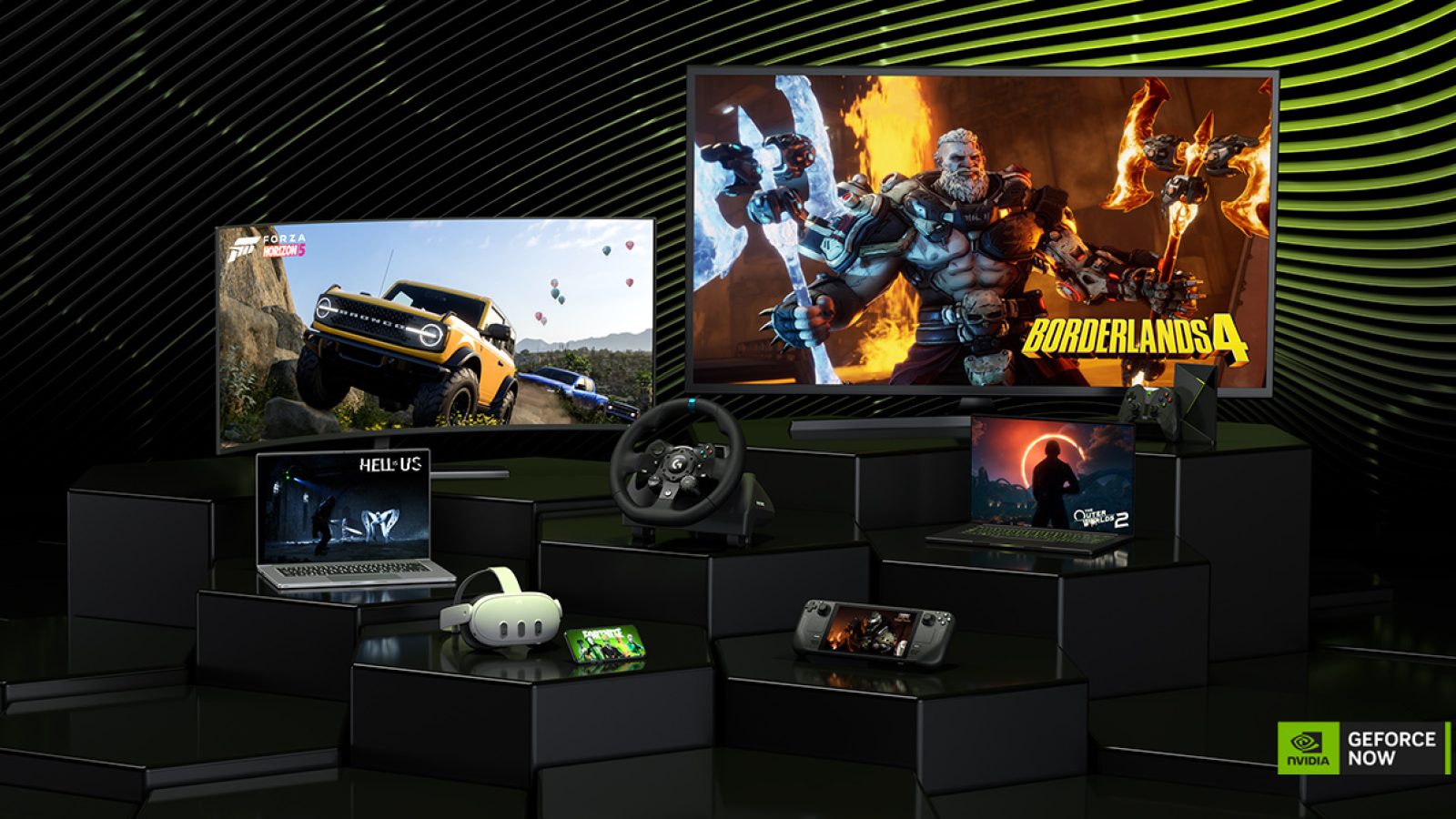
GeForce Now, or GFN for short, is going through a massive update that we had the opportunity to test before public launch. In short, if you have the Ultimate tier, you now get RTX 5080 performance. We're talking dedicated hardware for your gaming session, with 62 TFLOPS of power. This roughly equals the performance of three PS5 Pros, and is about 2.8× faster than the previous GeForce Now RTX 4080-based hardware.
What makes GeForce Now different is that, unlike other services, when you log in, specific hardware is locked to you. You don't share RAM, CPU, or GPU, you get your own dedicated system. There are some caveats, such as gaming sessions being capped at eight hours (up from six). After that, you need to log out and back in to grab a new system. Realistically though, few people sit through eight straight hours without a break. This makes the gaming experience much faster, while also blurring the line between traditional PC gaming and cloud gaming. This is not Google Stadia.
The system has three tiers: "Free" - 1 hour at 1080p, "Performance" - 1440p with RTX graphics and six-hour sessions, and "Ultimate" - 4K HDR, 240Hz (sometimes even 360Hz), RTX, Reflex, G-Sync, and eight-hour sessions. A few restrictions apply, such as playtime limits and queues, but higher tiers mean shorter waits. In practice, I haven't encountered any queues, and GFN boots quickly, loads the game, and gets you playing.
The library is also expanding to almost 4,500 titles. You can play on virtually any platform, as long as you have a solid internet connection. The games aren't included, and you buy them through your preferred ecosystem (Battle.net, Steam, EA App, which I honestly had forgotten about, etc.) and then link them to GFN.
Pricing is straightforward: "Performance" is €11 per month or €55 for six months, while "Ultimate" is €22 per month or €110 for six months. It isn't cheap, but when you compare it to buying an RTX 5080 card outright, you could get around 3.8 years of GFN Ultimate for the same price. Storage is capped at 100 GB per session, so for games without cloud save support you'll need permanent storage tied to your account. That said, most major titles are fully cloud-based, so this didn't present issues in testing.
The upgrade to Nvidia's new Blackwell platform also brings support for DLSS 4: Multiframe generation, 5K/120 FPS support, ray-tracing, light reconstruction, and advanced upscaling. It also enables 4K/120 FPS gaming on newer LG TVs with no extra hardware, 90 FPS on Steam Deck, and 120 FPS streaming on the Lenovo Legion Go.
The PC interface still feels a bit clunky, reminiscent of Linux gaming from 20 years ago, but functionally, it works. From a technical standpoint, the upgrades are significant: full 4:4:4 chroma subsampling, 100 Mbps streaming bitrate, more efficient AV1 encoding, and sub-30 ms latency in esports titles. That last part is especially important, as it makes competitive online games actually playable without noticeable input delay. At first I thought there were issues with some online-only games such as Dune: Awakening, but it turned out the problem was the game itself, not GFN.
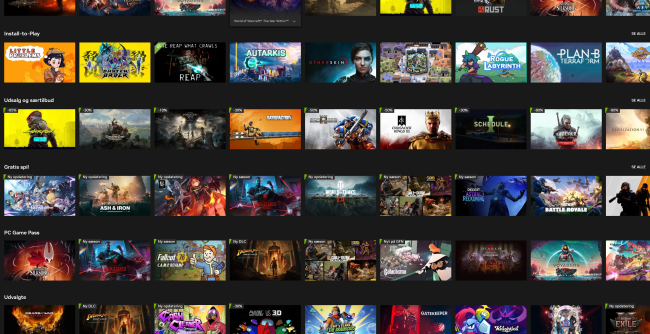
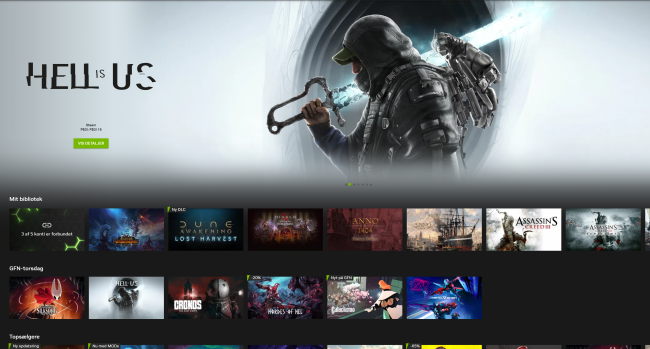
We tested on a 4K QD-OLED monitor with a 1000/1000 Mbps fibre connection and 1-2 ms ping. The Ultimate tier requires at least 75 Mbps, so we were well above that. The main caveat is still connectivity, as without fibre, the experience is less consistent, and even in 2025 not every developed country has full rollout. That said, when conditions are right, the experience is excellent. In blind testing, I doubt I could tell the difference from local gaming. For handheld devices with limited hardware, the performance jump is huge.
Despite being an avid critic of cloud gaming, I have to admit this feels like a full replacement for a gaming PC. Our reference-level rig still squeezes out a few more frames at ultra settings, but the cost difference is hard to justify. My PSU alone cost more than two years of GFN Ultimate. As long as Nvidia keeps pricing steady or lower, only the top 1% of enthusiasts - those playing more than 100 hours a month - will have a real reason to buy high-end hardware. If Nvidia can expand its server clusters, increase monthly playtime to 150 hours with rollover, and maybe offer discounts or bundled AAA games, this service could become unbeatable.