
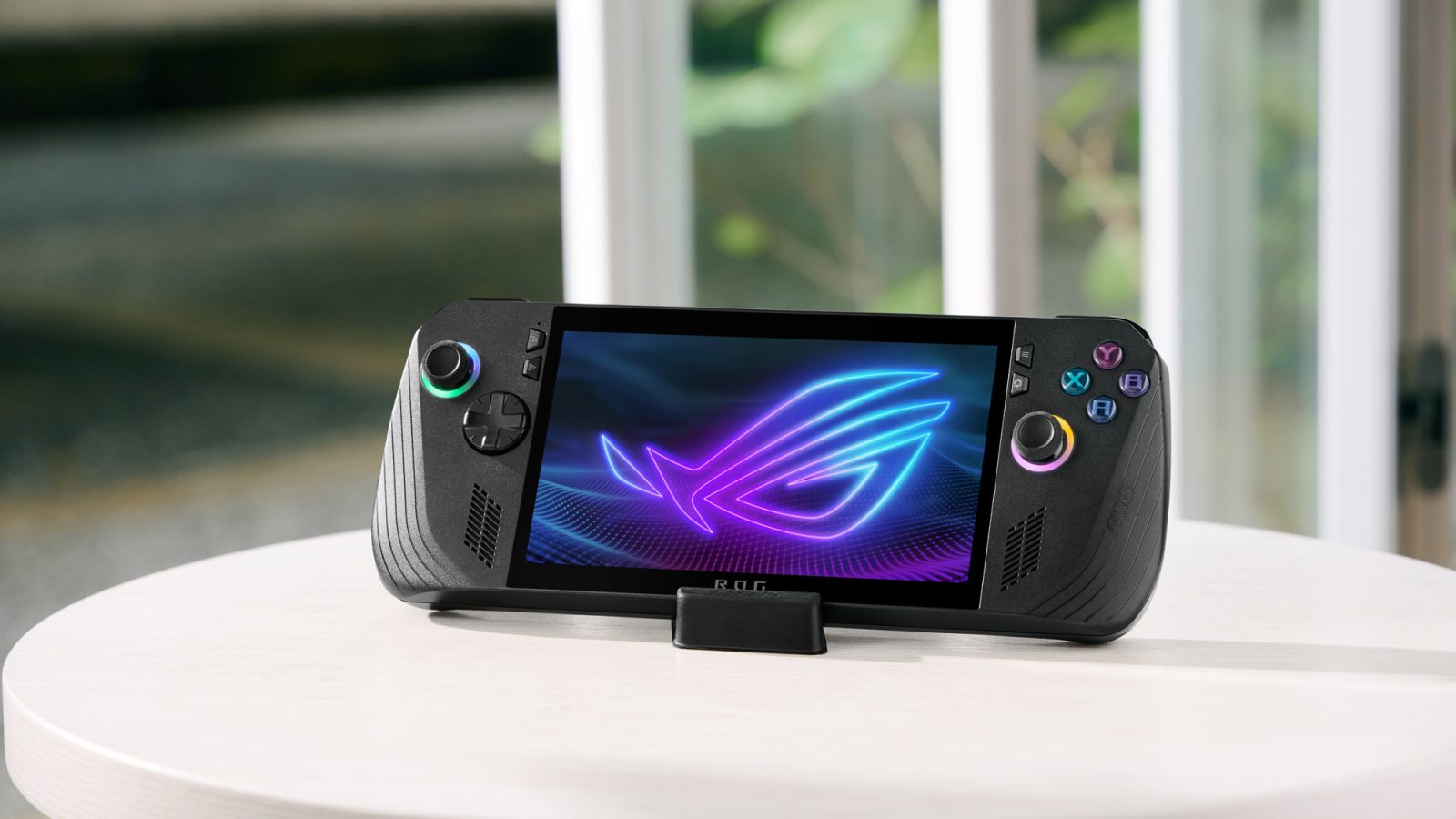
As the years have passed, I have become quite convinced that Windows 11 is simply not a good software platform from which a capable, efficient and seamless gaming experience can be enjoyed, especially in a handheld setting. Yes, Windows 11 remains an OS option from which virtually all PC gaming enthusiasts launch games via Steam, GOG and other ecosystems, but the promise of the console-like handheld PC gaming experience is something pretty much only Windows can fulfil.
In time, Microsoft may get it together to release a version of Windows, or some sort of Xbox-centric platform, but for now, I have to admit that I personally find SteamOS via a Steam Deck to be the more streamlined and user-friendly way to play PC games via a handheld.
But let's pretend that you're out there and have already decided that the natural limitations of SteamOS are not for you. Maybe you love the fact that there's a full-blown desktop OS running underneath your gaming overlay, maybe you want to play the titles that AntiCheat blocks on SteamOS or that still lack optimised Linux ports, or maybe a large part of your game collection is just on storefronts other than Steam. Either way, there is a market for Windows-based handhelds, and it's hard to recommend anything other than a ROG Ally X from Asus.
The ROG Ally has already been a sort of defacto choice for many in this specific corner of the market, and rightly so, and the Ally X addresses virtually all of the complaints, but without moving key components, as this upgraded variant simply has no new, improved AMD SoC platform to move on to - yet. An Ally 2 will most likely utilise AMD's upcoming Strix Point Mobile APUs, but we don't know that for sure yet.
What we do get is pretty significant though, if only as a mid-generation refresh. First and foremost, there is a doubling of the battery size from 40 to 80Whr, which should give... well, a doubling of the current battery life, whether it's under full throttle or in Silent. And while we're on the subject of these specific profiles, Asus has increased the Ally X's power budget by a few Watts. It's only 2-3 in each profile, but combined with faster and more RAM, specifically 24GB DDR5 at 7500 MT/s (thanks Linus Sebastian for finally teaching me that this is a better parameter to measure by). Combined with the fact that you now get a slightly better 1TB SSD in the form of a PCIe 4.0 NVME m.2. 2280, and the aforementioned battery increase, it's a solid upgrade. The machine also uses the same display as before, a 7-inch 1080p/120Hz IPS display. It's a shame Asus hasn't found a way to reduce the bezel around it, because there's a lot of space lost here, but the screen wasn't previously a key concern and it still works fine.
There's currently a lot of controversy surrounding Asus in particular and their poor customer support to say the least, and as it stands they've promised to turn their whole approach on its head. Still, pay special attention when buying anything from Asus, but despite this I'm far more offended by the fact that you don't get a bag. It just doesn't cut it. Although, it's nice to see Asus ditch the proprietary XG Mobile format and instead switch to regular USB 4, which means you can connect any external graphics card.
It sounds like a small thing, but overall the X model is a pretty significant upgrade that makes sense in a lot of situations, mostly due to the much, much bigger battery. There are a few games where we tracked slightly more frames in selected titles across all power profiles, and slightly improved ergonomics (as well as the ability to replace analogue sticks with Hall Effect variants), and that's not nothing. Of course, it depends on how hungry your games are for more RAM. Cyberpunk 2077 is a rather striking example, beating both Lenovo Legion Go and the previous Ally quite handily, and Shadow of the Tomb Raider and Hitman 3 also seem to be happy with the extra RAM with increases of between 15 and 20%. Forza Horizon 5 is pretty much the same though.
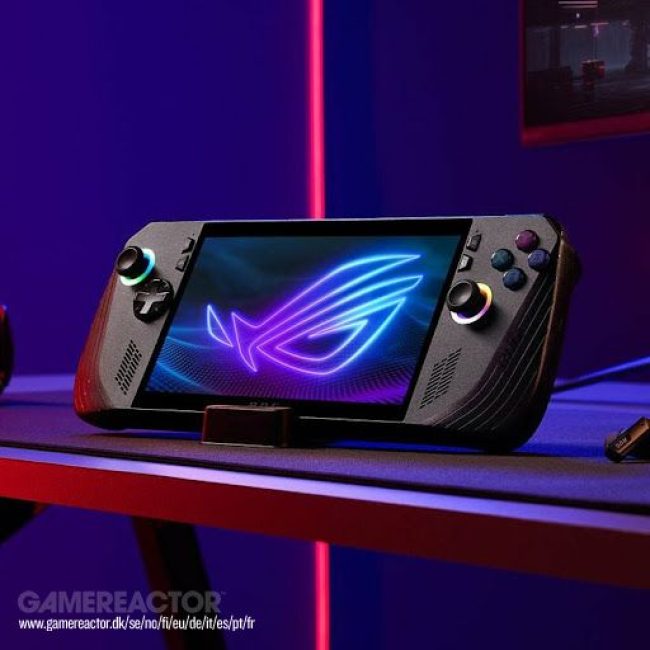
But with that, we have to circle back to Windows. Unfortunately. And I also know that not everyone is really bothered by the openness and customisability of the platform. If that's you, then Ally X is pretty much perfect, but for me, it's becoming increasingly clear that Windows is just not compatible with an experience that can only be accessed via a controller. Setup alone this time took several hours, partly because Windows is completely unable to recognise that this is not a traditional computer and is asking me whether I want to boot from a cloud-based backup of a work computer back in April. Touch-based control will have to come into play again and again, and while Armory Crate SE is a fine software overlay, Windows gets in its own way constantly.
SteamOS is superior to this OS in every way, but it's also more limited, and furthermore, it's really, really not Asus' fault that Windows doesn't work well as a platform. Through Armory Crate SE, Asus has definitely done the best it can.
Beyond that, however, it's worth stating that as a refresh, the Ally X is only further proof that Asus has the better Windows-based handheld offering, delivering the most versatile handheld possible through simple optimisation, streamlining and strategically placed components. There are no limitations here and plenty of room for further customisation. Whether you trust Asus when something happens to your Ally X is another story entirely, and the hope is that they truly intend to transform their customer support and service in the foreseeable future, as they claim they will.