
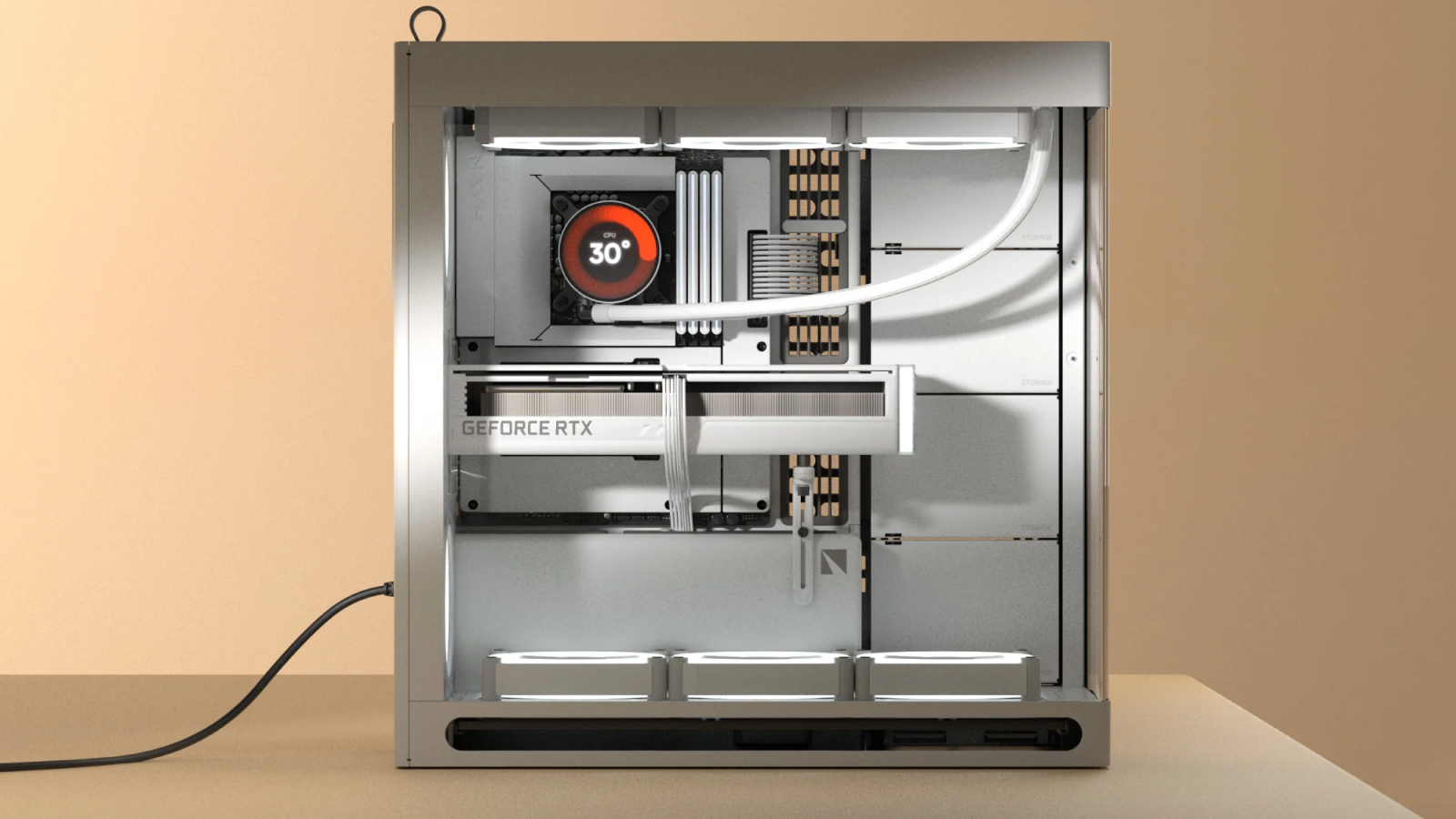
Harbour is a new brand led by industry veterans, and according to what Gamereactor has been able to find out, it includes former employees from several of the absolute leading case-only companies in the industry, as well as several of the greats in all categories, and it shows. That said, they are part of the Pro Gamers Group, which includes a number of major brands in almost everything: Noble Chairs, Ducky keyboards, Streamplify, and Aerocool. In addition, they've made no secret of the fact that they've developed it in collaboration with several of the major European sellers known for overclocking gear and cases.
There are an insane amount of small details in this new HAVN HS 420, from fans that are not mounted in perforated metal but have real mounting frames that also act as structural bracing, to the fact that magnets are used for most things instead of plastic clips. In addition, you get a continuous glass front and side panel, which is dangerous, but well made. And there's a VESA mount included too. I haven't seen that before, but then again, I don't understand people who put monitors in the enclosure. But you can do that here, and with a crystal clear glass panel it's no problem.
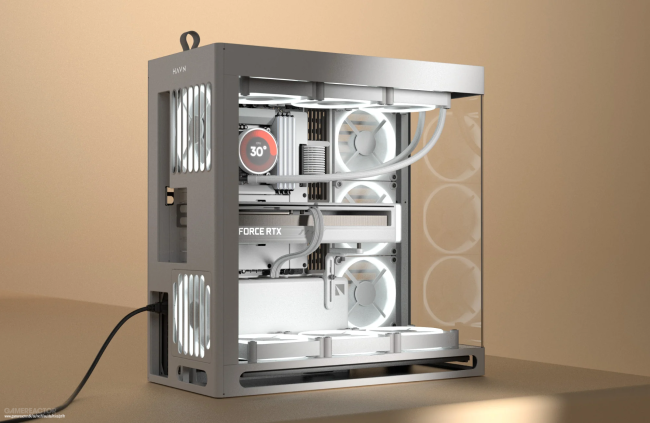
The entire enclosure is actually made as one big giant perforated surface with a lot of elongated openings that can also be used for cables, and with associated transverse clips that are made so that you can mount whatever you want. It's a very modular and extremely flexible approach with all load-bearing elements in metal, which you can then close off with cover plates so that limited false air is drawn in. It's really a dual-chamber principle and it's one of very few enclosures where there is an obvious attempt to focus on the graphics card, not just visually, but also in terms of cooling. The vast majority of CPUs today are liquid cooled and there is often plenty of airflow to cool the power section of the motherboard, so it's strange that more people haven't thought along these lines.
There are large cable channels with both Velcro and colour coding and what can only be described as very accomplished industrial design in everything from the power button to the vertical GPU holder. The bottom is raised and is one of very few cases that actually allows air to be sucked in from the bottom. The various metal frames on the inside have rubber flanges fitted to dampen vibrations, something you normally always cut away and save on. Similarly, the riser cable for the graphics card is PCIe 5.0, which there are still no gaming graphics cards using yet. In other words, future-proofing, although it's often relative. There are rumours that the next generation of graphics cards, which at the time of writing is probably only a few months away, will have a top model that actually uses PCIe 5.0, in which case this is currently the only solution that supports it.
In addition, the VGPU slot has a rather ingenious setup, using the small glass shield to create a cold and a hot zone inside the case by running forced vertical cooling. This means that you suck air from the bottom, spit it out right in front of the vertically mounted graphics card, and then the hot air is sucked up from the back and top of the graphics card, along with any heat from the motherboard. This inherently requires a liquid-cooled CPU, as the vertically mounted GPU covers the motherboard, so you have to remember to have all cable work in place and mount the GPU last.
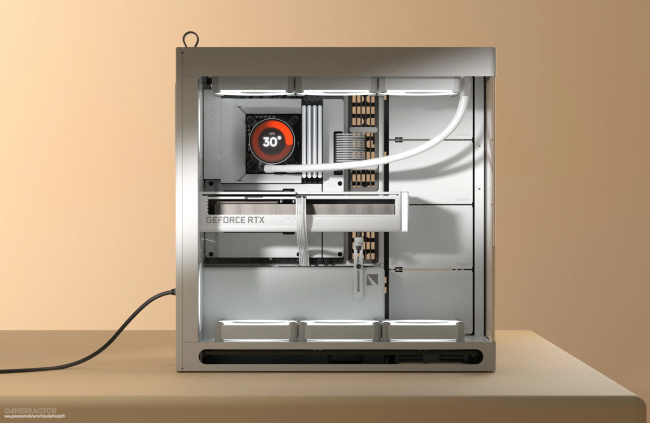
It's E-ATX standard and there's room for quite a lot. 11 fans in total, if I've counted correctly. And up to two 420mm radiators at the same time, or three if you use the bottom frame to mount a radiator instead of fans that suck air in, but that seems less optimal. There are four dust filters, two of which can be removed, and here's an ingenious detail: The entire top plate is magnetic and can be opened with a small handle, because of course the start button, USB connections etc. are not wedged in it. They are mounted in a plate underneath, making ongoing maintenance and replacement even easier. The lower dust filter is also removed from the side and not from the front. This makes it easier to hit the right spot and push it back in correctly, so points for that little detail too.
My only criticism is that one PWM hub is placed rather oddly, almost as an extension of the cables from the power supply. The idea is good; it's centrally located, but it's also difficult to get to if you have a lot of cables to run to the power supply. If you have a liquid-cooled GPU, it probably makes more sense to buy the non-VGPU version, as the airflow doesn't make much sense otherwise. The VGPU version costs $269 and the regular version is $199, which in my opinion is surprisingly cheap. A definite bargain, I'd say.
This is by far the best and most user-friendly case I've tried in many years, and believe me, you won't want to miss out on it.