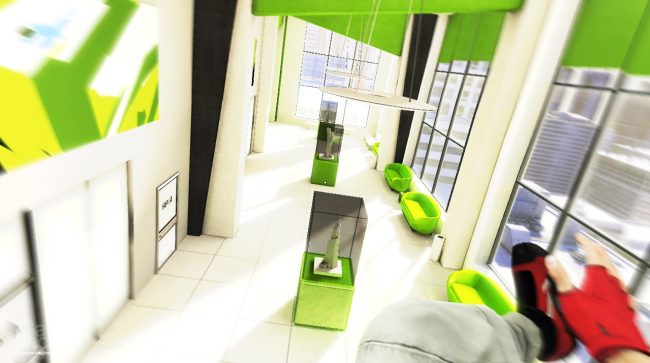
It's not the gameplay mechanics that we remember most about Mirror's Edge, nor is it the protagonist Faith. Instead, it's the insanely clean and eye-catching graphic design, which depicted a future dystopia in a very beautiful way. The entire game world was white, with occasional coloured details to assist with direction and things to interact with, all framed by mostly glorious weather that gave the surroundings an idyllic look.
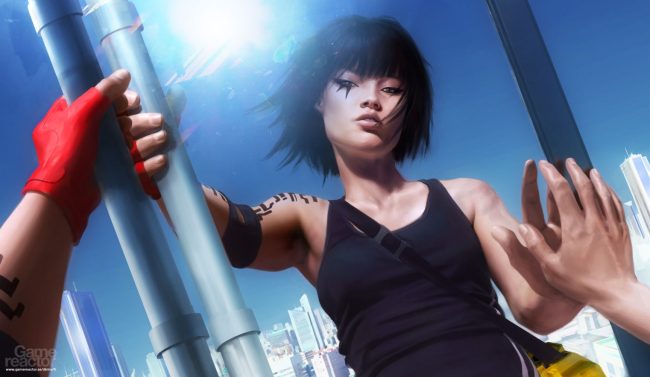
But... it almost turned out completely different and much more generic. The developers revealed this during a discussion with Design Room (thanks Rock Paper Shotgun). Mirror's Edge was released in 2008 and initially looked more like other games at the time, which is to say, pretty much brown throughout. Senior producer Owen O'Brien says:
"Mirror's Edge started off looking like every other Unreal game, to be honest. But we found that when you were moving very fast through the world, you got simulation sickness very quickly. We discovered that it was lessened if you made the world cleaner and less detailed."
Art director Johannes Söderqvist adds that it wasn't an ugly game, but that it simply lacked the personality that the finished adventure has in abundance:
"It was more run-down, sort of New York-style rooftops with these water towers — pretty brown, like a regular game, if you will. It wasn't bad; it looked good, actually. But there was no style to it, or a fairly generic style."
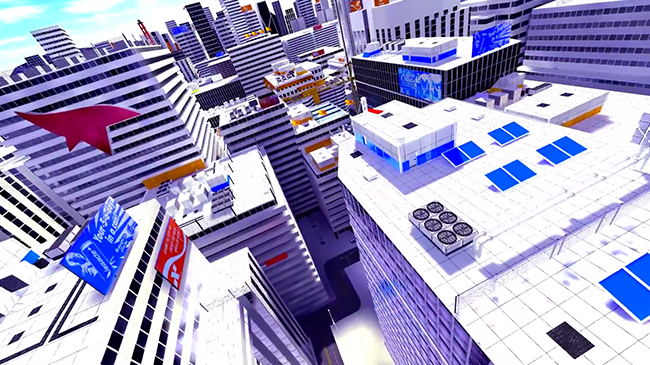
Along the way, DICE had a change of heart about Mirror's Edge, and what ultimately led to the major redesign seems to have been precisely that it was so difficult to distinguish it from the crowd. O'Brien explains:
"I couldn't tell Battlefield from Call of Duty from Rainbow Six, and I said to the team, 'I want to look at a screenshot of Mirror's Edge in a magazine and know it's our game'."
The result was one of the best-designed games ever, and it's doubtful that we would even remember the game today if it had become the bland looking adventure it was originally intended to be.