
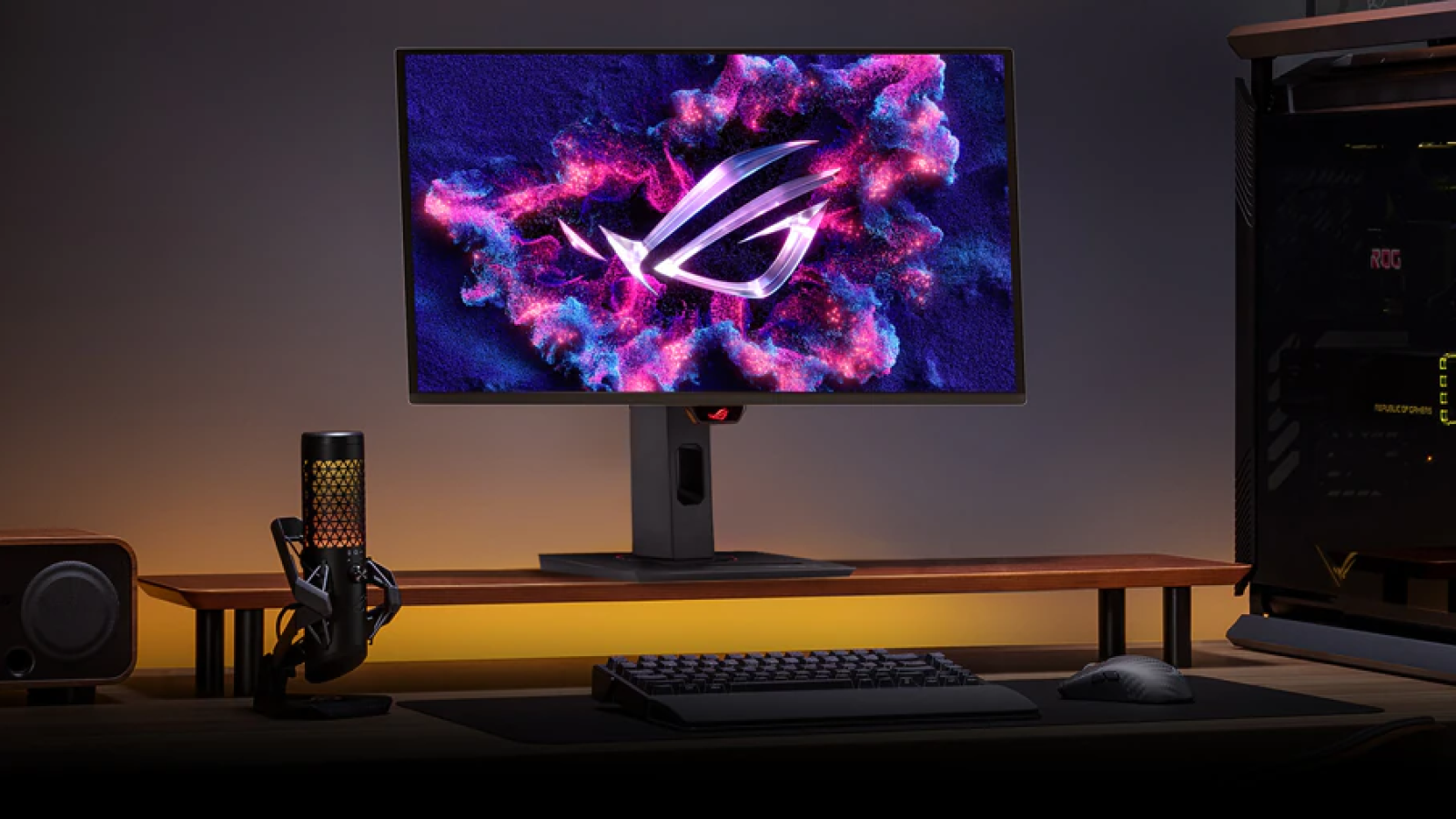
The market for OLED screens for gaming is still booming, and the standard is generally high. Prices have been high too, but fortunately Asus is trying something a little more affordable, but unfortunately it will probably be a long time before a good OLED screen doesn't cost the same as a large graphics card.
The Asus ROG Strix OLED XG27UCDMG uses Samsung's 4th generation QD-OLED panel, and we're talking 10-bit panel, 30-bit colours, 4K resolution, 165 ppi, 99% DCI-P3, and 1000 nits brightness. Add to that HDR10, 0.003 ms response time, and 240 Hz refresh rate, and yes, it takes 220 V directly. It sounds good on paper, and it is in practice, as the screen has both solid uniformity in light and natural colours that provide a calm and comfortable image. Text appears sharp and precise, and there are no colours that stand out. The screen also comes with a three-year warranty.
Then there are all the extras: massive passive cooling plates, protection programmes, compatibility with Nvidia G-Sync, and anti-flicker systems. And then there are the connections: DP 1.4, HDMI 2.1, and USB-C with 90W PD and USB hub. Yes, there is a headphone jack, and no, don't use it. There is also room for a KVM switch, which is a welcome addition.
Unfortunately, the stand is made of plastic and is quite bulky, but it's still so small that I'm not really bothered by it, especially after I suddenly realised that the crack in it is designed as a mobile phone holder. On the other hand, it rotates incredibly easily and is generally easy to adjust.
I don't remember having any particular problems with flicker on previous Asus OLED screens, but the fight against this has been taken seriously. There is a new 2.0 Anti-Flicker feature, which Asus believes can reduce flicker by up to 20%. Surely impressive, but flicker is only occasionally a problem with OLED for me although it does happen. The screen has not been tested on a console, so VRR and other features normally used with consoles have not been tested.
The software is nice, easy to navigate, but also packed with a myriad of settings. Apart from profiles, however, many people don't need to mess with it, and I would argue that most users will turn on the screen, find that the picture is good, and never install the software.
Like so many other screens, there are standard crosshairs and improvements to dark areas. As usual, I must point out that this should not be allowed in games with competitive elements. However, I think the built-in sniper function, which allows you to zoom in on the screen, is far worse but Asus is not the first or last to offer this kind of functionality. I don't know why, but I couldn't find the function in the software.
Asus has far more exciting ideas to offer, such as a distance sensor that automatically displays a black image on the screen if you are away from the table for a long time, and unfortunately, these kinds of automated features are probably the way forward. It's not new, it's been seen before, but it's still nice. Of course, there are all the usual features: automatic light limitation in static areas, pixel shifting and recalibration, all to prevent burn-in. For the same reason, as with many others, there is dimming control, process line detection, combined with a large cooling plate on the back. And it's backed by a three-year warranty, a clear improvement, and we look forward to seeing such warranties extend to 4, 5, and preferably 6 years or more.
Asus, like many others, uses generous rounding: 26.5" becomes 27, and 31.5" becomes 32, like all the others.
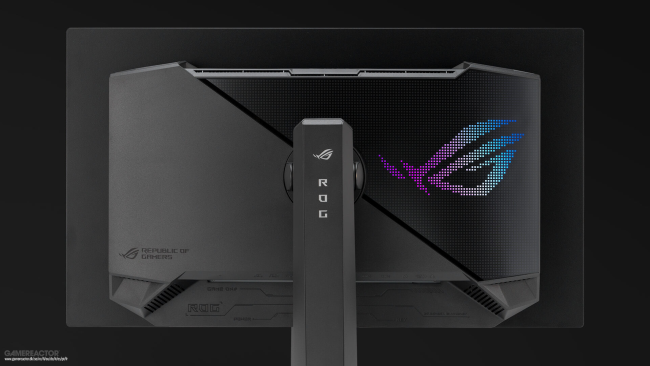
Normally, I can't stand a screen with a glossy surface, as it reflects too much light and often looks artificial. But here, it doesn't matter; on the contrary, it helps the image become more vivid.
You can find on sale for £839 but the traditional price is £939. However, it's still very cheap for this size of top-class OLED, and it's not an old panel, but a modern 4th generation display with a QD layer. My only complaint is that the tested screen is only 27". I think that with 4K, we need to jump to 30", preferably 32". But then it's good that Asus beat me to it and has already put a 32" version on sale.