
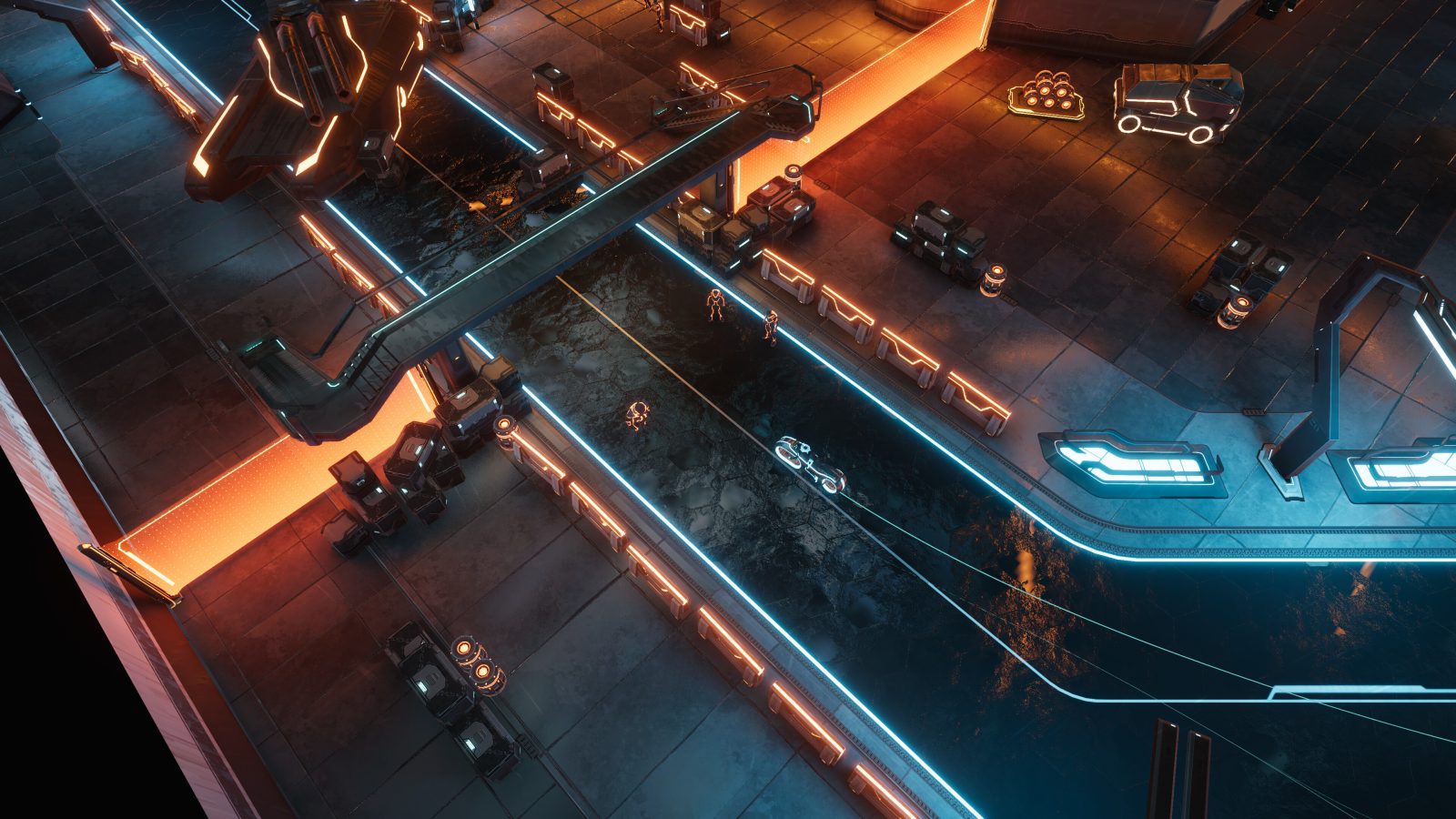
The neon-drenched world of Tron seems like a natural playground for video games—yet for some reason, it's a realm rarely explored with any real success. Previous attempts have ranged from lukewarm to forgettable, never fully capturing the exhilarating possibilities of the Grid. So, when Bithell Games dropped Tron: Catalyst—touting disc duels, light cycles, and fast-paced Grid action—I was genuinely excited. Sci-fi plus a strong premise? Count me in.
You step into the glowing boots of Exo, a courier doing one last delivery before clocking out—except this package sets off a chain of events that lands her in interrogation, accused of knowing too much. Moments later, she's battling for survival in an arena and questioning her own reality, especially after discovering she can inexplicably rewind time.
The story dives deep into the digital Grid, teasing a web of secrets and speculative tech. Unfortunately, Tron: Catalyst stumbles out of the gate with storytelling that feels robotic in all the wrong ways. Conversations play out via static character portraits and bland dialogue boxes. The game throws out place names and jargon as if they should mean something to you from the get-go—only they don't. Any connection with the characters or curiosity about the plot fades fast in this cold, mechanical delivery.
From an isometric perspective, you guide Exo across regions ranging from disc arenas to barren wastelands. Progress usually boils down to fetch quests disguised as "talk to this NPC, complete their request, get a clue, move on." There's a time-reset mechanic where you can rewind to earlier checkpoints while keeping knowledge and upgrades. It's a clever hook on paper and gives the game a light strategic edge, but in practice, it feels more scripted than empowering—like you're being nudged down a path rather than carving your own.
Combat steps in as the second core pillar. Thankfully, it fares better. Real-time battles mix simplicity with fluidity. With just block, throw, strike, and dodge to master, you're expected to read enemies and respond in kind. It's all reminiscent of twin-stick shooters at times, especially when the screen fills with foes. Upgrades from exploration add variety, and overall, these fights are one of the game's more enjoyable aspects.
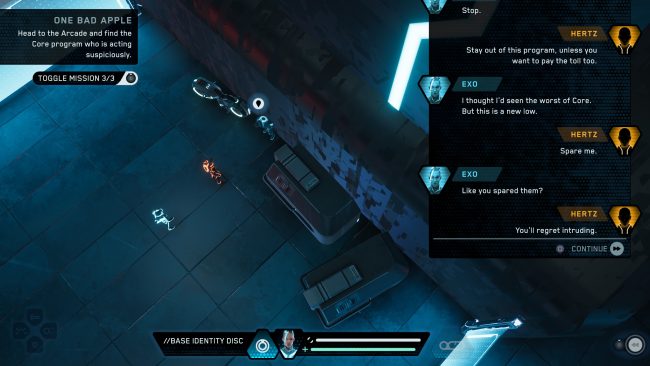
Sadly, clunky controls undermine even that. Movement feels stiff and twitchy—fine for an AI protagonist in theory, but in gameplay, it comes off as unpolished. Combine that with flat level design, mechanical conversations, and unremarkable navigation where even riding a light cycle feels dull. That's... kind of impressive, in a backwards way.
Visually, Catalyst kicks off strong with a stylish pixel-art intro that hints at a bold aesthetic. But once in-game, the visuals snap back to a safe, sterile look. There's polish, sure, but little flair. The environments are under-detailed and the character animations stiff. Cutscenes rely on static art—well drawn, but repetitive. It's a shame, because that opening teased a more daring style the rest of the game never capitalises on.
Audio design follows suit. Sound effects are minimal, voice acting is dry (though clear), and the spark just isn't there. What does shine is the soundtrack: Dan Le Sac delivers a synthy, atmospheric homage to Daft Punk's Tron: Legacy score. It fits the digital vibes perfectly. Unfortunately, repeated tracks overstay their welcome and dilute the mood through sheer repetition.
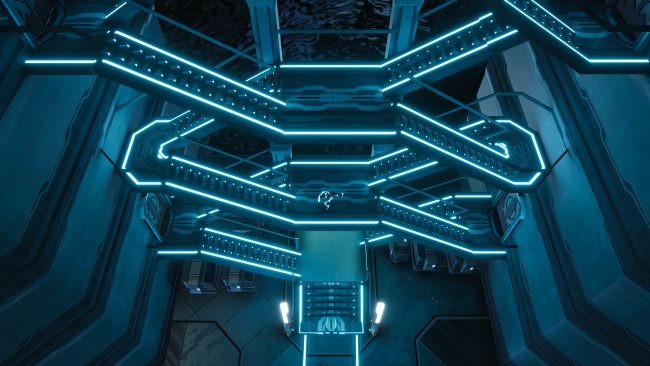
In the end, Tron: Catalyst feels like a concept brimming with promise—a narrative twist here, a combat mechanic there—but it fumbles the execution. I'll admit, my anticipation may have made the fall feel harder than the game truly deserves. Still, too much feels off: from storytelling to traversal to tone, everything leans toward flat and cold.