
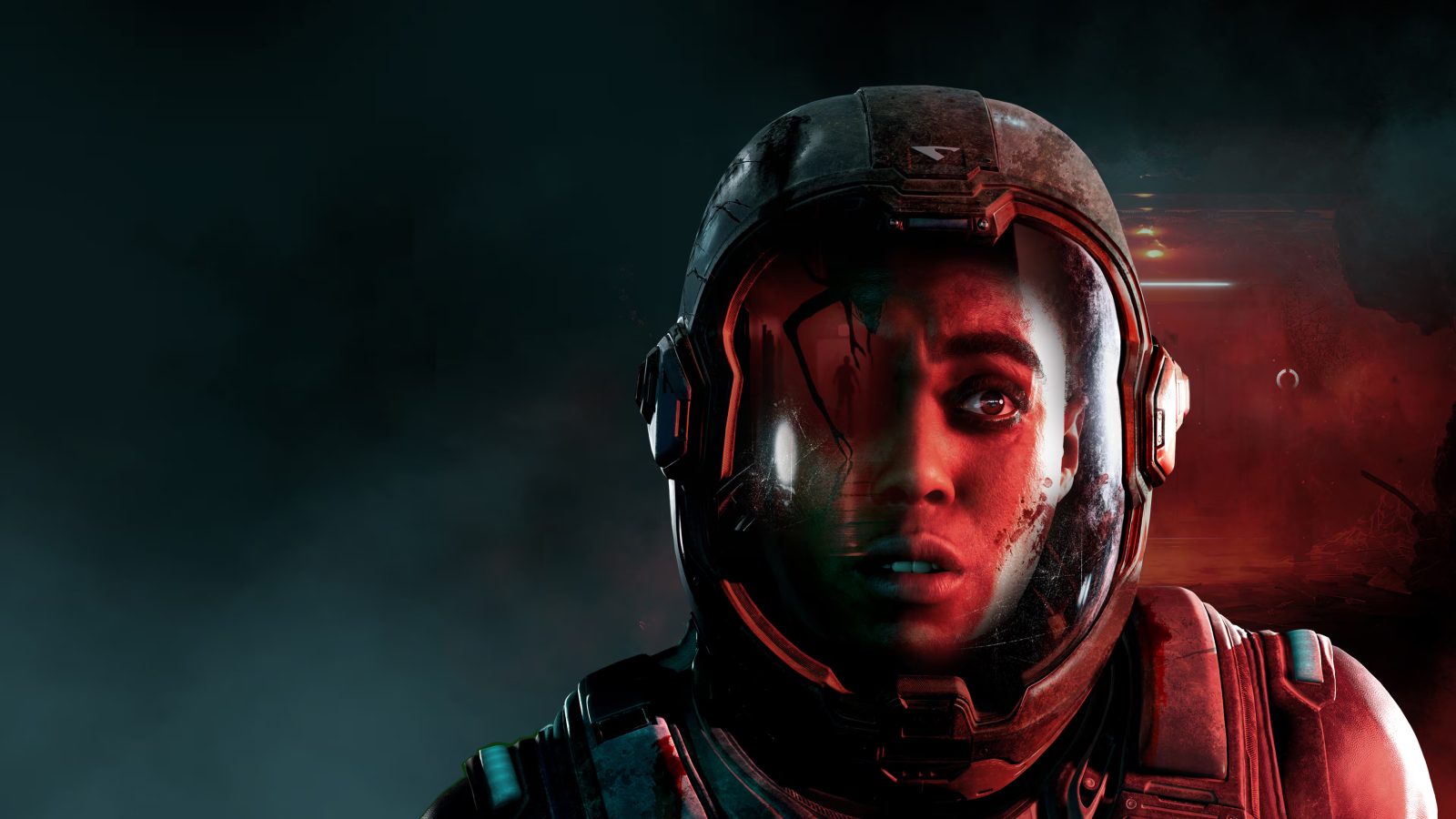
"In space, no one can hear you scream." We've seen many variations of this classic tagline over the years. Films like Alien and The Thing have inspired all kinds of pop culture for decades, and now Supermassive has offered its take: "In space, death takes many forms." Supermassive Games is a studio that isn't afraid to make its sources of inspiration plain for all to see. This has been evident in the vast majority of their games, nearly all of which have been pastiches of all manner of horror subgenres. But while their previous titles—especially Until Dawn—have often been a reference-filled romp in the chamber of horrors, Directive 8020 is far more focused and serious in its narrative style. Yes, the game is a reimagining of the classic films from '79 and '82, but out of love for them, the development team has created one of their best games to date.
Directive 8020 is part of The Dark Pictures anthology, but that isn't something they're advertising on the poster, and I've had a hard time understanding why. Apparently, the studio chose not to include it in the title to make the communication around the game clearer. At the same time, there's nothing in the game that makes it necessary for it to be part of the anthology, and it's strong enough to stand on its own, so why Supermassive insists that it's part of the series while keeping it somewhat hidden is a bit confusing. One of the elements present in all the previous games was the overarching narrative held together by the mysterious Curator, who always had a cryptic comment or some incomprehensible advice to offer between scenes. He is nowhere to be found here. Perhaps they plan to tie it into a broader universe later on, but you don't actually need to have played any of the previous games in the series. In many ways, it's good that Directive 8020 has shed that baggage. Supermassive presents a serious and at times thought-provoking sci-fi story here, where they've toned down the quick-time events a bit and placed more focus on classic gameplay elements like stealth and survival horror, but they do so without losing the series' DNA: the narrative tree with all its branches.


Cassiopeia is a spaceship sent ahead of a larger colony ship to observe and determine the location of a new colony on the planet Tau Ceti f, the only habitable planet humanity has been able to find in the universe. Earth is slowly dying, so the establishment of this colony is crucial for humanity's continued survival. As the crew slowly comes to their senses after eight years in hibernation, they discover that the ship has been struck by a meteorite that has burrowed deep into the hull and it has brought new passengers: an alien and mysterious life form. It quickly becomes clear that this life form is not only aggressive and deadly, but that it can also mimic other life forms. We're not just talking about physical appearance; it can also imitate behaviour and personality. Thus, the stage is set for high drama, and the crew must now fight both to keep the ship together and to overcome their mutual distrust.
The classic trick in a thriller or horror film is to give the audience more information than the characters in the story have. Ideally, this should be done so effectively that you feel like shouting, "Don't go in there!" at the screen, and this is where Directive 8020 immediately began to pleasantly surprise me. It must be said, I think the 1979 film Alien is the best movie ever made, so I'm very sceptical when anyone tries to rival it, but that scepticism quickly vanished, and I was engrossed by the suspense. The interesting thing is that you get to make—or not make—some of the choices that you always blame the characters in horror movies for. As the story progresses, however, it becomes clear that as a player, you don't have as much information as you thought and soon the consequences start coming down on you. There's a lot going on beneath the surface of the narrative, and there are things I won't reveal, but I want to emphasise that Supermassive does a better job with their narrative branches in Directive 8020 than in any of their previous games. This is primarily because they're more focused in their storytelling than before. They've often had a tendency to split characters up across different locations with different goals, but here it's kept relatively simple. Just like in the Alien movie, all the characters are in the same boat, and while it's essential to Alien's artistic quality that Ellen Ripley, played by Sigourney Weaver, is the protagonist, it's easy to imagine that the plot could practically and mechanically continue even if she were to die during the story. The same applies in Directive 8020. There is more focus on the entire crew's overall goal, and depending on the choices you make and which characters die and when, the path to that goal can vary. It can vary so much that they might not even get there at all.
The very pragmatic motivation for the player allows the narrative to breathe more freely. Often, it can feel artificial when world-building in a game takes place through notes and audio recordings you find scattered around, but here it feels natural and, not least, important. The underlying events and conspiracies that run like an undercurrent beneath the superficial plot gradually come together like a jigsaw puzzle. Every little bit of information can be so important that it actually influences your choices as a player. It's far more powerful and satisfying to make a choice based on your own interpretation of the available information, rather than the system of foreshadowing and flash-forwards that Supermassive has used in their previous games.


Although the setup is strong, it's just as important that all the different storylines come together properly and satisfactorily, and here Supermassive is more successful than they've been before. But this is also where you start to sense the house of cards wobbling. Overall, most plot points are fully resolved, but there were scenes and longer stretches toward the end where I was downright confused and didn't quite understand what was happening. You can quickly figure out that there's probably a scene or dialogue that's been cut out, or that the scene cuts to another one because a character, for example, is dead or in a different location. It breaks the illusion. As things pick up speed and the stakes rise, characters can start dying in rapid succession without much reaction from the other crew members. Of course, it's a complicated and resource-intensive project for a developer to account for all variables, but it's a project they've set in motion themselves, so it's a fair point of criticism. Overall, though, I'd say Supermassive succeeds with their narrative tree.
As a new feature, they've chosen to visualise this narrative tree in a system called "turning points." Here, you can see all the points where you could have gone in a different direction, and you can immediately go back and try another path. I chose to play my first run-through on the "Survivor" difficulty, where this option is locked until the end and I would definitely recommend that. It was tough having to live with the consequences of your actions, but also more satisfying since the story is allowed to unfold naturally. It also makes it more satisfying to go back to specific scenes once you're done. The addition of the Turning Points system might initially seem like it takes away some of the mystery, but it's actually a really great addition. You can complete the game in about 6-8 hours, and you might not feel like sitting through it all again just to see how a single scene would play out differently or to pick up a note you missed in another scene. If you feel the system ruins the suspense, you can simply choose not to use it as there's nothing in the gameplay that forces you to interact with it.
The story is carried by generally good acting and animations. Supermassive's games aren't on the same level or budget as Naughty Dog's, but they've gone out of their way to make the acting as believable as possible. We don't entirely escape the awkward grimaces and blank stares that have appeared in their previous games, but even on this point, Directive 8020 is the best the developers have created so far, and overall, the immersion is maintained. When the plot revolves around doppelgangers, however, it's confusing when a character appears artificial or lifeless; is it because they're an imitation, or is it because the animation isn't quite right? Again, I want to emphasise that most of the time, it works well.
The story and the narrative elements driven by the player's choices are what Supermassive is known for, and that's what set them apart in the industry all the way back with Until Dawn. Where they haven't really shown their stuff yet is in more traditional gameplay sequences like stealth or survival horror, but they're taking big steps in that direction with Directive 8020, and most importantly, they're pulling it off. They're not ground-breaking stealth sequences, as they're kept relatively simple, with a point at the other end of the area you need to reach without being detected. Between the character and the objective, there may be small puzzles or alternative routes, but you aren't overwhelmed. The enemies don't have dynamic AI; they usually patrol predictable routes, but overall I was very pleasantly surprised by how polished these sequences are. Without a doubt, Directive 8020 is the most gameplay-heavy game in The Dark Pictures series and that's a good thing. Supermassive stays within the lines and doesn't take big risks compared to other games, but considering that this hasn't been the studio's strong suit in the past, they've definitely succeeded here, and I'd love to see them go more in this direction in the future.


On the technical side, Directive 8020 is also solid and it's their best-looking game to date. This is due to the graphical quality, but can also be largely attributed to the art design. The spaceship is stylish, yet also appears technically feasible and not overly futuristic. The sharp, artificial lines create a good contrast to the organic and mutating forms that gradually grow and spread throughout the ship. If I may once again compare it to the Alien universe, the style is closer to Prometheus than the 1979 film. Cassiopeia looks like a ship that functions technically, and its design is therefore relatively subtle, yet it still has a strong visual presence in the game.
On the PS5, I noticed that the game—and especially the audio—stuttered when I started a new episode or at the beginning of a new scene. It's not something that ruins the experience, but it's noticeable enough that hopefully it can be fixed quickly with an update. The audio is also strangely mixed. Of course, this can vary depending on your equipment, but some action sequences feel like amateur theatre because the sound effects are too low and the characters' grunts and groans are too loud and this should be improved. Much of the time, the game almost feels like a AAA title, but these glitches reveal that it isn't. I have a lot of respect for what Supermassive manages to do, but I wish they could iron out the kinks completely so you don't have to cringe at an awkward scene every now and then. On the other hand, they manage to use the PS5 controller's built-in speaker extremely effectively, as radio communication comes from both the TV and the controller, creating a spacious and authentic feel.
It should be mentioned that there is a multiplayer component, but it's just standard "pass the controller." There are no parallel sequences, not even when playing online. The Dark Pictures series has been easy to introduce to people who aren't very used to gaming. I think it might be a bigger challenge here with the more demanding stealth sequences, so the most experienced player might need to take over the controller there.
I'm tempted to call Directive 8020 Supermassive's best game. It probably doesn't surpass the blast that I thought Until Dawn was, as in many ways, it was far more kitschy and downright cheesy, but it worked well as a sort of party horror game. Directive 8020 is a serious sci-fi story. It doesn't surpass its sources of inspiration, but it doesn't pale in comparison either. All the gameplay mechanics Supermassive has worked with before work better here than ever. It's also undoubtedly the game in the series with the most traditional stealth gameplay, and fortunately, the developers show that they know how to do it here too, even if they aren't taking any big risks. If you're a fan of Supermassive's games or sci-fi horror, Directive 8020 comes highly recommended, and for that matter, it does for everyone else as well.