
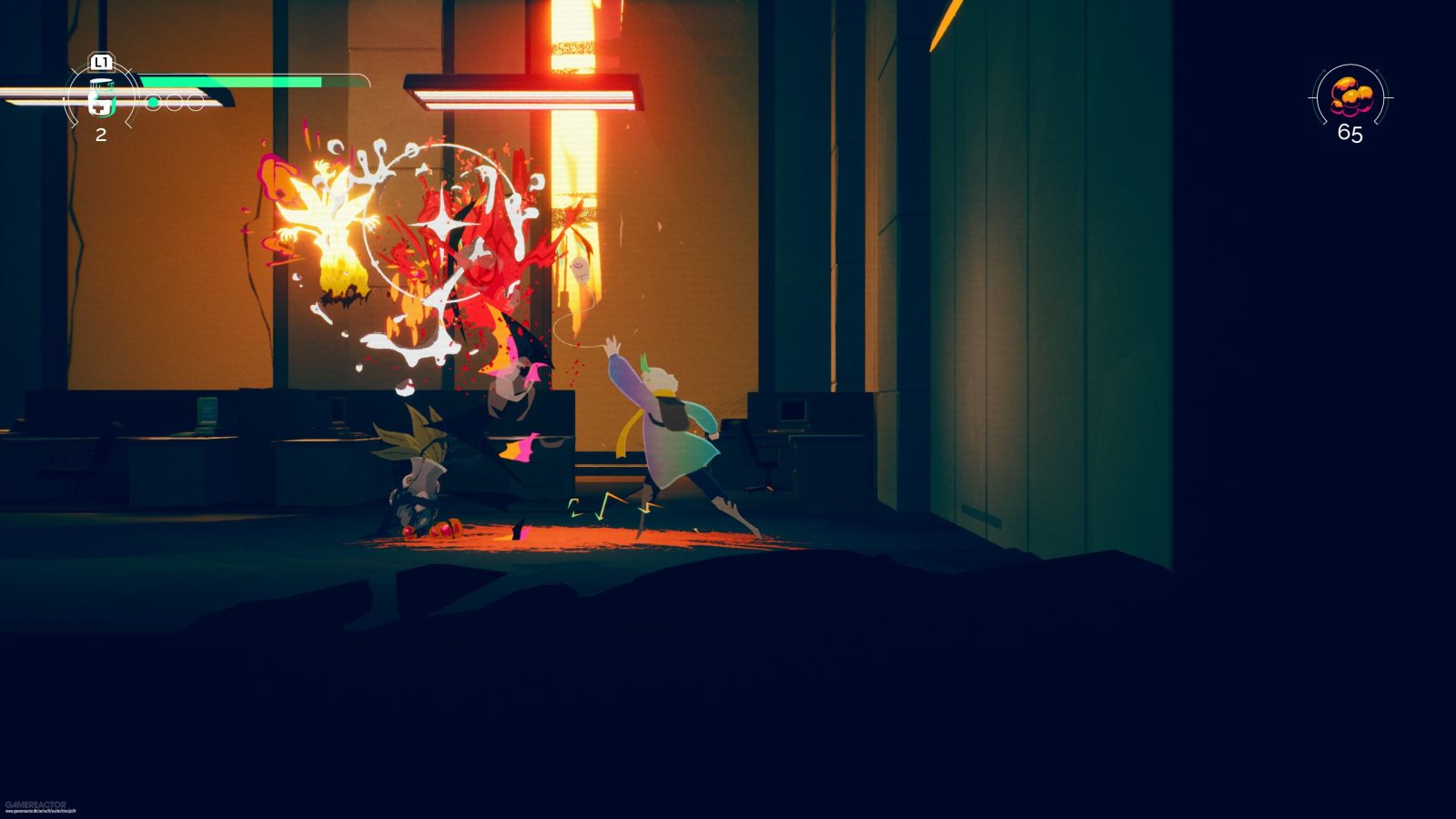
In the wake of the excellent Hollow Knight: Silksong, it's a steep climb in the hopes of challenging the Metroidvania genre. However, there is little doubt that Heart Machine, the studio behind the acclaimed Hyper Light Drifter, has been influenced by Hollow Knight in many ways this time. It's basically a very similar starting point to the black and white adventure from 2017, where they lure you with hand-painted views and a level of difficulty that asks us to try, re-evaluate, and re-test when we fall. Death is merely a time for adjustment in attack angle and patience, where a return visit to the arena means that lost resources are regenerated. Mistakes are something we should embrace with a new strategy, perhaps wandering in the wind for a while just to look for new upgrades or potent secondary and passive abilities, or at best a new weapon that opens up new attacks, or perhaps completely different paths?
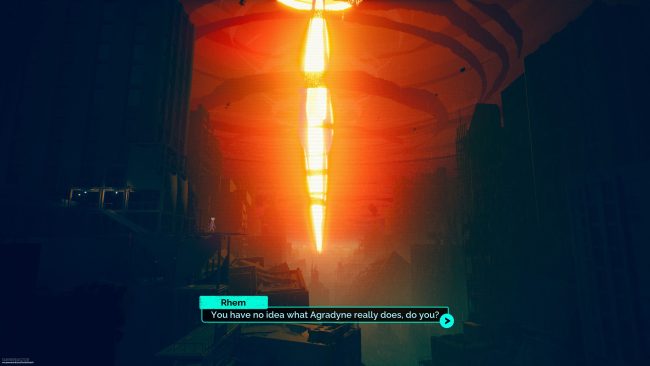
Agradyne, a huge mega-corporation in the fictional Sanzu City, has established itself with its technological advances as an empire that owns and manufactures every last penny in the city, while carrying out secret experiments in the underworld. In 1992, where the game takes place, a catastrophe of interdimensional proportions occurs and the city is shut down, and quarantined within minutes. A rift to an alien world opens up and from it flows horned and damned demons like the shock wave from a nuclear weapon, causing devastation.
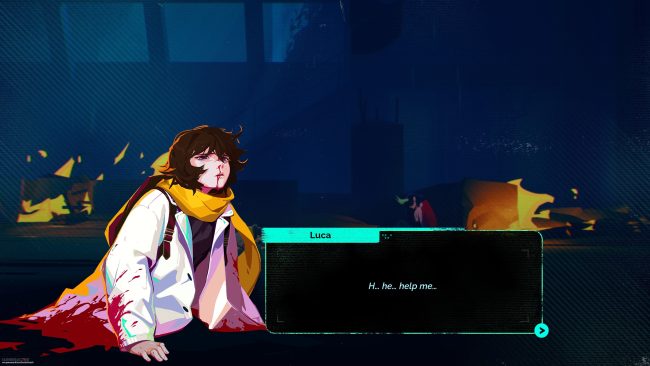
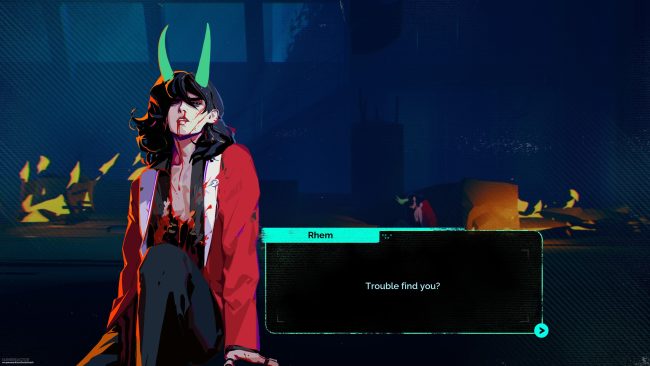
Teenage girl Luca, together with her high school bestie Kaz, tries to escape the disaster where the opening is unusually dark and macabre. The protagonist Luca ends up under rubble and has her lower body and both legs crushed, while she witnesses her friend being executed by a being from hell. She tears herself free, dragging her torso towards a wounded enemy named Rhem who has been involved in what has happened, where an attractive offer is proposed; Luca will get new legs if she in turn promises to help him with his agenda. This becomes the starting point for a cynical and unholy alliance, which later turns out to mean that they may have more in common than one might first think as the story deepens and branches out.
With Rhem acting as a spiritual guide in the duo's interaction, the dialogue is also rewarding, at times heavy but also humorous where mouthfuls and sarcastic jargon are a breath of fresh air between a teenager and a tormented spirit as they set off on an adventure through the city's many biomes. As mentioned, it's a "Metroidvania", which once again focuses on finding solutions that unlock new areas. Venturing deep within a territory to face a passage you should tackle a little later is part of this and I am not disappointed here, as all the hardships often also lead to hidden objects to upgrade the character's attributes, many often hidden behind walls that can be destroyed.
Does it sound familiar? This is the greatness of this subgenre, where adventure and the environments are at the centre, an unexplored ant farm of tunnels and systems that set certain requirements for continued advancement that lead you forward. The whip I am given at the beginning is swung to advance over harmful terrain and points between A and B, but also acts as a grappling hook in battle where I can tear down flying creatures from the air, or pull nearby objects to be able to take a step and jump a little higher.
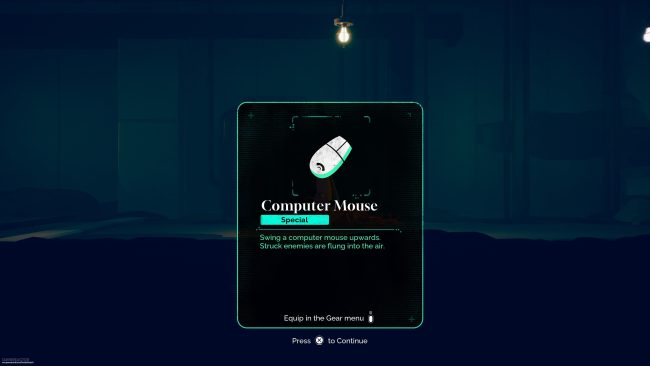
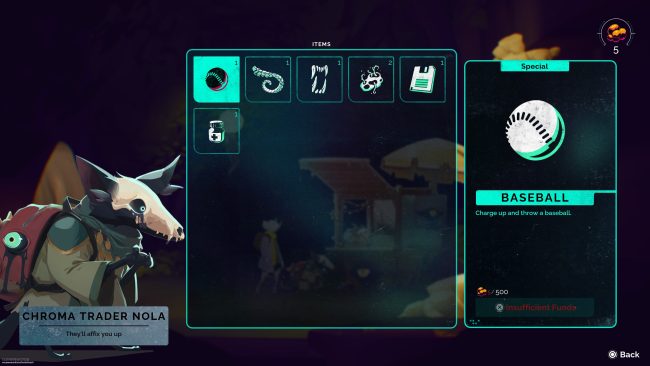
The items and weapons are deliberately down-to-earth and unique. Kitchen knives are the first weapon I find where I deal out anime-jerky combos against a possessed traffic cone with tentacles. I can't help but applaud the wealth of imagination among the game's many weapons and enemies. Delivering punchy shots with a hockey stick, throwing heated baseballs, or pulling out a ball that sends forth electric shock waves, to name a few, all contribute to the variety in the battles that alternate between screens. All are sharpened for different play styles and specialised areas of use where a vertically swung computer mouse with a wire can pop a ground-based enemy into the air for an accompanying juggle attack, while the knives act as a finisher. All weapons can also be equipped with found "affixes", perks if you will, which are placed in the weapon's available slots and provide passive bonuses such as faster sprint, extended range, and much more. These slots can also be increased in number via the game's scattered shops that are run by animals as strange as they are comical, with the stunted possum being a clear favourite.
One of the initial main missions involves searching for the laboratory that was the starting point for the devil invasion. The gate to the lab is locked with retinal recognition where the keys consist of four pairs of eyes from Agradyne personnel who have been attacked by really irritated demon colleagues of Rhem. The hunt for eyeballs begins where the steady stream of medium and big bosses in the game rewards with items and challenging encounters where I died ten times against most of them. The challenge, however, never becomes overwhelming where patience remains a virtue. Learning attack patterns that increase in pace and scope is not a negative, as being observant and responsive instead of randomly hammering buttons gives the same feeling of triumph as when an overwhelming foe falls in Dark Souls.
It also shares elements with the Souls games, where we find portals disguised as campfires at the end of tunnels where you can breathe a sigh of relief after navigating the labyrinths we have been faced with. The health vial is restored in the safe "pocket space" corner where you can also dump the game's currency in a bank, or talk to Rhem about the state of the world. Enemies that have been killed on the map also respawn if you stop here, which is a very conscious part of the risk/reward concept.
Just as the title suggests, there's a lot about possession, as the demons take over everything from kitchen appliances to bodies in the inferno that has erupted. The enemies consist of everything from porcelain vases, cardboard spiders, twisted soda machines, to office furniture that all want you dead. It's an equally ordinary and unconventional design that permeates throughout, which also extends to the environments and its regions. It's refreshing to not see separate passages painted in different colours, where doors require keys or subway stairs connect different floors, with ventilation shafts and elevators that all belong in a fundamentally normal world. Overall, there's a stylish setting here, which contributes to its overall thinking. The environments are rhythmic with their demolished skyscrapers, offices, flooded basements, zoos, and twisted highway bridges to name a few. The dirty and dull colour palette of hopelessness is interspersed with 3D zooming and panning, which makes the 2D world feel a little more technically alive, larger, and enveloping in scale, something that the evocative and dystopian soundtrack also does a good job of matching.
The design is a lot about straight lines, which strangely at times also becomes a bit too much of the same thing. The feeling of consistent minimalist realism becomes a bit grey-brown with a tunnel vision that makes the game blend together at times, something that also affects the navigation. Despite the classic grid map where you can drop down markers, it does not necessarily reflect the terrain or elevation differences in a logical way every time, where the directions forward rarely help. Likewise, I sometimes experience the battles as somewhat unruly and clumsy where my character feels bolted to the ground, despite the dodge and parry system at my disposal. I would have liked a more lively and organic flow in the controls, although in time it will become more dynamic with greater finesse after newfound combat arts and talents. I truly hope that they will sharpen the basic combat in future patches.
Possessor(s) offers an interesting touch on an established Metroidvania formula, but in my opinion it's best played in shorter sessions. In addition to a story that is slowly unravelled through memories and flashbacks in the main characters' shared inner lives where it's anything but black and white, a message is also conveyed about commerce and obsession where even demons are not allowed to be left alone as raw materials without being exploited and extracted. It's a bit tragic to see the developer hit with layoffs just before launch after three years of development, something that hopefully does not affect the planned improvements that have been promised. It deserves to be played by those who have no problems with a little challenge within the layout where the controls could also have been a little tighter, but where it ultimately demonstrates in a creative way that pride comes before a fall.