
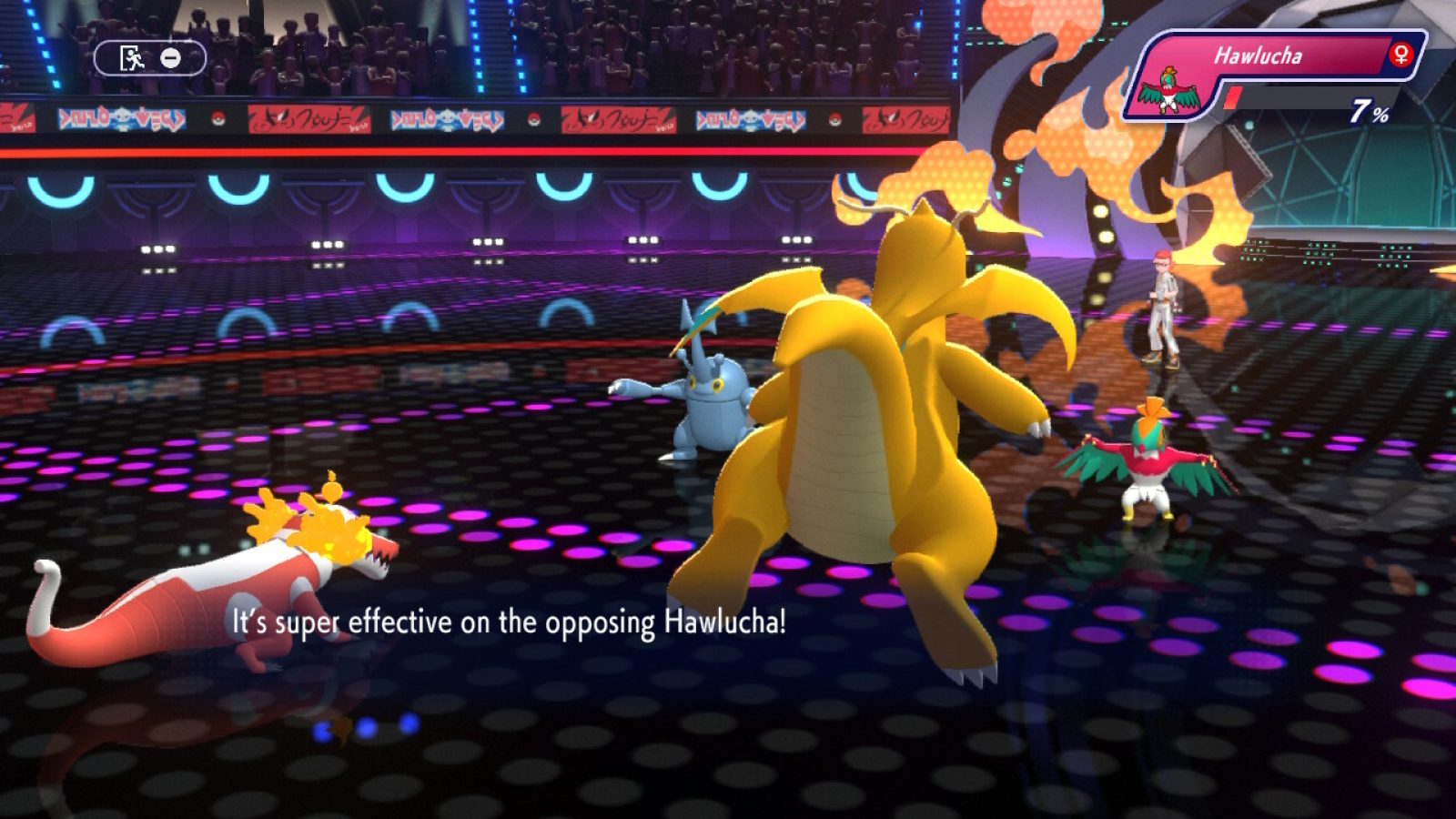
I doubt I was the only one who got a bit excited when Pokémon Champions was announced. A game that would focus solely on online battles. No story, no running around collecting gym badges and taking down massive criminal syndicates. Nope, pure, unadulterated battle action. A new, much-needed Pokémon Stadium or Colosseum. If you had those hopes, I'm sorry to disappoint you. Champions is no champion, and I wonder what the point of this game actually is.
In a way, it feels as though the game is overdue and should have been released quite some time ago, whilst on the other hand it feels as though it isn't quite finished and could have done with a bit more time in the oven. To back up the former point, this is a game being released on the Switch. The original Switch, that is, not the Switch 2. This review is therefore based on the Switch experience. And at a lovely 30 FPS, too. There is, however, a Switch 2 update available to download completely free of charge, but it's still limited to 30 FPS. At the same time, it's a game that's rather light on content and suffers from a few bugs.
Firstly, there are only 186 Pokémon to use out of the 1,025 available. This is fewer than were in Pokémon Stadium 2 (251), a 26-year-old game. This means that most teams look quite similar once you climb a bit in the rankings. There are around ten Pokémon - such as Mega Charizard, Whimsicott, Sneasler, Incineroar, Mega Froslass, Rotom (Wash), and Kingambit - that feature in almost every team in various line-ups. The lower tiers, Poké Ball and Great Ball (each 'tier' is divided into four divisions, with one being the highest. Perform well enough in Division One and you move up to the next tier) can offer a few other monsters as there are more beginners there, but once you reach Ultra Ball and above, the meta is very limited. Something that really doesn't help matters is that many, many, many 'held items' are missing from the game. These are items a Pokémon can hold that provide various bonuses, such as healing HP or stronger attacks. Among others, the Flame Orb is missing, which makes the Guts ability completely useless, as well as Black Sludge for healing Poison-types, Choice Scarf, Assault Vest, and Life Orb. If you've played more seriously in a competitive context, you're undoubtedly familiar with these. On the other hand, you could see it as a new, fresher setup where you have to try new things.
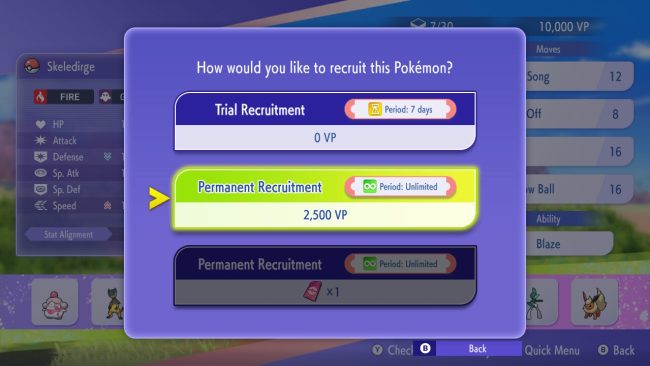
VP and vouchers are the foundation of the Champions world.
Battles can then be fought as one-on-one matches or with both trainers fielding two Pokémon at the same time. Each mode has its own separate rankings. In the first mode, you bring a team of six Pokémon and then select three of them to battle. They are then sent out individually. For two-on-two battles, the developers have opted to follow the rules used in official tournaments. This means you select a team of six Pokémon and then choose four to battle, with the first two sent out together. Usually in Pokémon games, such as Scarlet & Violet, when playing against friends you can use all six Pokémon in your team in the same battle. All of them are then at level 50, regardless of what they were before. Furthermore, in addition to the online rankings, there are regular tournaments, unranked matches, and the option to create private matches using an ID number to invite an opponent.
The question is why experienced players should play this if they already play matches frequently in Scarlet & Violet, apart from the novelty factor. Champions doesn't introduce anything new and is essentially a stripped-down version. The only difference is that it is currently possible to use Mega Pokémon, but not 'Terastallising'. It's possible this will be added eventually, but right now it's very basic and it feels like they just had to get this game out now that Pokémon is celebrating its 30th anniversary. The answer is quite simple. The players have to. From this year's Pokémon VGC World Championships onwards, this is the official tournament game.
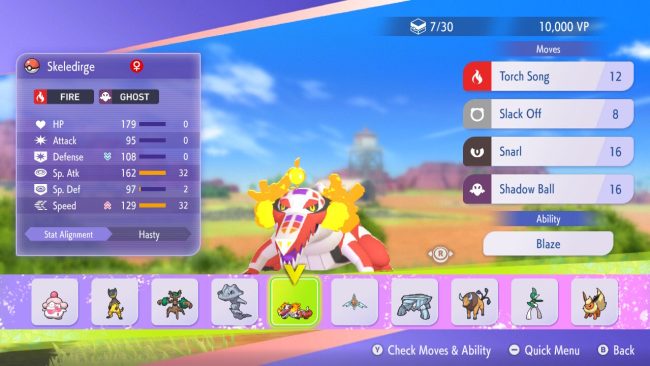
New monsters are recruited via a gacha system.
However, Game Freak and everyone involved with Pokémon deserve credit for the fact that this is an excellent introduction to competitive battles for beginners. The game is 'free-to-start', meaning you can play it completely free of charge, and it's very quick to get into a stream of match after match after match (without needing an online subscription, either). As soon as a match is over, you can choose to jump straight into the next one with the same team, and it all flows very smoothly. So, if, for example, someone doesn't own the latest games in the series and has come in via Pokémon Go, they can give it a go here, with the added bonus of being able to import their monsters from Go via Home. As this is a game that focuses 100 percent on battles, you can't just walk around throwing Poké Balls in the game. Therefore, there are only two ways to catch monsters. One is, as mentioned, to transfer them via Pokémon Home. Nicknames, titles, attacks and other details are carried over. What's more, this is done completely free of charge in the game. However, this brings me to the second way, which involves spending money.
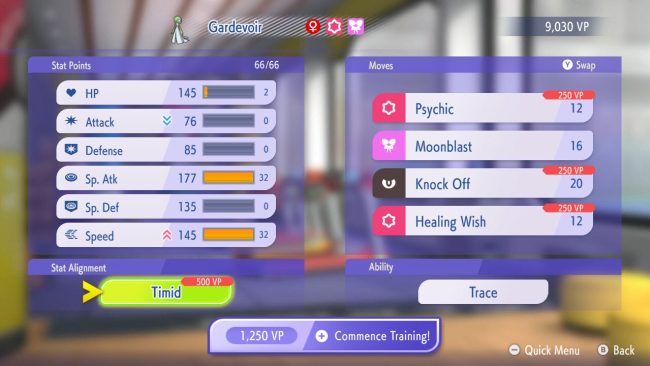
It's easy to change your monster's various attributes (in exchange for VP or vouchers, of course).
This is where the "free-to-start" aspect ends. You can also recruit monsters via a gacha system (think lottery), where you either pay VP or use Quick Coupons. The way it works is that you get one free spin every 22 hours. Ten random monsters then appear, and you get to choose one to recruit, either on a seven-day trial period or permanently by using VP or recruitment coupons. If you want to get ten new candidates before these 22 hours are up, you have to pay 100 VP or 1 Quick Coupon for every hour remaining until the 22 hours are up. That is 2200 VP or 22 coupons. These are things you can gradually earn in the game by playing matches and completing daily or weekly missions. Do you then want to change your new friend's attacks or attributes? Spend more VP or another type of coupon. If you want to make things easier for yourself, you can always buy a Premium Battle Pass and a membership. The Battle Pass gives extra rewards as you level up during the season (up to level 50), whilst the membership gives you various bonuses, one of which is completely absurd. The basic version is limited to you only being able to store 30 Pokémon, with five extra when you move up to the next division. This is incredibly stingy. With a membership? 50? 100? 200? Nope, you get 1,000 (!) box spaces. So, from 30 for free to 1,000 for a fee. You also get the chance to build 15 different teams and access exclusive missions for vouchers and other rewards.
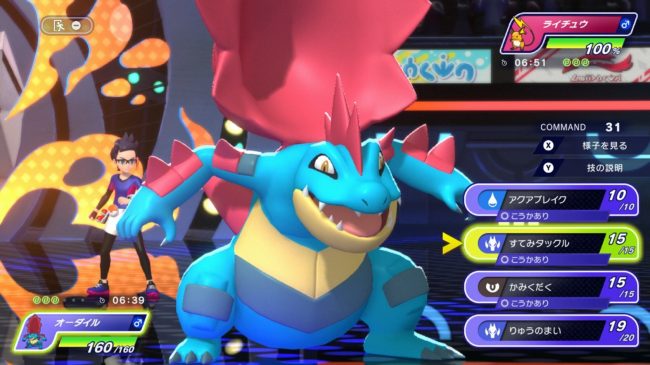
Mega Pokémon is the special mechanic in this game.
One question I've been pondering is: "Does this game have potential?" The answer is "maybe". Right now, the game is sorely lacking in content, but if they expand the number of playable monsters (its Pokédex), introduce more mechanics such as Terastallising, Gigantamax, or even the long-forgotten Z-Moves, it could offer greater variety. The question is how much of the (surely massive) player base will remain by then. Right now, it's all about the novelty and the fact it's free, but once everyone's had a go, will there be more than just the hardcore fanbase left? We'll see. For now, Pokémon Champions is a good introduction for new players, but the seasoned veterans will surely feel that something is missing.