
Following the ground-breaking Zero Escape trilogy, Kotaro Uchikoshi and his development team at Spike Chunsoft embarked on a new IP. AI: The Somnium Files was released in 2019, and while the pace and intensity were slightly lower than in the Zero Escape games, the quality was just as high. This was a visual novel with insanely high production value, well-written characters, and a crazy but still coherent plot. The same could be said about the sequel, AI: The Somnium Files nirvanA Initiative, from 2022, so I was very excited when I dove into the latest chapter, No Sleep for Kaname Date - From AI: The Somnium Files, which is chronologically set between the two previous games.
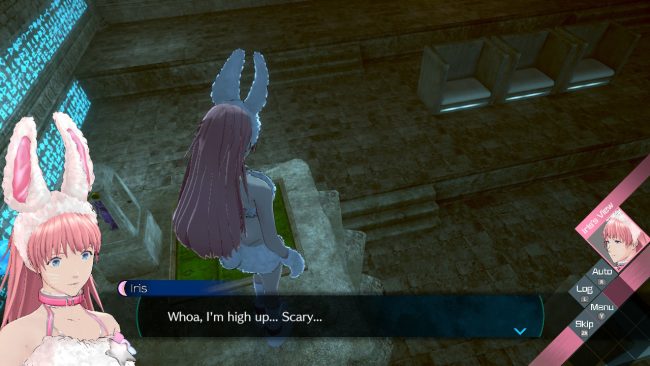
However, I get a bad feeling right from the opening sequence. Where the first game opened gradually, almost seductively, slowly luring you into its unique universe, No Sleep For Kaname Date throws you headlong into several confusing and disjointed scenes. Our main character, police officer Kaname Date, is on the run from a group of black-clad henchmen, and shortly afterwards, the game's secondary protagonist Iris Sagan, an internet idol from the previous games, is suddenly kidnapped by aliens - or so it seems. To get home unharmed, Iris must now complete a series of ingenious Escape Rooms, while Date, in more familiar surroundings, must try to figure out where in the world (or perhaps outside of this world) Iris is.
Let's start with the escape room sequences. If you've played Zero Escape, you'll undoubtedly feel right at home. The interface is pretty much the same as we saw in Zero Time Dilemma, and even several sound effects are repeated. Unfortunately, No Sleep For Kaname Date suffers from the same problem as Zero Time Dilemma - the quality is not as high as in the developers' older games. There are still puzzles where the solution hits you like Newton's apple, and you suddenly feel like the smartest person in the world and like an idiot (for not seeing the obvious solution earlier). This applies, for example, to an early sequence where you have to manipulate some digits. But unfortunately, the more serious brain teasers are few and far between. All too often, it's just a matter of interacting with all the objects - then the solution almost comes by itself.
It's not that the game doesn't try. For example, another character is quickly introduced, with whom Iris has to collaborate to solve the many puzzles. But it never really works. Symptomatic of this is the Third Eye sequence that appears near the end of each escape room. Here you are faced with two impossible escape routes, and then it's a matter of finding a third way. But since the two wrong solutions are already crossed off in advance, the mechanics pretty much undermine themselves, and to make matters worse, you also get an annoying timer thrown at you. The time limit doesn't make the puzzles any better, it just frustrates you and forces you to restart or reload.
That said, the escape sequences aren't bad. They just pale in comparison to the developer's previous superb work in {999: Nine Hours, Nine Persons, Nine Doors} and Virtue's Last Reward.
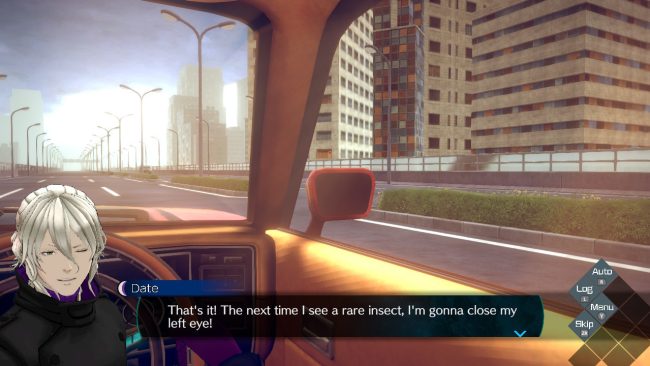
The idea of having to find an alternative solution at the end of the various Escape Rooms is a good one. It's just not particularly well executed.
Beforehand, I was quite excited that the new Escape Rooms would complement the series' Somnium sequences, as I, like many other players, have had a somewhat mixed relationship with this part of the game. This is a kind of dream therapy, where Date, with the help of his AI companion AIBA, examines the deepest psyche of suspects and witnesses. The sequences have always been visually impressive and an excellent vehicle for the game's storytelling. But - perhaps not surprisingly - dreams are associative and often a bit random, making them difficult to translate into well-functioning gameplay. However, No Sleep For Kaname Date manages this quite well.
Specifically, Somnium works by having you, as AIBA, move around and explore an often fragmented landscape filled with more or less peculiar objects. Just like in real dreams, some objects are quite random - remnants of random thoughts or insignificant observations - while others have deep symbolic meaning. So what is important, and what is just noise on the cerebral cortex? You find out by interacting with the objects. There are typically 3-4 options for each object, and if you choose the right action for a significant object, you slowly dive deeper into the many layers of consciousness as the fog lifts and a common thread begins to emerge.
Yes, it's still trial and error at first. But the more you learn about the person you're "syncing" with (to use the game's terminology), the easier it is to figure out exactly how to behave in their mind. Because there is actually a logic to it, even if it often goes against the symbolic and concrete meanings of words and objects.
What works particularly well in the various somniums is their pacing and intensity. Unlike in the escape sequences, you can't just fiddle with everything. You only have six minutes in each Somnium, and every time you interact with an object, a predetermined number of seconds are deducted from the clock. The same applies when you move your character, but otherwise time stands still, which in practice means that a Somnium often lasts over half an hour. The structure means that you are penalised for your mistakes (but rarely too harshly), and conversely, you are also rewarded for good observations, either by advancing in the sequence or by unlocking a small bonus that reduces the time lost in a future action. Incidentally, you can adjust the difficulty level for both somniums and escape rooms, which is a nice addition.

The dream sequences were, to my surprise, one of the game's absolute highlights.
When you're not trying to escape or delving deep into repressed memories, No Sleep For Kaname Date is a very traditional Japanese adventure. This means that you primarily explore relatively static environments with a first-person cursor. Occasionally, you have to press a specific object to move on. But there are no puzzles here like in Western adventure games. Although there is interactivity, including through quick-time events, you mainly press your way through a seemingly endless amount of dialogue.
This naturally places high demands not only on the game's dialogue and story, but also on its presentation, that is, the sound and visuals. Unfortunately, the game does not quite reach the heights of the previous chapters in these respects.

No Sleep for Kaname Date is a Japanese game in every sense of the word.
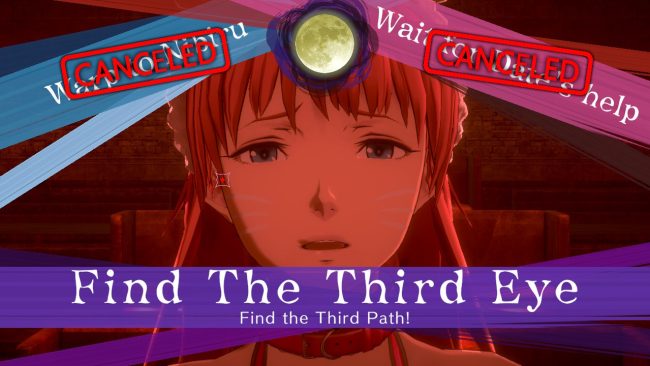
The sharp anime graphics and atmospheric sound are not really lacking anything, but there is a lot of recycling here. You talk to the same characters and move between the same locations over and over again. And, perhaps more importantly, this is now the third game in a row where we hang out at the Lemnisgate talent agency and flirt with the busty receptionist; the third game in a row that we visit the same empty warehouse along the waterfront and get scolded by our adopted daughter Mizuki; the third game in a row that we drive along the wide boulevards of Tokyo while a projection of our assistant AIBA summarises the latest developments in the case. Well, you can of course start here - AIBA explains who the various characters are as you go along - but I'm guessing that most of those who buy this game have already played at least one of the previous chapters.
What's worse, No Sleep For Kaname Date isn't quite as well written as its predecessors. Kazuya Yamada has taken over as game director and lead writer, while the series' usual front man, Uchikoshi, takes a back seat as scenario supervisor. Perhaps to show that they understand the characters, the new writers focus too much on their external quirks and too little on their inner core. The result is that several of them almost appear as parodies of themselves - which, unfortunately, often happens when characters are passed on to new writers. But sure, it was a delicate balancing act that the previous games didn't always master either.
I'm a little torn about Kaname Date in particular. I still like that he has a cheeky, let's be honest, inappropriate tone, because he still manages to be serious or compassionate in situations that actually call for it. We all know someone like that. But on the other hand, his fascination with porn magazines is allowed to take up far too much space. It was never a particularly funny joke to begin with, but now it seems more like a psychological disorder that has apparently infected several of the other characters as well.
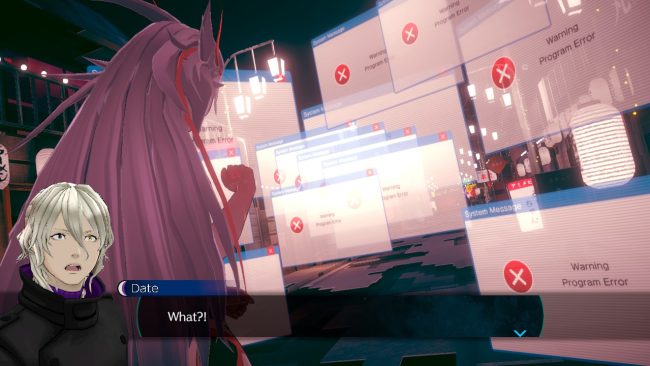
We have to agree with AIBA - our dear protagonist has clearly been injured.
I can't say much about the story itself and the overall plot, as Spike Chunsoft has been very restrictive in avoiding spoilers. But I'm probably not spoiling anything by saying that the story is once again delivered in a surprising way, where you repeatedly think, "that can't work," only to see it all fall into place satisfactorily. Chronologically sandwiched between the two previous games, the writers' narrative scope is limited, but I actually think they get away with it, even with this constraint.
When I re-read this review, I sound very negative. But in fact, No Sleep For Kaname Date is still a good game. It just suffers from following two masterful games. Judged on its own merits, it's still a Japanese adventure with sky-high production values, a fascinating story, fun characters, and, in my opinion at least, fine English voice acting. Just be careful not to set your expectations too high.