
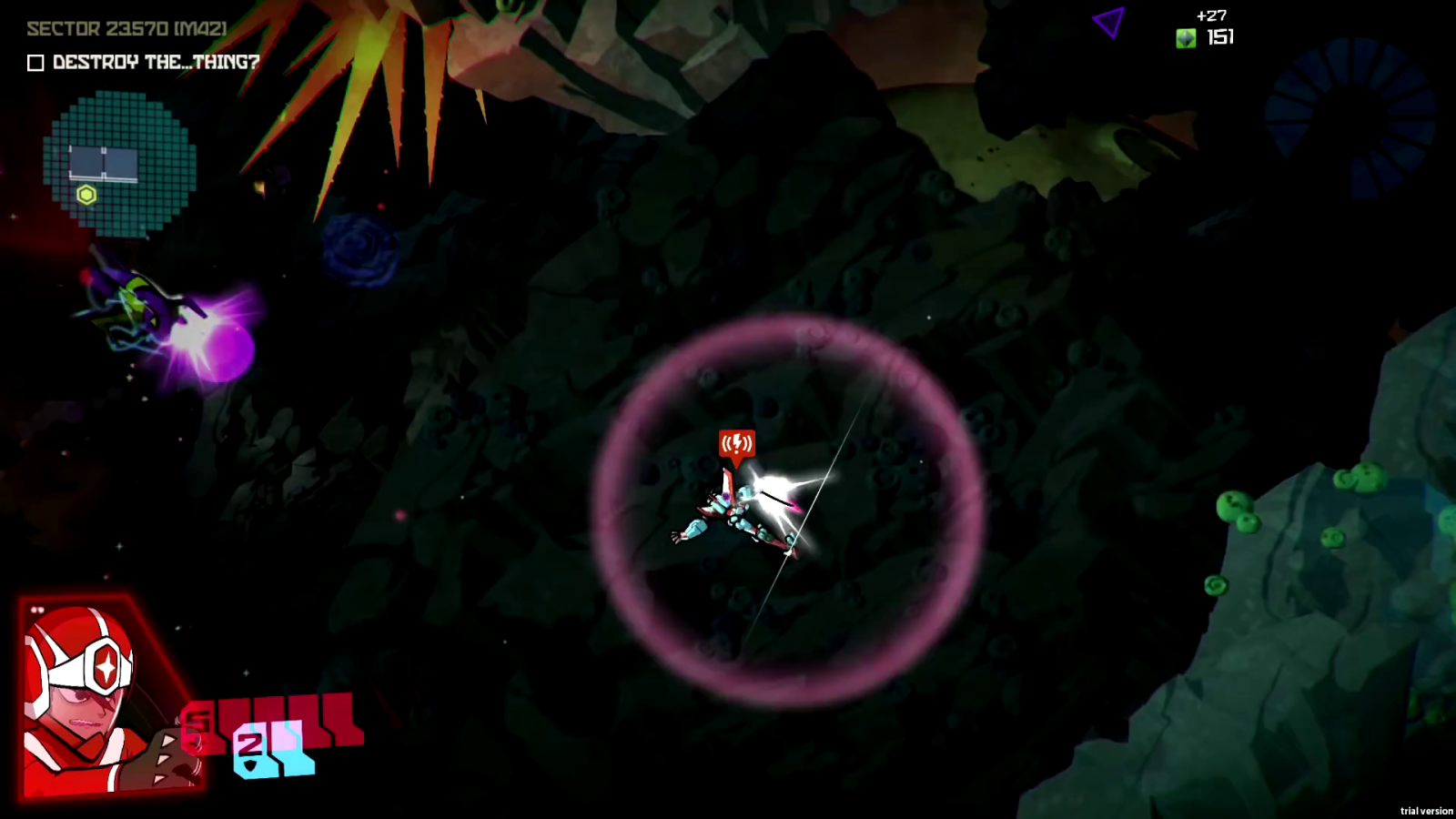
Galak-Z: The Dimensional has been out for a few weeks already, so you might be wondering why it's taken us this long to gather our thoughts and offer up a review. The main reason is thus: this is a roguelike-like space shooter, and our preference when tackling anything roguelike-like-like, is to take time over it, dip in and out, learn the systems slowly rather than overdosing on permadeath for three days straight. So that's what we did here, we took our time, and over a couple of weeks started to get to grips with the various mechanics and systems that have been thrown into the mix by 17-Bit.
Galak-Z is, as mentioned, a roguelike-like, the second "like" in this case means permadeath and randomised levels. This offering's a 2D open-world space shooter very much inspired by the genre classics and Japanese anime. Players assume the role of Atak, a sharp-witted pilot who finds himself fighting imperial aliens, cutthroat pirates, and space bugs. Controlling Atak and his ship is harder than it looks, with propulsion mapped to the triggers, and directional movement through the sticks. There's boost on R1, strafe on L1, a dodge move that takes you out of the 2D field, lasers, missiles to lock-on, and in later levels you get a directional shield and a grappling hook that can turn enemies into weapons to be flung at other enemies. The world around you doesn't make things easier, with deadly obstacles to dodge and clever opponents on constant patrol.
Mastering your control over the ship is key, and while you can get a couple of levels into the game by simply going forwards and backwards and pressing shoot, that won't do in the longterm. Your ship is fragile, and won't take many consecutive hits before it explodes into twisted metal and flame, so staying out of the line of fire is essential. You spend much of your time floating through giant asteroids and cavernous space hulks, carefully avoiding a diverse range of enemies as well as the local fauna.
Combat is dangerous, but also essential, as scrap collected from fallen foes can be recycled and turned into ship improvements via the store. There's different enemy types to be mindful of, and each will require a different approach. A small patrol might be tackled directly with lasers, a more challenging unit is best taken down via a surprise attack and a barrage of missiles, or you could draw a dangerous enemy squad into harm's way - luckily the three factions don't get on so well - and then mop up once the fight is over. Even the environment can be cleverly brought into the equation when dealing with a hostile situation.
Like other roguelikes, there is a significant challenge, but 17-Bit has framed it with complimentary systems that lessen the pain and make it more accessible. While it's frustrating to lose an hour of progress, it's not always wasted time. You pick up crash coins at random points in the game (usually in the wreckages of enemies you've downed) that upon your death transfer to your new game and give you credits to spend on equipment. There's also blueprints to find, and these add new upgrades to a permanent collection that supplies the randomised store that serves you during each play-through.
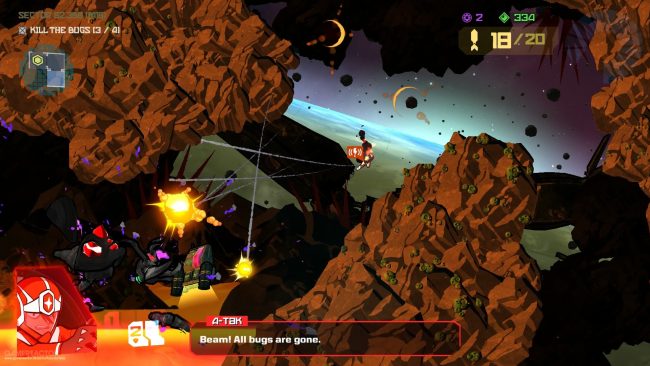
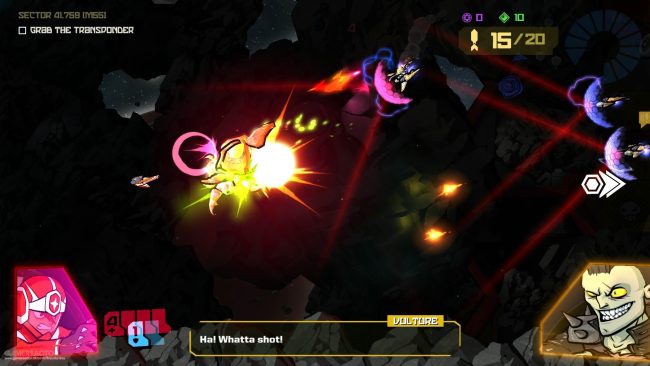
On any given run there's a really nice selection of upgrades for both ship and weapon systems hidden throughout each level, and as you gather them up your ship becomes increasingly capable. To succeed you'll need a dash of luck when finding decent upgrades - although you can make your own luck to an extent, by scouring each level for every loot drop - and then plenty of good play as you progress, knowing when to play it safe and use stealth, and choosing the right moments to advance on your prey.
The game is split up into five-mission seasons, and death at any point resets your progress within that season. Of course it sometimes feels harsh when death pays a visit, but if you've been playing for a while you'll have collected several crash coins that can be spent on equipping your ship with good gear ahead of the next run, or if you've got enough coins you can even restart the mission where you died, albeit without your gear that's then stashed somewhere in the level and needs to be recovered.
Fragility of life and severity of challenge combine to create a tense and atmospheric experience, where every bar of health is to be treasured and protected. The shield regenerates after a short while, but health does not, and you can only repair between missions or if you stumble across a vendor on your travels (and even then, only one health bar at a time). Even at full power with bonus shields and health, it still pays to be cautious, which means there'll be moments where you'll tiptoe around enemy patrols, firing up your boosters briefly to generate the momentum required to float silently past encounters with alien bugs and deadly space pirates.
This is a game in many ways defined by its anime art style; it wears its influences on its sleeve, and looks great thanks to characterful enemy design and elegant cel-shading. The levels that host the action aren't the most impressive we've ever seen, but the different factions that you encounter are thoughtfully realised, and enemy units are clearly differentiated and easy to identify. The ship you control looks great, and it develops the ability to turn into a mech after the first series comes to an end, at which point the dynamic of the game shifts and your options at any given moment increase. Both forms and their respective animations look fantastic. It sounds good too. The voice acting is spot on, and the script that underpins it is also decent, with clever lines and loads of referential quips. There's also a nice soundtrack that fits the action like a glove.
The whole thing is overflowing with smart design decisions. It's more generous than your average roguelike, and while it retains a punishing edge, there's an element of snowballing whereby as you unlock more items for the shop and find more crash coins, you can increase your chances for subsequent runs. Of course, with each pass you learn new strategies and refine your skills, and this personal improvement is just as important.
Clever systems are complimented by stylish visuals and audio. 17-Bit has pulled together a wonderful blend of ingredients when creating this space shooter. If you enjoyed Spelunky and other games of that ilk, or even if you're a fan of classics like R-Type, then make Galak-Z your next port of call.