Reggie Fils-Aimé reveals what went wrong with Wii U and also shares a secret about NES Mini
There are few top executives among console manufacturers who have come across as truly genuine and honest, and who have consequently built their own community of fans. Some examples include former Sega and Xbox head Peter Moore, PlayStation executive Shuhei Yoshida, Nintendo president Satoru Iwata, and of course the one and only Nintendo of America boss Reggie Fils-Aimé.
The latter has always been known as a straight-shooter who tells it like it is, and often does so in an interesting way. But even so, many raised their eyebrows at what he said during a Q&A event at the NYU Game Center (transcribed by IGN). There, he went into detail, completely unsentimentally, about what went wrong with the Wii U, and even took the opportunity to reveal that the mini versions of the NES and Super Nintendo were developed to generate revenue after they realised the Wii U was a lost cause.
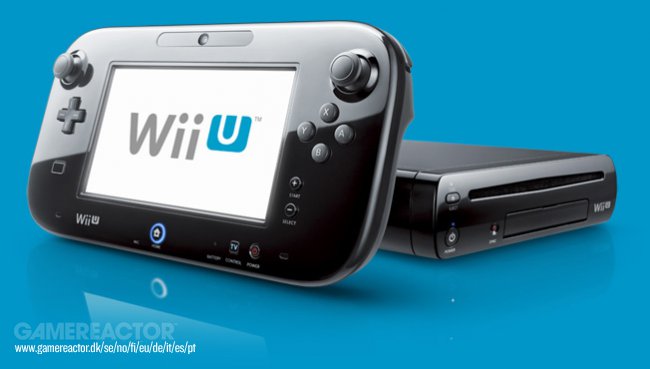
It's a long story, but if you're interested in the gaming industry and gaming history, this is a must-read from one of the people with the best insight into the gaming world and Nintendo of all. Fils-Aimé said:
"When we were developing the Wii U, we were convinced that the combination of what I call the '10-foot experience' — your TV 10 foot away, and a 10-inch experience having some sort of gameplay on the GamePad... was a big idea. We believed that it would create opportunities for different types of gameplay, where you could be playing what's happening on the big screen together, like in Mario Kart, or you could play a different type of game where one person is having a slightly different experience than everyone else.
"We began creating content with that idea and the output was Nintendo Land. We thought it could be the equivalent of Wii Sports for that generation. And I played it, I didn't stand up and say, 'Boy, this software isn't working for me,' but you get that little itch in the back of your neck that says, 'Ehh... this isn't Wii Sports.'"
Although Nintendo Land didn't turn out to be the next Wii Sports, he says that the Wii U actually sold well initially. But it was released in 2012, and the following year Microsoft launched its Xbox One and Sony released the PlayStation 4, which many people felt were significantly sexier and more powerful consoles. He continues:
"We launch, we actually did well in our first year, but then as players were looking at the next generation of Sony and Microsoft [consoles], our sales really stalled. The other thing that happened was the pace of new products we had seen on paper did not materialize on the timetable that we needed. So the team was working on a new Smash Bros., Mario Kart, Splatoon — which has become a fantastic franchise for Nintendo - but the games didn't come out fast enough. And after the second year, it was clear that we were not going to have the success we needed to.
"That's when the commercial executive starts really pushing an agenda on how we need to course correct."
Some of the issues were that they had two different versions of the Wii U, which retailers didn't appreciate. And gamers were unhappy about the lack of games for the console. In other words, action was needed:
"We had launched with two different SKUs [essentially, two versions of the same product], one had more memory than the other. The one with less memory was white, the other SKU was black. I killed the white SKU because the volume wasn't there to sustain it. In order to keep our retail partners, we needed to have a velocity that made sense. We [also] focused on some games that were coming digitally, and this was really the beginning of a deep relationship with independent developers that would find success on that platform, and then on Nintendo Switch. So we did a series of commercial efforts to try and sustain as much momentum as we had."
The solution to secure revenue was to release mini versions of the NES and Super Nintendo, which became incredibly popular and started a trend that continues to this day (even though Nintendo itself seems to have stepped down - despite fans hoping for a Nintendo 64 Mini). These devices were, in other words, more of a stopgap measure than a well-thought-out piece of fan service:
"In two successive years, we launched those micro legacy devices... the small NES and then following year, the small SNES. We did that to sustain our business, because we needed something to sell at volume, come the holiday season. So it was a series of commercial ideas, knowing full well that the Wii U was on life support."
<bild></bild>
The Wii U was, in other words, doomed, and a replacement was needed. Reggie Fils-Aimé recounts how he was summoned to Japan, where the beloved Nintendo president Satoru Iwata (who himself had previously developed games such as Balloon Fight and Kirby's Dream Land) told him that he had once again been diagnosed with cancer, which tragically led to his death in 2015. Fils-Aimé seems to have got the year wrong - this was recounted freely from memory in front of an audience - as he continues the story, which shows what a true professional Iwata was right up until the very end:
"Now jump to March 2016. I'm called to Japan for a meeting, and I argued with [former Nintendo president] Mr Iwata because I'd lined up activity for my birthday. He was adamant on the days that he wanted me in Kyoto, and I would have celebrated my birthday in Kyoto.
"In the end there were two reasons for this meeting," Fils-Aimé revealed. "The first is, that's when he told me his cancer was back. At that point, we all believed he had beaten his cancer, but he wanted to tell me face-to-face that his cancer was back. And we talked about that for like an hour. And then he, like, flipped the switch. Now we need to talk about the future. And it was in that meeting that we did the launch planning for the Nintendo Switch. The software that would come out, the pricing, how we would launch it, how we would think about it. And we ended up launching the Switch the following March."
In the end, the solution turned out to be the Switch, which built on the ideas Nintendo had for the Wii U, and the rest, of course, is history. The Switch became wildly popular, and today the Switch 2 continues to gain momentum at a rapid pace.
"When you've got a business in trouble, you know. And when you know, you need to take decisive action in order to manage the situation, manage your key constituents, whether its retailers or consumers, and then find the solution that would deliver success downstream. And for Nintendo, that solution was the Switch, that leveraged the insight we had about a 10-foot experience and a 10-inch experience, but the execution was different."
<bild>The Switch is an evolution of the Wii U, but its creator, Satoru Iwata, never got to see its success.</bild>